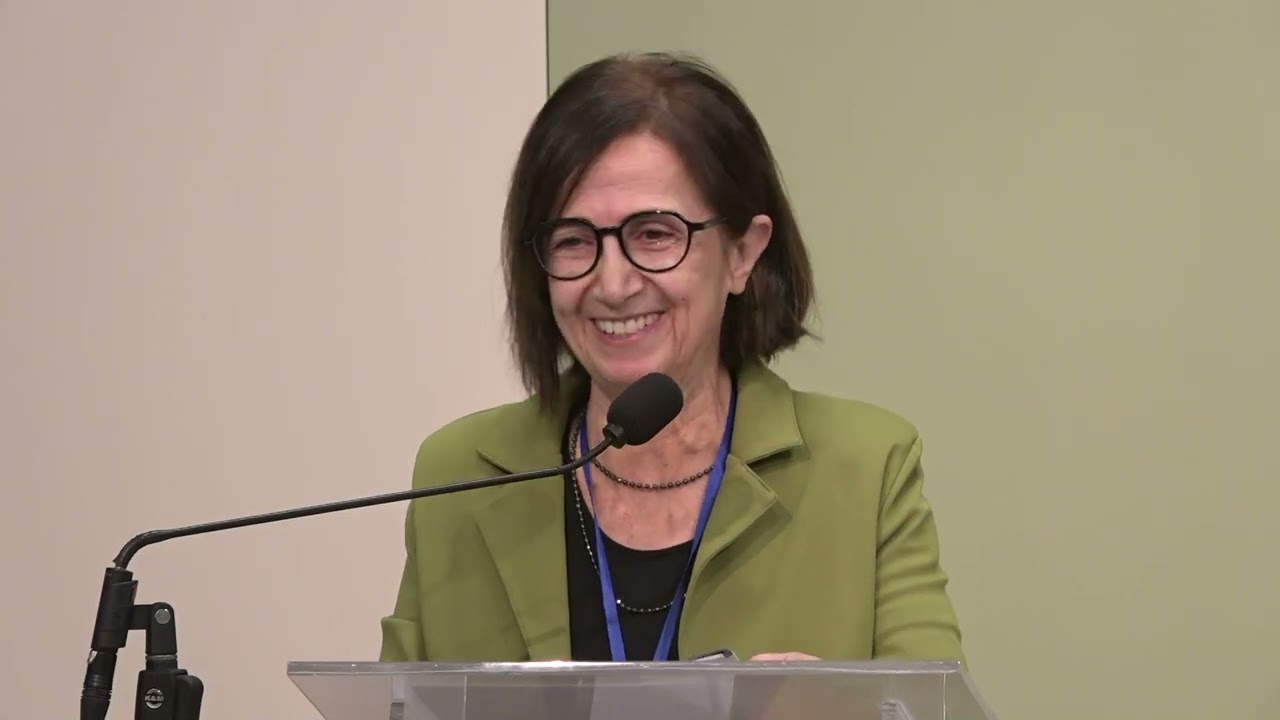
Day 1-Introduction: Welcome remarks and framing of the conference
Title history
- Day 1-Introduction: Welcome remarks and framing of the conference — observed on 20261120-1939 UTC (YouTube)
Keywords
Summary
216 words
Critical Evaluation
Value of the Information & Strength of the Argument
The value of the information lies in framing a significant but under-researched area—the empirical contribution of religious actors to development. The argumentation is coherent and builds logically from the recognition of widespread but undocumented faith-based activity to the call for better measurement and partnership. The speakers present a specific data point (8.8% higher GDP per capita growth in democratizing countries) to illustrate the broader claim that freedom, including religious freedom, correlates with prosperity. However, the reasoning is largely assertive and based on the organization’s own research, with no external evidence presented within this introductory segment. The introduction of ‘integral human development’ as a bridging concept is intellectually stimulating, though its practical application remains to be demonstrated. The argument for integrating religious actors into development is made compellingly, but the lack of concrete examples or case studies in this opening leaves the argumentative strength modest.
Scientific Rigor, Source Quality, Title Accuracy
The scientific rigor is moderate: the talks reference internal research and the expertise of well-known institutions (e.g., John Templeton Foundation, Georgetown University’s Berkeley Center), but no specific external sources are cited in the description or transcript. The conference is framed as a serious academic initiative with a clear methodological focus on measurement and evidence, which bodes well for rigor, but the video itself offers no substantiation. The title ‘Day 1-Introduction: Welcome remarks and framing of the conference’ matches the content precisely—it is an introduction. No comments are provided for analysis.
249 words
Title / Content Match
The title accurately describes the content: it is the opening session of the conference, consisting of welcome remarks and framing statements.
Quality & Reliability
8/10
The conference is organized by the Atlantic Council, a reputable think tank, and the opening speeches reference institutional research and data. The tone is measured and sets a serious, empirical agenda, though it remains introductory and non-verifiable in this short segment.
Key Moments
Markers derived by PSI from the transcript: the creator did not define chapters.
- Host delivers welcome remarks on behalf of the Atlantic Council, acknowledging sponsors and partners.
- Discussion of research showing that democratization leads to higher GDP growth per capita, addressing critiques of democracy's efficiency.
- Introduction of the conference's focus: the role of religious actors in development and the need to measure their impact.
- Rita Musalem of the Focolare Movement welcomes participants and highlights the venue's history and the need for interreligious dialogue.
- Professor Fabio Petitto frames the conference's two lines of inquiry: mapping the faith-based development footprint and learning from innovative faith-based initiatives.
- Call to future steps: defining a research agenda and moving toward implementation of development interventions that amplify faith-based initiatives.
Contribution & Novelties
The video sets an ambitious agenda for systematically integrating faith-based actors into mainstream development thinking. Its original contribution is the proposal to use ‘integral human development’ as a pragmatic bridge between religious and secular development frameworks, and the explicit call to measure the ‘faith-based development footprint’—a concept rarely addressed in mainstream development policy. This approach could bring new data and perspectives on the actual capabilities of religious institutions in service delivery.
Pour aller plus loin :
- Catholic social teaching — Foundational to the concept of integral human development; many religious actors cite this basis.
- Jürgen Habermas — Referenced for the ‘post-secular sensibility’ that recognizes the public role of religion in modern societies.
- Freedom of religion — Core theme; the video argues that religious freedom is an indicator of broader institutional health.
- Sustainable Development Goals — Provide the modern framework for global development; the conference’s aims align with SDG targets on education, health, and partnerships.
154 words
Radar Profile
The radar shows a moderate amount of information (6) with good quality (7) and solid reliability (8), but a low technical level (5). This profile is consistent with a high-level strategic introduction: it offers trustworthy framing and a few data points, but does little to deepen the technical aspects of measuring development or engaging religious institutions.