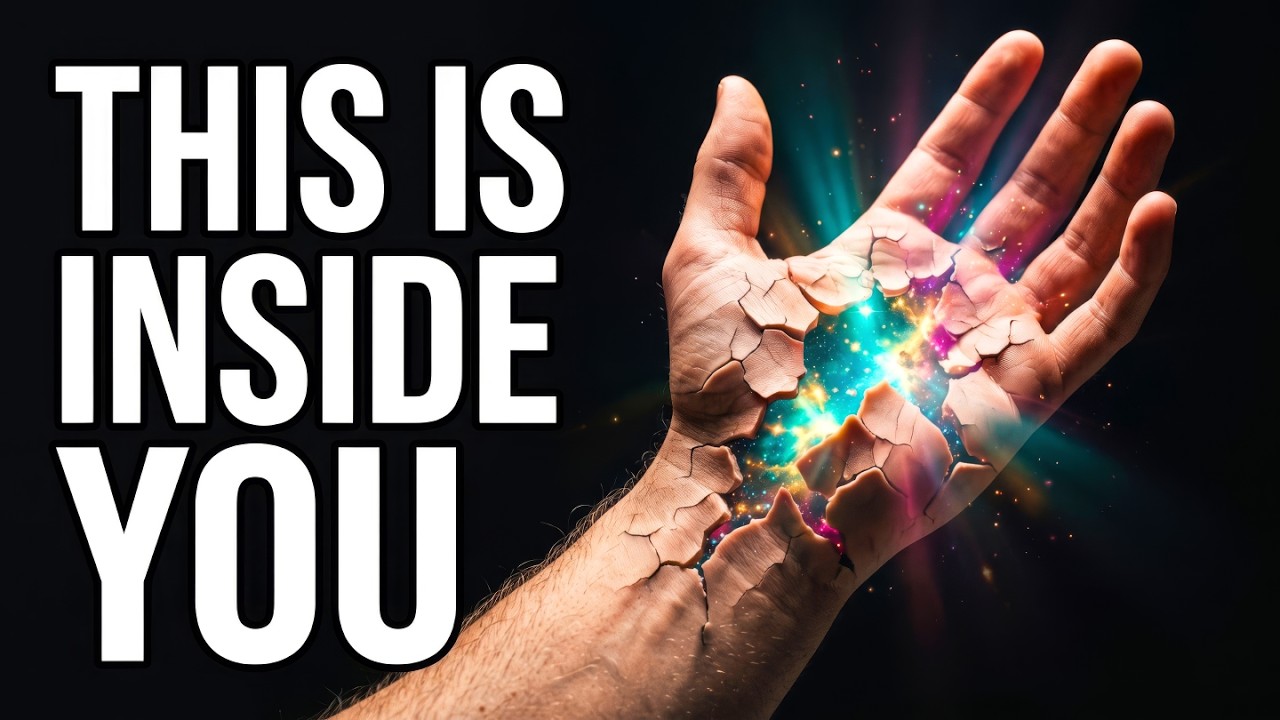
You Are Older Than the Earth — What You're Really Made Of
Keywords
Summary
206 words
Critical Evaluation
Value of the Information & Strength of the Argument
The informational value is high, as the video condenses a broad range of established scientific concepts into an accessible narrative. The argumentation is solid, relying on well-known physics principles like nucleosynthesis and the composition of atoms. The presenter builds the case step by step, from the largest scales of stellar evolution to the smallest quantum fields, ensuring logical progression. The use of vivid comparisons (e.g., atoms in body vs stars in universe) makes the concepts tangible, while the willingness to acknowledge uncertainties (e.g., the exact origin of Earth’s water) enhances credibility. The argument is also strengthened by the explicit rejection of pseudoscientific interpretations, which adds intellectual honesty.
Scientific Rigor, Source Quality, Title Accuracy
The scientific rigor is high: the core claims about stellar nucleosynthesis and the age of hydrogen are backed by established astrophysics, and the presenter clearly marks what is established versus what is poetic framing. No external sources are explicitly cited in the video or description, but the content aligns with mainstream scientific consensus. The title is highly adequate, accurately summarizing the central theme of the video. The pacing and structure (chapters) contribute to clarity, and the presenter’s commitment to honesty about the limits between science and metaphor is a model of responsible science communication.
216 words
Title / Content Match
The title accurately reflects the content, which explores the ancient cosmic origins of the atoms that make up the human body.
Quality & Reliability
9/10
The video presents well-established scientific facts about the composition of the human body, stellar nucleosynthesis, and the age of atoms, with a clear distinction between tested science and poetic interpretation. The explanations are accurate and the presenter explicitly avoids common misconceptions about quantum consciousness and manifestation, demonstrating scientific rigor.
Chapters
- The iron in your blood is older than the Earth
- You are the ash of dead stars
- The oldest part of you: born in the Big Bang
- The ancient sea you carry inside you
- More atoms in you than stars in the universe
- You are almost entirely empty space
- You are not made of things, but of fields
- You are a verb, not a noun
- The possibility your matter came from
- You never came from nothing
- A knot in the cosmic web
- At rock bottom, you are energy
- The 9-billion-year life of one atom
- Borrowed, never owned
- You are a process, not a thing
- The unbroken chain: you almost weren't
- How we found out we are stardust
- The honest answer, all the pieces together
- What it means for you
- Borrowed stardust
Contribution & Novelties
The video synthesizes existing scientific knowledge about cosmic origins into a compelling narrative aimed at a general audience, making it unique in its presentation style (calm, sleep-focused). It provides a clear and accurate account of how the human body is composed of ancient stardust, distinguishing fact from poetic embellishment.
Pour aller plus loin :
- Stellar nucleosynthesis — Wikipédia article on the formation of elements in stars, a core concept of the video.
- Big Bang nucleosynthesis — explains the origin of primordial hydrogen and helium.
- Human body composition — details the proportions of elements and water in the human body.
- Atom — fundamental unit of matter, central to the discussion of empty space.
112 words
Radar Profile
The radar profile shows high scores across information quantity, quality, and reliability, with a slightly lower technical level indicating the video is accessible to a broad audience. This suggests a well-balanced, scientifically sound piece of popular science communication.