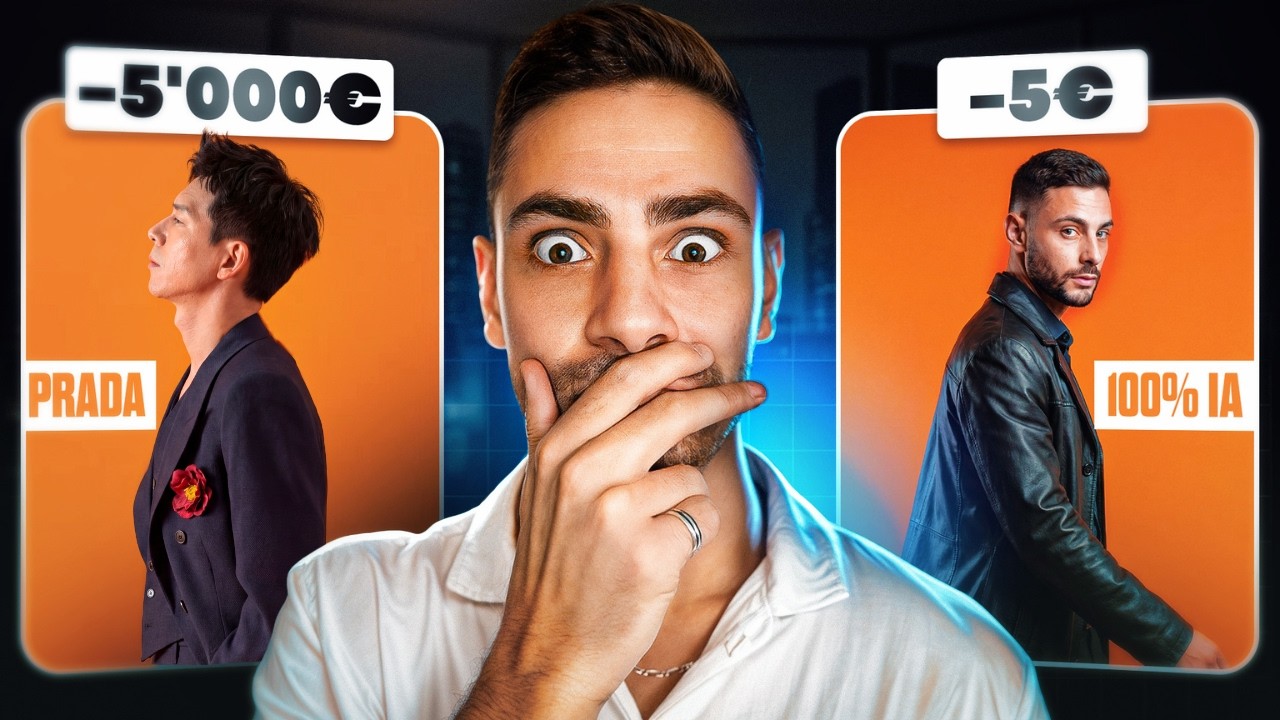
CLONER une vidéo avec l'IA en 5 minutes (outil caché de GEMINI)
CLONE a video with AI in 5 minutes (hidden GEMINI tool)
Title history
- CLONER une vidéo avec l'IA en 5 minutes (outil caché de GEMINI) — observed on 20261112-0057 UTC (YouTube)
Keywords
Summary
155 words
Critical Evaluation
Value of the Information & Strength of the Argument
The video is highly valuable as a practical, hands-on guide. The creator demonstrates real results, showing a side-by-side comparison of an original Prada ad and his cloned version, which convincingly illustrates the effectiveness of the workflow. The argumentation is based on direct demonstrations and cost comparisons, claiming a production cost of €4 versus an estimated budget of €5,100 for the original. The explanation is well-structured, breaking down each step and tool. However, the argumentation relies solely on the creator’s own experience and does not provide external validation or compare with alternative methods, which limits its objectivity.
Scientific Rigor, Source Quality, Title Accuracy
The video does not cite external scientific sources; it primarily references the creator’s own resources and promotional links to tools like AI Studio, WaveSpeed AI, and n8n. The claim that the ‘hidden Gemini tool’ is overlooked is supported only by the creator’s assertion. The title perfectly matches the content, and the step-by-step process is clear and reproducible. The video is more of a tutorial than a scientific analysis, so the lack of peer-reviewed references is expected, but the promotional tone for the paid club slightly reduces its credibility. The inclusion of a sponsorship segment is visible but not mentioned in the description, and the video does not address potential biases.
221 words
Title / Content Match
The title accurately describes the content: the video demonstrates how to clone a video using AI in about 5 minutes, and the hidden Gemini tool is indeed presented.
Quality & Reliability
7/10
The video provides a thorough step-by-step tutorial with practical demonstrations, but relies on the creator's personal experience and promotional links, lacking independent verification or scientific sources.
Chapters
- Cloner des vidéos par IA : Introduction à la duplication vidéo
- Les 3 outils IA essentiels pour cloner des vidéos
- Fonctionnalité Gemini cachée : Analyse vidéo IA avancée
- Tutoriel IA : Accès à AI Studio Google pour l'analyse vidéo
- Réaliser un clone vidéo IA : Étapes pratiques avec N8N et Airtable
- Automatiser le montage vidéo IA : Astuces et limites
- Opportunités business : Comment cloner des vidéos IA pour e-commerce et agence
- Personnaliser le processus : Récupérer des vidéos d'Instagram
- Webhooks N8N : Déclencher le workflow d'analyse vidéo
- WaveSpeed AI et Kai AI : Plateformes pour génération d'images et musique par IA
- Bonus : Créer des vidéos Motion Control avec Cling 2.6
Cited Sources
- AI Studio Google — Platform used to access Gemini models and analyze videos.
- WaveSpeed AI — Model aggregator used for image and video generation via API.
- n8n — No-code automation platform used to orchestrate the workflow.
- AIOS.fr — Creator's service for AI projects.
- LinkedIn - Thomas Berton — Creator's professional profile.
External References
Contribution & Novelties
60 words
Radar Profile
The radar profile shows high scores in information quantity (8) and technical level (8), indicating a dense, practical tutorial. The lower scores in information quality (7) and reliability (6) reflect the lack of external validation and reliance on personal experience, making it a useful but not academically rigorous resource.