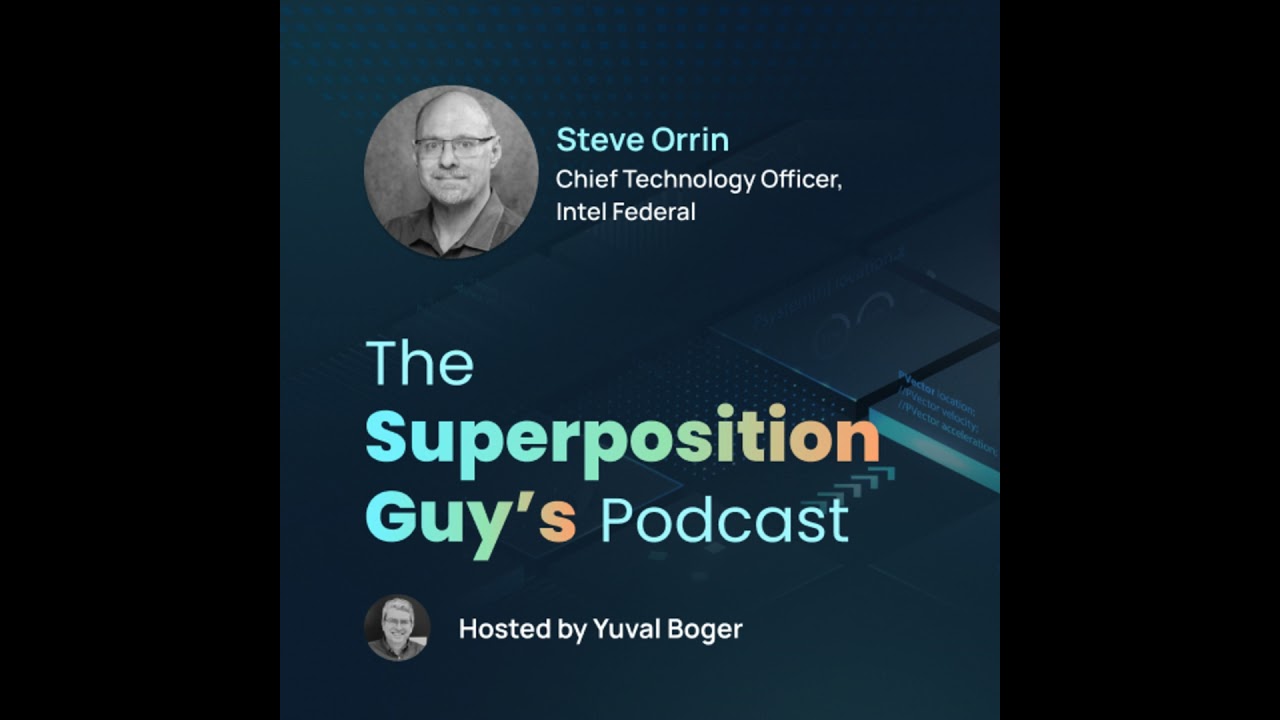
Steve Orrin, Chief Technology Officer for Intel Federal
Keywords
Summary
179 words
Critical Evaluation
Value of the Information & Strength of the Argument
The value of the information is high, as it provides concrete deadlines and actionable guidance from a leading industry expert. The argumentation is well-supported: Orrin references official standards (CNSA 2.0, executive orders) and real-world examples (e.g., 20,000 crypto assets in a laptop) to illustrate his points. He logically explains the difference between must-be-PQC and can-remain-legacy components, helping clarify common misconceptions. The reasoning about crypto agility and the need for early procurement is compelling and grounded in technical realities.
Scientific Rigor, Source Quality, Title Accuracy
The scientific rigor is strong; Orrin is directly involved in the PQC ecosystem and cites specific documents and technical details. The discussion aligns with current NIST and CNSA recommendations. Sources mentioned include NIST and CNSA 2.0, and the episode itself is a credible platform. The title is adequate but slightly generic; it focuses on the guest rather than the topic, but the content clearly delivers on the implied expertise. No significant source conflicts are apparent, and the title correctly signals the federal focus.
176 words
Title / Content Match
The title accurately reflects the guest and his role, focusing on the federal CTO's perspective. The content matches the title by discussing Intel's and the government's approach to PQC migration.
Quality & Reliability
8/10
The interview features a highly credible expert (Intel Federal CTO) who provides detailed, specific information about post-quantum cryptography mandates, deadlines, and practical migration strategies. Claims are supported by references to official documents (CNSA 2.0, executive orders) and industry practices. The discussion is clear, well-structured, and addresses both technical and organizational challenges.
Key Moments
Markers derived by PSI from the transcript: the creator did not define chapters.
- Overview of 2030-2031 deadlines and 2035 legacy crypto removal
- January 2027 acquisition requirement for national security systems
- Discussion of 20,000 crypto assets in a standard laptop and inventory challenges
- Intel's five-generation integration of PQC into silicon and firmware signing
- Crypto agility and future algorithm changes
- Practical advice for agencies starting their PQC migration
Cited Sources
- NIST Post-Quantum Cryptography Project — Referenced as the origin of the PQC algorithms and standards mentioned in the discussion.
- CNSA 2.0 Advisory — Cited for the 2027 acquisition deadline and specific algorithms like XMSS and LMS for firmware signing.
Concurring Sources
- NIST PQC Standardization — Concurs with the need for PQC adoption and the specified timeframes.
- Executive Order on National Security — Supports the 2030/2031 deadlines and the extension to the defense industrial base.
Contribution & Novelties
The episode provides a clear, up-to-date overview of the PQC migration timeline and practical challenges, particularly the complexity of cryptographic inventory and the need for crypto agility. Intel’s multi-generational hardware strategy is a unique insight. The discussion clarifies that not all crypto assets require immediate migration, which is valuable for organizations prioritizing efforts.
Pour aller plus loin :
- NIST PQC Standards — Reference for the finalized algorithms and ongoing research.
- CNSA 2.0 Guidance — Details on the acquisition deadlines and algorithm requirements.
- Cryptographic Bill of Materials (CBOM) — An emerging concept for automated crypto inventory, mentioned implicitly as a future tool; no direct URL but linked to software supply chain security.
111 words
Radar Profile
The profile shows a high level of information density and technical depth, with slightly lower scores on accessibility and conciseness. The expert opinion nature contributes to high reliability, while the topic is technical but presented clearly for a knowledgeable audience.