J’ai arrêté d’écrire mes prompts
I stopped writing my prompts
Title history
- J’ai arrêté d’écrire mes prompts — observed on 20261101-0050 UTC (YouTube)
Keywords
Summary
140 words
Critical Evaluation
Value of the Information & Strength of the Argument
The video offers practical value for AI users by presenting a novel workflow modification backed by anecdotal evidence and a reference to Karpathy’s tweet. The argument is built on personal experience and a cited external guidance, but it lacks systematic testing or broader empirical data. The reasoning is coherent and addresses common pain points, but the lack of critical examination of potential downsides (e.g., context overloading, accuracy issues) weakens the argumentative depth.
Scientific Rigor, Source Quality, Title Accuracy
The main sources cited are the OpenAI API guidance and OpenAI’s GPT-4o voice introduction, both relevant. The creator also mentions several third-party tools (WhisperFlow, Super Whisper, VoiceInk) but does not provide independent evaluations. The title accurately represents the content, with no clickbait. The video includes a promotional segment for VoiceInk, though it’s not sponsored; the creator explicitly denies sponsorship. Overall, the scientific rigor is moderate, relying on personal testimony and corporate documentation rather than peer-reviewed studies.
163 words
Title / Content Match
The title accurately reflects the content, which discusses abandoning traditional text prompts in favor of voice interaction with AI.
Quality & Reliability
6/10
The video presents a personal experience-based workflow shift, supported by references to OpenAI guidance and a tweet from Andrej Karpathy, but lacks formal scientific evidence. The advice is practical and coherent, though subjective and product-flavored.
Key Moments
Markers derived by PSI from the transcript: the creator did not define chapters.
- Introduction: personal shift to voice prompting
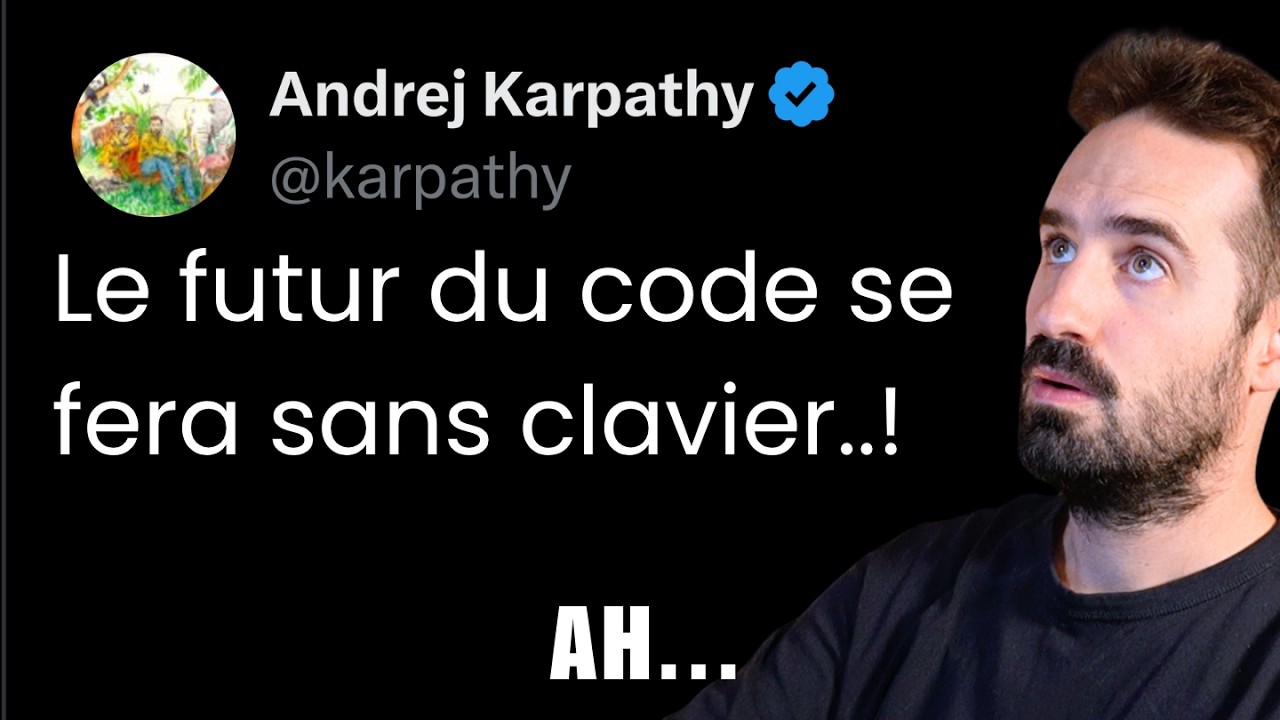
- Reference to Andrej Karpathy's tweet about voiced monologue
- Explanation of how voice provides richer context for AI
- Comparison of typing speed vs speaking speed
- Discussion of tools: WhisperFlow, Super Whisper, and VoiceInk
- Recommendation of VoiceInk as open-source alternative
- Closing remarks and call for viewer opinion
Cited Sources
- OpenAI API Guides - Latest Model — Cited as guidance on how to provide context to models, supporting the voice-first approach.
- OpenAI - Introducing GPT-4o — Cited as reference for voice interaction capabilities of modern AI.
- VoiceInk — Recommended by the creator as open-source voice input tool.
- DevArt - Qwen test — Another video by the same creator, linked in description.
- DevArt - DeepSeek vs ChatGPT vs Claude — Another video link from description.
Concurring Sources
- OpenAI GPT-4o blog — Supports the claim that modern models handle voice interaction effectively.
External References
Contribution & Novelties
This video contributes by popularizing the concept of voice-first prompting, a trend observed in the AI community, and provides a practical workflow comparison. It highlights the increased context richness of spoken language and suggests a hybrid editing approach.
Pour aller plus loin :
- Voice User Interfaces — Overview of voice interaction technology.
- Speech-to-Text API — Background on speech recognition technology.
- Andrej Karpathy’s tweet — The original tweet referenced (exact URL not available, but tweet is known).
76 words
Radar Profile
The radar profile shows moderate scores across all dimensions, with a slight strength in information relevance and a weakness in technical depth, reflecting a practical but not deeply rigorous presentation.