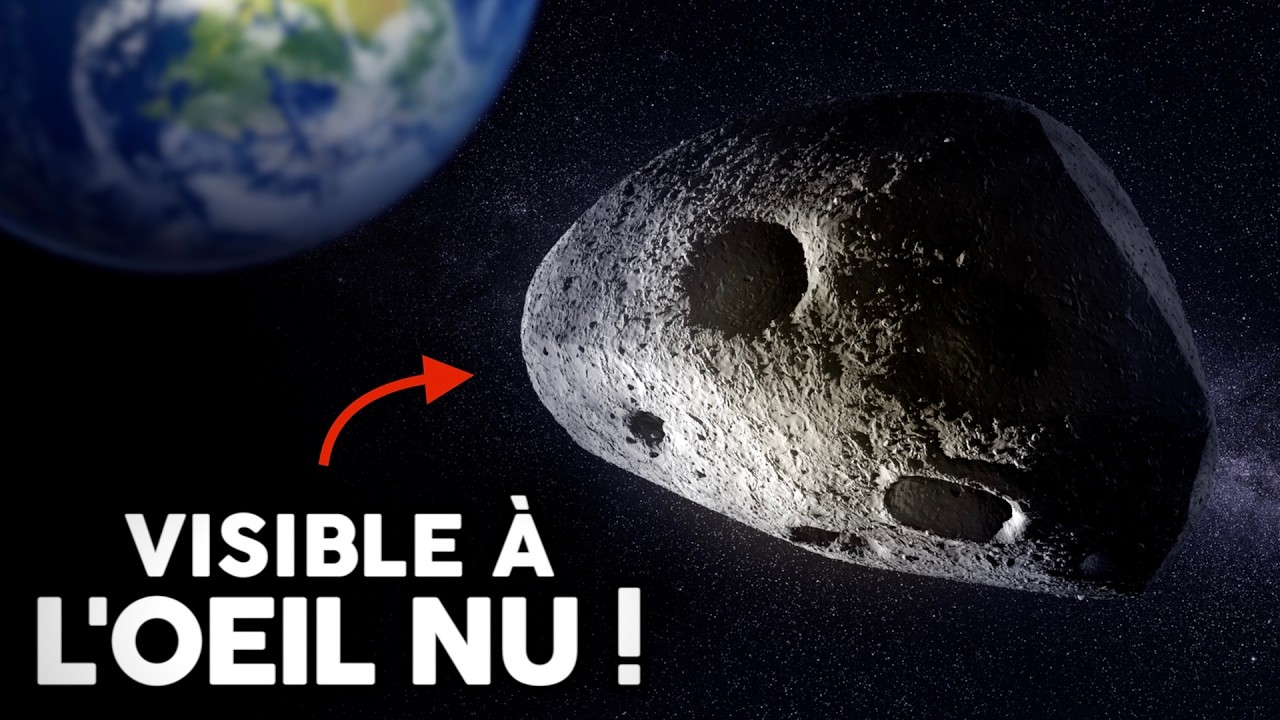
L'ASTÉROÏDE qui nous rendra visite en 2029...
THE ASTEROID that will visit us in 2029...
Keywords
Summary
174 words
Critical Evaluation
Value of the Information & Strength of the Argument
The video provides substantial value by synthesizing up-to-date information about Apophis, correcting earlier misconceptions, and clearly explaining both the risks and the scientific benefits. The argumentation is solid, using credible sources and logical reasoning. The creator effectively differentiates between myth and reality, such as the likelihood of an impact and the actual consequences, while underscoring the uniqueness of the 2029 event. The explanations of orbital mechanics and impact physics are accessible without being oversimplified, and the use of analogies (e.g., comparing the asteroid’s size to the Eiffel Tower) aids understanding.
Scientific Rigor, Source Quality, Title Accuracy
The video demonstrates strong scientific rigor by referencing well-known astronomical sources and providing a list of links in the description, including NASA’s Sentry page, Wikipedia articles, and reliable science news outlets. The content aligns with current knowledge about Apophis, and the creator correctly mentions the missions and their objectives. The title is appropriate and does not sensationalize the content, as the video itself emphasizes both the interest and the lack of immediate danger. The video’s topical accuracy is supported by its consistency with available data, and the inclusion of the 2036 return context adds depth. The only minor issue is a mispronunciation of ‘Aten’ as ‘Athènes’, but this does not detract from the overall reliability.
220 words
Title / Content Match
The title accurately reflects the content: the video focuses on the asteroid Apophis and its planned close approach in 2029, including historical context, potential impact scenarios, and upcoming space missions.
Quality & Reliability
8/10
The video is scientifically accurate, well-documented, and provides a balanced account of Apophis. Minor mispronunciations (e.g., 'Athènes' for 'Aten') do not affect the content. The presentation is engaging and educational, with sources provided in the description.
Chapters
Cited Sources
- Sentry: Earth Impact Monitoring — JPL's Sentry system for monitoring potential asteroid impacts, referenced for risk assessment.
- 99942 Apophis - Wikipedia (EN) — Detailed article on Apophis, used for orbital and physical data.
- Échelle de Turin — Wikipédia — French Wikipedia page explaining the Torino scale.
- (29075) 1950 DA — Wikipédia — Article about the asteroid 1950 DA, mentioned as a long-term risk.
- (99942) Apophis — Wikipédia — French Wikipedia page on Apophis.
- OSIRIS-REx: Mission to Apophis (OSIRIS-APEX) — Wikipedia section on the OSIRIS-APEX mission extension.
- L'Europe s'empare de la défense planétaire — CNRS article about European planetary defense, related to Ramses.
- Apophis - NASA Science — NASA's page about Apophis, providing official data.
- Asteroid Apophis - EclipseAtlas — EclipseAtlas page for Apophis, referenced as a source for more info.
- Apophis 2029 : l'ESA lancera la sonde RAMSES... — Article about the ESA Ramses mission.
- L'astéroïde Apophis va passer près de la Terre en 2029... — Numerama article on Apophis preparation.
- OSIRIS-APEX - The Planetary Society — Planetary Society page on the OSIRIS-APEX mission.
Concurring Sources
- NASA Apophis page — Official NASA data confirms the flyby distance and timing.
- Wikipedia: 99942 Apophis — Provides consistent physical and orbital parameters.
External References
Contribution & Novelties
The video offers an updated and comprehensive review of Apophis, integrating recent mission developments (OSIRIS-APEX and Ramses) that were not covered in earlier videos. It corrects outdated impact probabilities and clarifies the actual level of danger, while providing a vivid narrative of the upcoming flyby. The original contribution lies in its synthesis of current data and its accessible explanation of the scientific and observational opportunities.
Pour aller plus loin :
- OSIRIS-APEX mission — Discover the extended NASA mission to study Apophis after its close approach.
- ESA’s Ramses mission — Learn about the European asteroid mission planning to witness the flyby.
- Torino scale — Understand the hazard classification system for impact risk.
111 words
Radar Profile
The radar profile shows high scores in quality and reliability, reflecting accurate content and solid sourcing. The quantity and technical level are moderately high, indicating a dense but accessible presentation. The video balances depth with clarity, making it suitable for a general science audience.