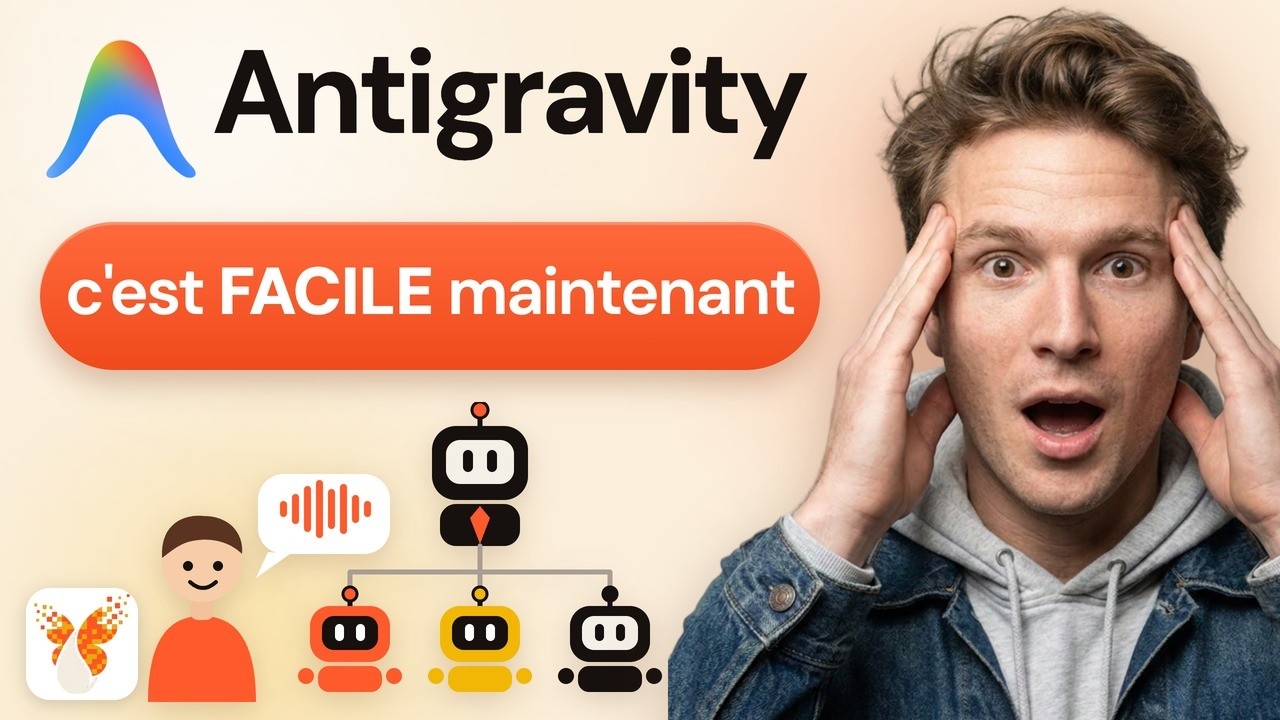
Antigravity de zéro : Gemini travaille SEUL pour 22 € par mois (TUTO)
Antigravity from scratch: Gemini works ALONE for €22 per month (TUTORIAL)
Title history
- Antigravity de zéro : Gemini travaille SEUL pour 22 € par mois (TUTO) — observed on 20261120-1642 UTC (YouTube)
Keywords
Summary
153 words
Critical Evaluation
Value of the Information & Strength of the Argument
The video provides high practical value by demonstrating real-use cases with clear instructions and honest assessment of results. It tests the claims made by Antigravity, such as autonomous remote work and voice mode, and reports both successes and failures. The argumentation is solid, supported by step-by-step evidence and a focus on verification. The creator does not overstate capabilities, acknowledging when results are imperfect, which strengthens credibility. The explanation of cloud vs. local trade-offs and subscription usage is particularly useful for potential users.
Scientific Rigor, Source Quality, Title Accuracy
The scientific rigor is moderate; the video is a tutorial rather than a scientific study. It relies on official documentation and direct experience, which is appropriate for a how-to guide. The sources cited are official Google Antigravity documentation and pricing pages, which are reliable. The title accurately describes the content, and the video’s claims are consistently checked against real outcomes. However, no external scientific sources are referenced, and some information may be outdated as the product evolves.
174 words
Title / Content Match
The title accurately reflects the content: it demonstrates how Gemini in Antigravity can work autonomously via remote agents, and mentions the subscription cost.
Quality & Reliability
8/10
The video provides a hands-on tutorial with real testing, including verification of results and honest reporting of limitations. It relies on official documentation and practical demonstrations, but lacks external scientific sources and some claims are time-sensitive.
Chapters
- La nouveauté de Gemini dans Antigravity
- Antigravity, c'est quoi, et la différence avec Gemini
- Le télécharger et l'ouvrir
- Les 4 notions qui suffisent
- La nouveauté : les projets dans le cloud
- Cloud ou local ? Quand choisir chacun
- Dans le cloud : choisir son prochain téléphone
- /grill-me et /teamwork
- Les permissions : Turbo
- Correction : /grill-me seul, puis /teamwork
- Comment les agents se partagent le travail
- Le suivre depuis son téléphone
- Le résultat, vérifié
- En local et à la voix : une appli pour Leboncoin
- On teste l'appli
- Raté, puis réparé
- Ce que ça a pris sur l'abonnement
- La fin
Cited Sources
- Remote Agents (Google Antigravity Docs) — Official documentation for remote agents feature.
- Custom subagents et /teamwork (Google Antigravity Docs) — Documentation for subagents and teamwork command.
- Voice mode (Google Antigravity Docs) — Documentation for voice mode feature.
- Plans et quotas (Google Antigravity Docs) — Details on subscription plans and quotas.
- Journal des versions (Google Antigravity) — Changelog for Antigravity updates.
- Les offres d'Antigravity (Google) — Pricing page for Antigravity.
- Google AI Pro (Google One) — Subscription plan details for Google AI Pro.
- Antigravity download — Download page for the Antigravity application.
- Antigravity web — Web access to Antigravity projects.
- Gemini — Google's Gemini application used for photo generation in the tutorial.
- Krysalid TV — Channel's website with resources.
- Tutorial resource page — Page with copyable prompts and sources referenced in the video.
Concurring Sources
- Remote Agents Documentation — Supports the claim that remote agents can run in the cloud and continue working.
- Subagents Documentation — Confirms the /teamwork feature and multi-agent orchestration.
External References
Contribution & Novelties
The video contributes a practical, hands-on walkthrough of Antigravity’s remote agents and teamwork features, which are relatively new. It offers a critical evaluation by verifying outputs and sharing both successes and failures, which is valuable for users considering the tool. The explanation of cloud vs. local mode and subscription consumption is particularly original.
Pour aller plus loin :
- Remote Agents — Official documentation for remote agents, directly relevant to the cloud-based teamwork demonstrated.
- Intelligent agent — General concept of AI agents, useful for understanding the underlying technology.
- Google AI Pro — Subscription details for the required plan, relevant to the cost discussion.
102 words
Radar Profile
The radar profile shows high scores in information quality and reliability, reflecting the video's hands-on verification and honest reporting. The moderate technical level suggests it is accessible to a general audience, while the quantity of information is adequate for a tutorial of this length.