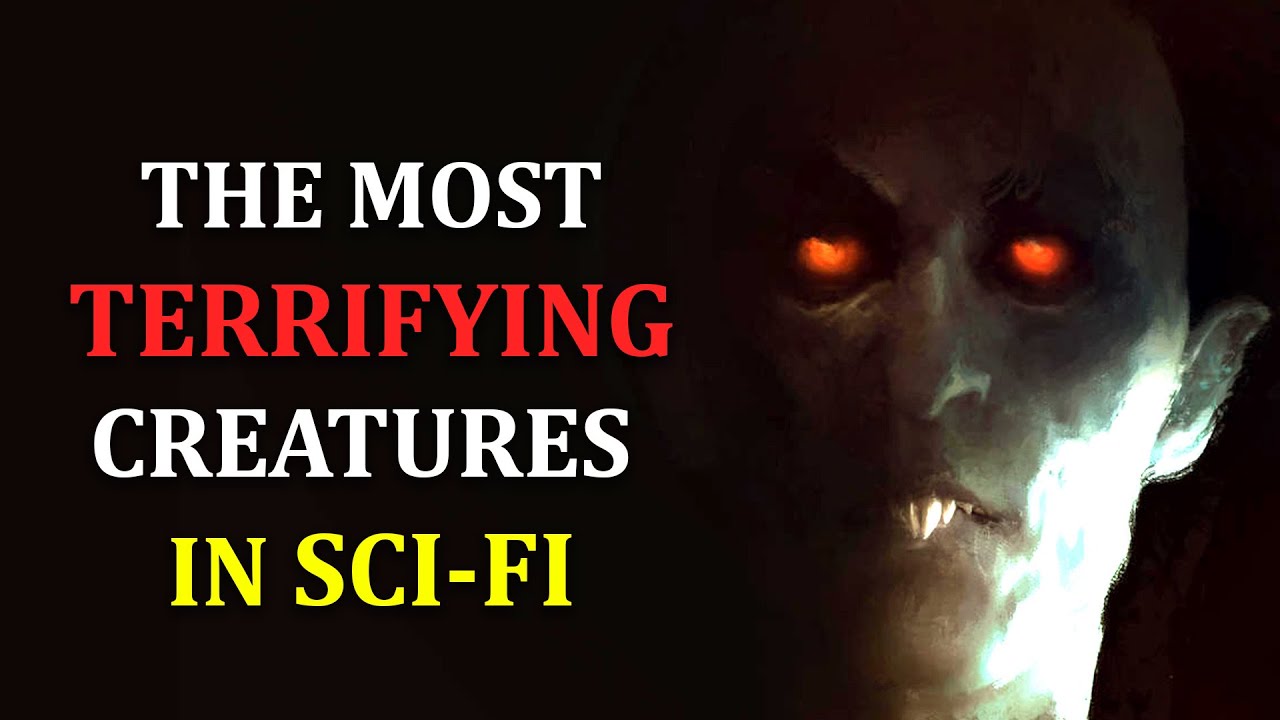
The Most Terrifying Creatures in Science Fiction
Keywords
Summary
225 words
Critical Evaluation
Value of the Information & Strength of the Argument
The video provides valuable insights into how science fiction reinterprets the vampire myth, moving beyond supernatural explanations to biological, evolutionary, and sociological frameworks. The argumentation is solid, using specific examples from four novels to illustrate different approaches. The creator effectively connects each book to broader themes such as pandemic fear, evolutionary competition, ethical consent, and political manipulation. The analysis is thoughtful and well-structured, though it remains an opinion piece rather than a rigorous academic study. The creator’s enthusiasm and knowledge are evident, making the content engaging and informative for viewers interested in science fiction literature.
Scientific Rigor, Source Quality, Title Accuracy
The video demonstrates a good level of scientific rigor in its historical and literary analysis, referencing real folklore cases and scholarly explanations. However, it does not provide formal citations or sources beyond the books themselves, and the creator acknowledges a minor error (mispronouncing George A. Romero’s name). The title accurately reflects the content, focusing on terrifying creatures in science fiction, specifically vampires. The video is well-researched but relies on the creator’s expertise and interpretation rather than peer-reviewed sources.
188 words
Title / Content Match
The title accurately reflects the content, which focuses on terrifying creatures in science fiction, specifically vampires.
Quality & Reliability
7/10
The video is a well-structured literary analysis by a knowledgeable creator, grounded in specific texts and historical context. However, it is an opinion piece without formal citations or peer-reviewed sources, and includes a minor factual error (Romero's name) acknowledged by the creator.
Key Moments
Markers derived by PSI from the transcript: the creator did not define chapters.
- Introduction and Halloween theme, setting up the topic of vampires in science fiction.
- Historical origins of vampires in Eastern European folklore, including cases like Petar Blagojevich and Arnold Paole.
- Scientific explanations for vampire beliefs, such as decomposition and rabies.
- Literary evolution from Polidori to Stoker, establishing classic vampire tropes.
- Introduction to science fiction vampires and the question of what a vampire represents in the modern age.
- Analysis of Richard Matheson's 'I Am Legend' and its pandemic-based vampires.
- Analysis of Peter Watts's 'Blindsight' and its evolutionary vampires.
- Analysis of Octavia Butler's 'Fledgling' and its symbiotic vampires.
- Analysis of Dan Simmons's 'Carrion Comfort' and its psychic vampires.
- Conclusion summarizing the themes and the modern relevance of vampires.
Cited Sources
- Art credits document — Credits for artwork used in the video.
- Quinn's Website — Author's official website.
- Quinn's Shop — Merchandise and books.
- Quinn's Graphic Novel — Promotion of author's graphic novel.
- Subreddit — Community discussion.
- Lovecraft Playlist — Related videos on Lovecraft.
- Dune Playlist — Related videos on Dune.
- Foundation Playlist — Related videos on Foundation.
- Hyperion Playlist — Related videos on Hyperion.
- Three-Body Playlist — Related videos on Three-Body Problem.
Concurring Sources
- Vampire - Wikipedia — Provides historical and cultural context for vampire myths, supporting the video's background.
- I Am Legend - Wikipedia — Confirms the novel's plot and themes, aligning with the video's analysis.
- Blindsight - Wikipedia — Confirms the novel's premise and themes, aligning with the video's analysis.
- Fledgling - Wikipedia — Confirms the novel's plot and themes, aligning with the video's analysis.
- Carrion Comfort - Wikipedia — Confirms the novel's plot and themes, aligning with the video's analysis.
Dissenting Sources
- Comment on Romero's name — The creator mispronounced George A. Romero's name, a minor factual error acknowledged in the comments.
Contribution & Novelties
The video offers a fresh perspective by focusing specifically on science fiction vampires, a niche often overshadowed by traditional gothic portrayals. It synthesizes four distinct novels to show how the vampire myth adapts to modern anxieties, providing a coherent framework for understanding these reinterpretations. The analysis is insightful and accessible, making it a valuable resource for both fans and scholars.
Pour aller plus loin :
- Vampire folklore — Provides background on the historical and cultural origins of vampire myths.
- Richard Matheson — Author of ‘I Am Legend’, influential in horror and science fiction.
- Peter Watts (author) — Author of ‘Blindsight’, known for hard science fiction.
- Octavia Butler — Author of ‘Fledgling’, celebrated for her speculative fiction.
- Dan Simmons — Author of ‘Carrion Comfort’ and ‘Hyperion’.
125 words
Radar Profile
The radar profile shows high scores in information quantity and quality, with moderate technical depth and reliability. This indicates a well-researched and informative video that is accessible to a general audience, though it lacks formal academic rigor.
💬 Très positif. Sur les 30 commentaires analysés, l'écrasante majorité exprime une admiration profonde pour la qualité du contenu, la profondeur de l'analyse et la valeur éducative de la vidéo, avec quelques suggestions de lectures supplémentaires et des éloges pour le style de présentation.