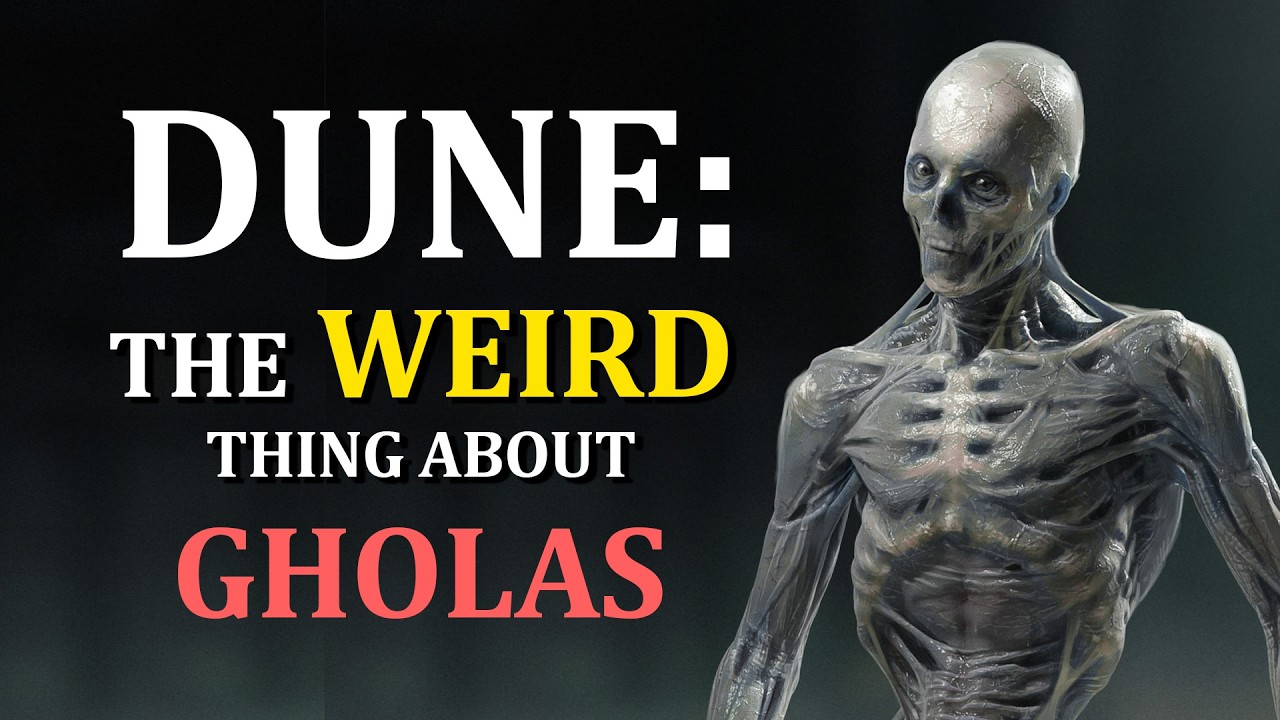
Dune: The Weird Thing About Gholas
Keywords
Summary
142 words
Critical Evaluation
Value of the Information & Strength of the Argument
The video offers a compelling and well-structured argument, supported by direct quotes from the novels. Quinn presents multiple pieces of textual evidence to support his theory that Hayt was a reanimated corpse, while also acknowledging alternative interpretations. The reasoning is logical and transparent, and he openly discusses the speculative nature of some points. The value lies in its detailed literary analysis and its ability to highlight subtle inconsistencies that enrich the reader’s understanding of the Dune universe.
Scientific Rigor, Source Quality, Title Accuracy
The video demonstrates a strong familiarity with the source material, citing specific passages from Dune Messiah and God Emperor of Dune. However, it relies solely on the novels themselves and does not reference any secondary scholarly sources or author interviews. The title accurately reflects the content, and the video stays on topic throughout. The analysis is rigorous within the bounds of literary interpretation, but it is not a scientific or historical study.
164 words
Title / Content Match
The title accurately reflects the content, which focuses on the peculiarities and inconsistencies in the depiction of gholas across the Dune series.
Quality & Reliability
7/10
The video provides a well-reasoned analysis based on close reading of the Dune novels, with direct quotes and references. However, it is largely interpretive and speculative, with no external scholarly sources or verification.
Key Moments
Markers derived by PSI from the transcript: the creator did not define chapters.
- Introduction to the topic and sponsorship segment.
- Discussion of the discrepancy between Hayt's age and later gholas.
- Reading of the passage from Dune Messiah about preserving Duncan's corpse.
- Analysis of Bijaz's statement about putting Duncan's dead flesh into the tank.
- Examination of the description in God Emperor of Dune about growing Duncan from cells.
- Discussion of the axolotl tanks being female Tleilaxu and the implications.
- Conclusion and invitation for comments.
Cited Sources
- Art credits document — List of artists whose work is used in the video.
- Quinn's website — Author's official website with links to books and other content.
- Quinn's subreddit — Community discussion forum for the channel.
Concurring Sources
- Dune Messiah (novel) — Primary source text that the video analyzes.
- God Emperor of Dune (novel) — Primary source text that provides later descriptions of ghola creation.
Dissenting Sources
- Dune (novel) — The first novel does not mention gholas, and its depiction of Duncan's death is the starting point for the discussion.
External References
Contribution & Novelties
The video provides a fresh perspective on a long-debated topic among Dune fans, offering a coherent theory that reconciles the apparent inconsistencies in the portrayal of gholas. It encourages readers to look more closely at the text and consider the author’s intent.
Pour aller plus loin :
- Ghola (Dune wiki) — Detailed fan wiki article on gholas, including various interpretations.
- Axlotl tank (Dune wiki) — Explanation of the tanks and their role in ghola creation.
- Dune Messiah (novel) — Wikipedia page for the novel, providing context and plot summary.
- Frank Herbert — Biography of the author, offering insight into his writing process and influences.
104 words
Radar Profile
The radar profile shows a balanced performance across all dimensions, with slightly higher scores in information quantity and quality, reflecting the video's strong content and analysis. The lower technical level score indicates that the video is accessible to a general audience, while the reliability score is moderate due to the speculative nature of the analysis.
💬 Très positif. Sur les 30 commentaires analysés, la grande majorité exprime un fort enthousiasme pour la vidéo et le sujet, avec de nombreux éloges pour l'analyse et la présentation, et un engagement actif dans la discussion théorique.