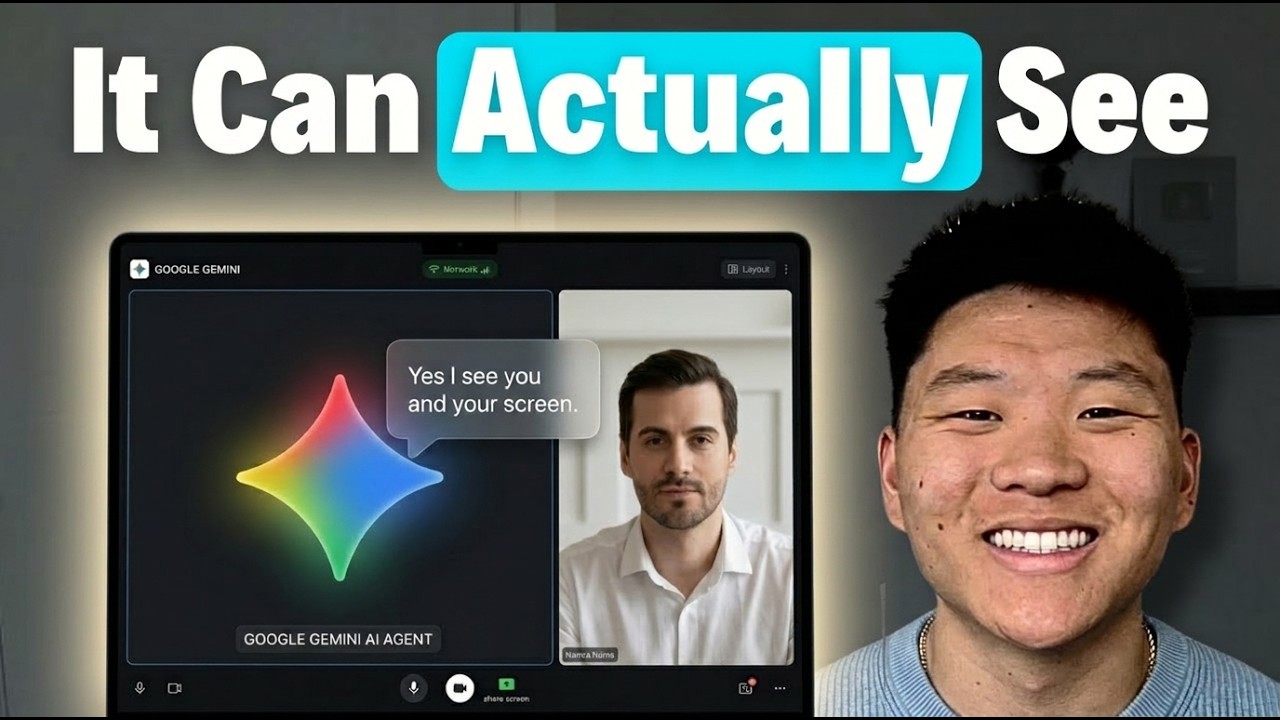
Gemini 3.1 Flash Live Just Changed Voice Agents Forever
Keywords
Summary
159 words
Critical Evaluation
Value of the Information & Strength of the Argument
The video provides valuable, hands-on demonstrations of Gemini 3.1 Flash Live, showing real-world applications like a website widget and a calendar/ClickUp assistant. The argumentation is persuasive, backed by live demos and practical examples, though it leans heavily on the model’s promotional claims. The creator’s approach of using Claude Code to build demos is insightful, but the argument would be stronger with independent benchmarks or comparisons to other voice models.
Scientific Rigor, Source Quality, Title Accuracy
The video references Google’s official documentation and benchmarks, but these are presented without critical scrutiny. The description includes links to the creator’s own courses and tools, which are promotional rather than scientific sources. The title is somewhat clickbait but the content does focus on the new model’s capabilities. The video is a tutorial, not a scientific review, so the lack of independent sources is expected, but the reliance on vendor claims limits its scientific rigor.
159 words
Title / Content Match
The title is somewhat hyperbolic but accurately reflects the video's focus on the new model's capabilities and potential impact on voice agents.
Quality & Reliability
7/10
The video provides a hands-on demonstration of Gemini 3.1 Flash Live, with practical examples and pricing details. However, it relies heavily on promotional claims from Google and lacks independent verification or critical analysis of limitations.
Chapters
Cited Sources
- Google AI Studio — Mentioned as the free platform to try Gemini 3.1 Flash Live.
- Gemini Live API documentation — Referenced for understanding how to connect the voice model to external tools.
- Claude Code — Used to build the demo applications and integrate the voice model.
- ElevenLabs — Mentioned as an alternative platform for easier voice agent deployment.
Concurring Sources
- Google AI Blog: Gemini 3.1 Flash Live — Official announcement and benchmarks supporting the video's claims.
Dissenting Sources
- Community feedback on latency issues — Some users in the comments reported latency issues during function calls, which the video acknowledges but does not fully address.
External References
Contribution & Novelties
The video offers a practical, hands-on look at Gemini 3.1 Flash Live, demonstrating its capabilities and limitations in real-world scenarios. It provides a clear workflow for building voice agents using Claude Code, which is valuable for developers. The comparison with ElevenLabs and the discussion of deployment challenges add practical insights.
Pour aller plus loin :
- Gemini Live API documentation — Official API reference for building with the model.
- WebSocket protocol — Technical foundation for real-time communication used in the demos.
- Function calling in LLMs — Concept of enabling models to interact with external tools, relevant to the function calling feature.
100 words
Radar Profile
The radar profile shows high scores in information quantity and technical level, reflecting the video's detailed demonstrations and technical depth. However, the lower reliability score indicates a reliance on vendor claims and lack of independent verification.
💬 Très positif — Sur les 30 commentaires analysés, l'enthousiasme domine, avec des utilisateurs impressionnés par la rapidité et les applications potentielles, notamment pour le support client et l'accessibilité.