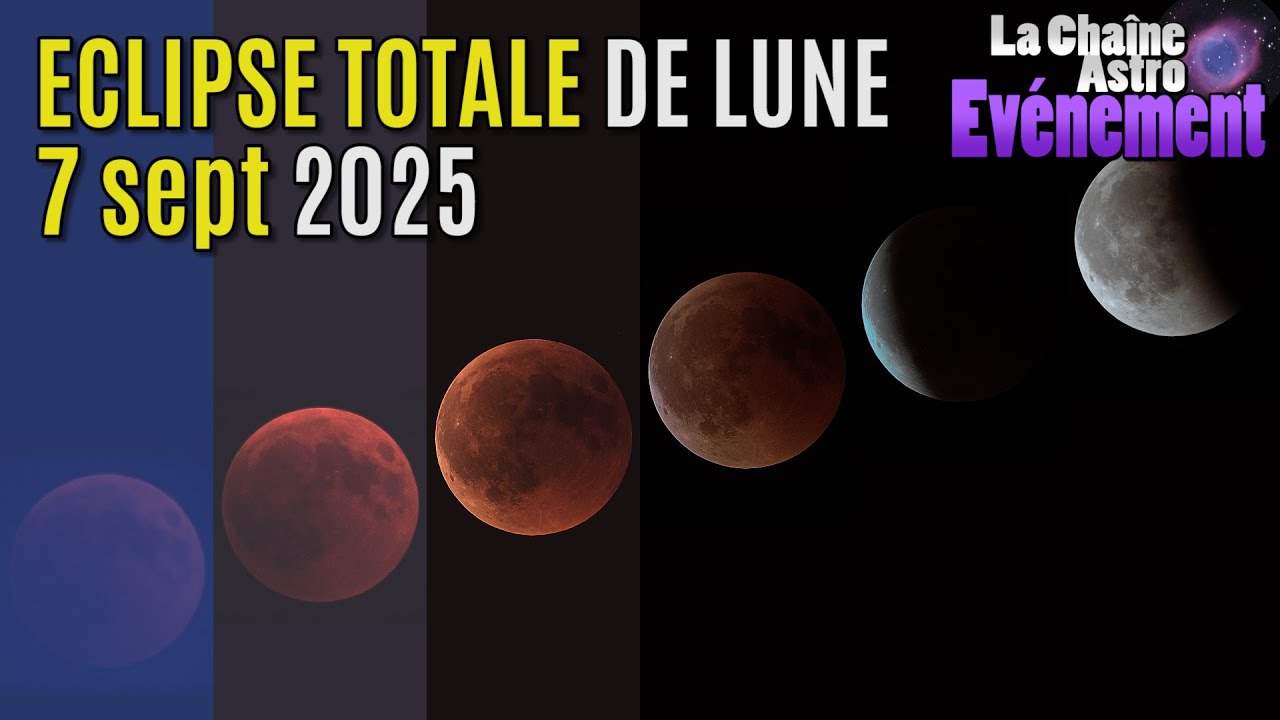
ECLIPSE TOTALE du 7 septembre 2025 : Guide d'observation (MAJ)
Keywords
Summary
189 words
Critical Evaluation
Value of the Information & Strength of the Argument
The video provides valuable, actionable information for amateur astronomers, especially those in France. The advice on observing the eclipse at moonrise, the use of alignment techniques, and the recommendation to use Peakfinder for scenic views are practical and well-explained. The argumentation is clear and logical, explaining the geometry of eclipses and the visibility conditions. The creator’s personal experience (e.g., the 2018 eclipse) adds credibility. The step-by-step demonstration of using official websites to obtain local times is particularly useful.
Scientific Rigor, Source Quality, Title Accuracy
The scientific rigor is high: the creator cites authoritative sources such as NASA’s Eclipse website, the IMCCE, and the Paris Observatory. The information is accurate and up-to-date. The title accurately reflects the content, and the video fulfills its promise as a guide. The description includes relevant links to official resources, which enhances the reliability. The only minor issue is a slight imprecision in some times, but these are corrected by referring to the official sources. The video does not contain any advertising or sponsored content.
178 words
Title / Content Match
The title accurately reflects the content: a guide to observing the total lunar eclipse on September 7, 2025, with updates.
Quality & Reliability
8/10
The video provides accurate and up-to-date information about the total lunar eclipse of September 7, 2025, with precise times and visibility maps. The creator cites authoritative sources (NASA, IMCCE, Paris Observatory) and gives practical advice. Minor inaccuracies in timing details are corrected by referencing official sources.
Key Moments
Markers derived by PSI from the transcript: the creator did not define chapters.
- Introduction: announcement of the total lunar eclipse on September 7, 2025, and overview of the guide.
- Explanation of the eclipse phenomenon: the Moon enters Earth's shadow, with three phases (penumbral, partial, total).
- Visibility map: different regions see different parts of the eclipse; for France, the eclipse occurs at moonrise.
- Practical advice: find a clear eastern horizon, use alignment tricks, and wait for the sky to darken.
- Use of Peakfinder to plan a scenic observation spot.
- Demonstration of IMCCE and Paris Observatory websites to get local times for moonrise and eclipse phases.
- Conclusion: invitation to a live observation and call to subscribe.
Cited Sources
- NASA Eclipse: LE2025Sep07T — Official NASA PDF with eclipse predictions and diagrams.
- Observatoire de Paris: L'éclipse totale de Lune du 7 septembre 2025 — Paris Observatory page with detailed information and local circumstances.
- IMCCE: Lunar Eclipses - 2025-09-07 — IMCCE tool to compute local eclipse times.
- Peakfinder — Website to visualize the trajectory of the Moon and find scenic observation spots.
Concurring Sources
- NASA Eclipse Web Site — Official NASA resource for eclipse predictions and data.
- IMCCE - Lunar Eclipses — IMCCE tool for computing eclipse circumstances.
External References
Contribution & Novelties
The video provides a practical, up-to-date guide for observing the September 7, 2025 total lunar eclipse, with specific emphasis on the challenging conditions in France (moonrise at sunset). It offers original tips such as using alignment techniques and Peakfinder to enhance the experience. The demonstration of using official websites to get local times is a valuable addition.
Pour aller plus loin :
- Lunar eclipse - Wikipedia — General background on lunar eclipses.
- Danjon scale - Wikipedia — Scale to measure the darkness of a lunar eclipse.
- NASA Eclipse Web Site — Official NASA resource for eclipse predictions and data.
99 words
Radar Profile
The radar profile shows high scores in quality and reliability, with moderate scores in quantity and technical level. This indicates a focused, well-sourced tutorial that provides essential information without overwhelming detail.
💬 No comments were provided for analysis.