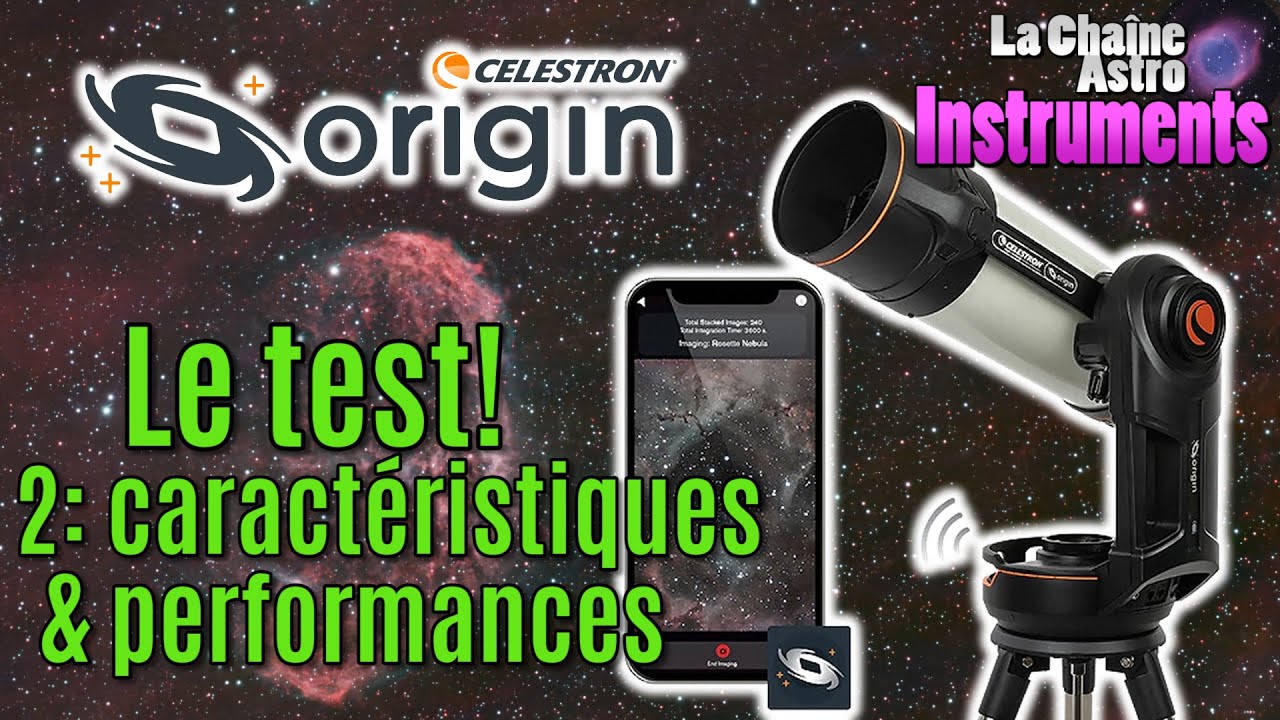
Celestron Origin : Caractéristiques et performances... le test! (partie 2)
Keywords
Summary
179 words
Critical Evaluation
Value of the Information & Strength of the Argument
The video provides valuable, practical information based on the presenter’s direct experience with the Celestron Origin in diverse environments. The argumentation is solid, as the presenter supports his claims with specific examples and test results. He demonstrates the telescope’s performance with actual images and discusses both strengths and weaknesses, such as battery life in cold weather and wind sensitivity. The reasoning is logical and grounded in hands-on testing, making the information credible for potential buyers.
Scientific Rigor, Source Quality, Title Accuracy
The scientific rigor is moderate; the video is an expert opinion rather than a formal study. The presenter references the product’s specifications and historical context, but does not cite external scientific literature. The sources cited are primarily product pages from a retailer (Medas Instruments) and links to other YouTube channels, which are relevant but not academic. The title accurately reflects the content, as the video indeed focuses on characteristics and performance testing. The presenter’s expertise in astronomy adds credibility, but the lack of independent verification limits the overall scientific rigor.
180 words
Title / Content Match
The title accurately reflects the content: a detailed test of the Celestron Origin's features and performance.
Quality & Reliability
7/10
The video is a hands-on review by an experienced amateur astronomer, covering technical specs and field tests in various conditions. Claims are based on personal experience and product documentation, but not peer-reviewed. The presenter is transparent about limitations and provides practical advice.
Key Moments
Markers derived by PSI from the transcript: the creator did not define chapters.
- Introduction to the video's focus: RASA design and field tests.
- History of the Schmidt telescope and the RASA design.
- Specifications of the Celestron Origin: 152mm aperture, f/2.2, IMX178 sensor.
- Overview of the components: Raspberry Pi, StarSense, SkyPortal, etc.
- Field test in countryside and at a public star party.
- City test from a balcony with light pollution filter.
- High-altitude test at Saint-Véran: cold weather and wind performance.
Cited Sources
- Celestron Origin product page — Product specifications and purchase link.
- RASA 8 product page — Reference to the RASA 8 telescope.
- RASA 11 product page — Reference to the RASA 11 telescope.
- RASA 14 product page — Reference to the RASA 14 telescope.
- StarSense camera product page — Component used in the Origin.
- SkyPortal WiFi adapter product page — Component used in the Origin.
- PowerTank Lithium product page — Power supply option.
- External battery product page — Power supply option.
- Dew heater controller product page — Dew control component.
- Dew heater controller (4 ports) product page — Dew control component.
- NexImage 5MP camera product page — Camera mentioned in the video.
- StarSense camera for Celestron product page — Camera alignment component.
- Light pollution filter product page — Filter tested in the video.
- Carrying bag product page — Accessory for the Origin.
- Univers Astro (affiliate link) — Affiliate link for purchases.
- Carnets astro YouTube channel — Recommended channel.
- Enastros Astronomie YouTube channel — Recommended channel.
- Jean-Luc Dauvergne YouTube channel — Recommended channel.
- Big Universe YouTube channel — Recommended channel.
Concurring Sources
- Celestron Origin product page — Confirms specifications and features.
Contribution & Novelties
This video provides a practical, hands-on evaluation of the Celestron Origin smart telescope, offering insights into its performance in real-world conditions (city, countryside, high altitude, cold, wind). It highlights the RASA optical design’s advantages for astrophotography and discusses the upgrade path for the camera sensor. The presenter’s experience adds value for potential buyers, especially beginners.
Pour aller plus loin :
- Rowe-Ackermann Schmidt Astrograph (RASA) — Background on the optical design.
- Schmidt camera — Historical context of the Schmidt design.
- Sony IMX178 sensor — Technical details of the sensor used.
- Celestron Origin official page — Manufacturer’s product information.
- Bortle scale — Context for light pollution levels mentioned.
106 words
Radar Profile
The radar profile shows high scores in information quantity and technical level, reflecting the detailed specifications and field tests. The quality and reliability scores are moderate, indicating a subjective review with practical insights but lacking formal scientific rigor.