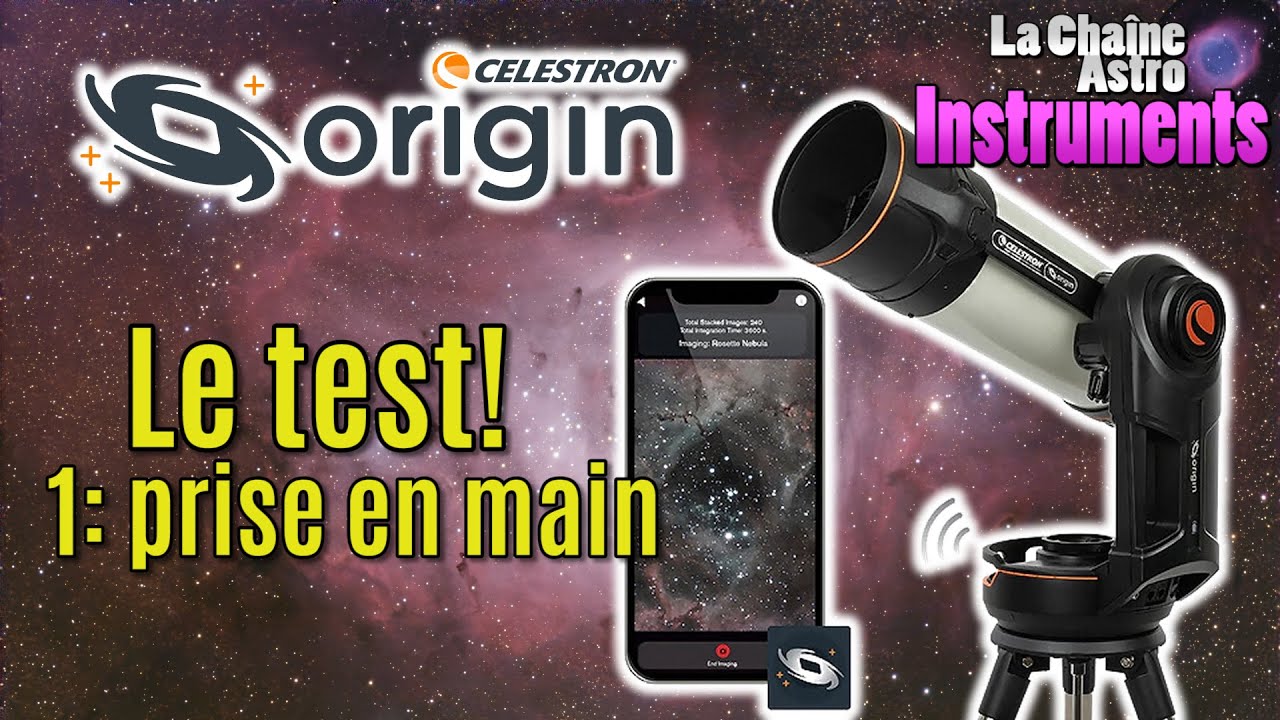
Celestron ORIGIN : Test! (p1 : installation - prise en main - 1ères photos)
Keywords
Summary
160 words
Critical Evaluation
Value of the Information & Strength of the Argument
The video provides valuable practical information for potential buyers of the Celestron Origin, covering the entire initial setup process and first-light experience. The argumentation is based on the host’s direct experience, which adds credibility, but it is largely anecdotal and lacks comparative data or quantitative measurements. The host clearly explains the technical aspects of the telescope, such as the RASA design and the role of the Raspberry Pi, but does not provide a deep scientific analysis of image quality or performance metrics.
Scientific Rigor, Source Quality, Title Accuracy
The video is a tutorial and personal review, not a scientific study. The host mentions that the telescope was provided by the French distributor Medas Instruments, but states he has full editorial freedom. The sources cited are primarily product pages from the distributor and links to other YouTube channels, which are not scientific references. The title accurately reflects the content, which is focused on installation, first use, and initial photos. The video does not engage with any academic literature or independent testing data.
180 words
Title / Content Match
The title accurately reflects the content: installation, first use, and initial photos of the Celestron Origin.
Quality & Reliability
7/10
The video is a hands-on tutorial by an amateur astronomer with practical experience, but it lacks rigorous scientific methodology and independent verification of claims. The information is largely subjective and based on personal testing.
Key Moments
Markers derived by PSI from the transcript: the creator did not define chapters.
- Introduction to the Celestron Origin and the test plan
- Tripod setup and leveling
- Mounting the optical tube and balancing
- Explanation of the telescope's design and electronics
- First light: connecting the app and automatic alignment
- Target selection and live stacking of the Crescent Nebula
- Review of the final stacked image and conclusion
Cited Sources
- Celestron Origin telescope product page — Product page for the Celestron Origin, mentioned as the telescope under test.
- Carrying bag for Celestron Origin — Optional carrying bag recommended by the host.
- Nebula filter for Celestron Origin — Optional filter for nebulae, mentioned for future tests.
- Carnets astro YouTube channel — Recommended channel by the host.
- Enastros Astronomie YouTube channel — Recommended channel by the host.
- Jean-Luc Dauvergne YouTube channel — Recommended channel by the host.
- Big Universe YouTube channel — Recommended channel by the host.
Concurring Sources
- Celestron Origin product page — The product page confirms the specifications mentioned in the video, such as the 150mm aperture and RASA design.
Contribution & Novelties
The video offers a practical, hands-on review of the Celestron Origin, a relatively new smart telescope, from a French amateur astronomer’s perspective. It provides a detailed walkthrough of the setup and first-light experience, which is valuable for potential buyers. The host’s emphasis on the ease of use and the integrated stacking process highlights the telescope’s potential to lower the barrier to entry for astrophotography.
Pour aller plus loin :
- Schmidt camera — The optical design of the Celestron Origin is based on a Schmidt camera, which uses a corrector plate and spherical mirror.
- Astrometry — The telescope uses astrometry for automatic alignment, a technique that identifies star patterns to determine pointing.
- Image stacking — The process of combining multiple exposures to improve signal-to-noise ratio, as demonstrated in the video.
129 words
Radar Profile
The radar profile shows a balanced performance across all dimensions, with slightly higher scores in information quantity and quality, reflecting the video's practical tutorial nature. The technical level is moderate, suitable for a general audience, while reliability is adequate given the hands-on approach.