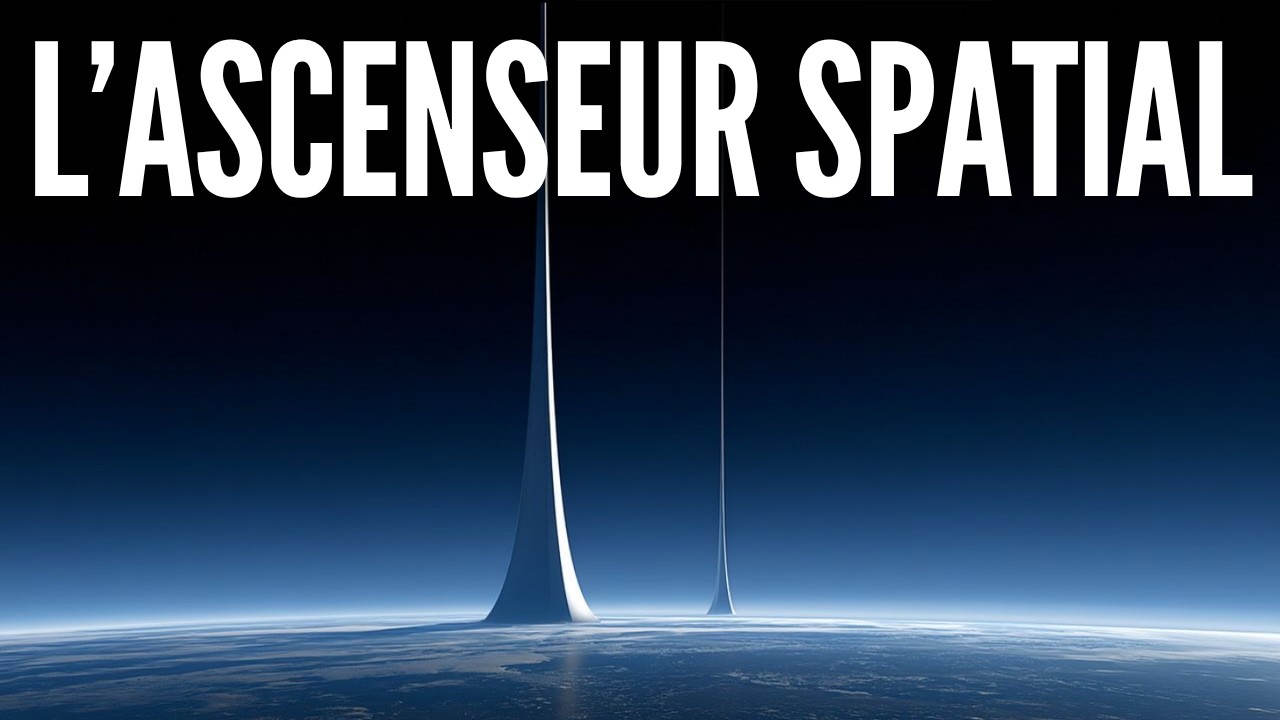
L’IA DÉCOUVRE DÉJÀ des MATÉRIAUX qui changent TOUT (ascenseur spatial compris)
Keywords
Summary
166 words
Critical Evaluation
The video is a high-quality science communication piece that effectively explains complex concepts in an accessible manner. The argumentation is solid, building from the fundamental physics of rocketry to the engineering challenges of a space elevator, and finally to the role of AI in materials discovery. The scientific accuracy is generally high: the explanation of the rocket equation, orbital mechanics, and the material properties of carbon nanotubes are correct. The video appropriately distinguishes between established science and speculative future applications, and it does not overstate the current feasibility of the space elevator. The sources cited include a Nature paper on AI-driven materials discovery, which adds credibility. The video also mentions the dangers of space debris and radiation, showing a balanced view. The only minor weakness is that the role of AI is somewhat secondary to the main narrative, and the video could have delved deeper into the specifics of how AI is being used in materials science. However, overall, the video is rigorous, well-researched, and provides a comprehensive overview of the topic. The public comments are overwhelmingly positive, praising the clarity and quality of the content, with no significant criticism or controversy.
192 words
Title / Content Match
The title accurately reflects the content, which covers the space elevator concept and the role of AI in discovering new materials, though the emphasis is more on the space elevator than on AI.
Quality & Reliability
8/10
The video presents a well-structured and accurate overview of the space elevator concept, grounded in established physics and engineering principles. It correctly explains orbital mechanics, the tyranny of the rocket equation, and the material challenges. The claims are consistent with current scientific understanding, and the video cites a Nature paper on AI-driven materials discovery. Minor simplifications are appropriate for a general audience, and the video clearly distinguishes between established science and speculative future applications.
Chapters
- Pourquoi l’espace coûte encore si cher
- Et si on construisait un ascenseur spatial ?
- Le mur invisible des matériaux
- Pourquoi une tour jusqu’à l’espace est impossible
- Le vrai principe de l’ascenseur spatial
- Le problème du contrepoids
- Une structure de 140 000 kilomètres
- Une catapulte géante vers Mars et Jupiter
- L’équation qui condamne l’acier
- Les nanotubes de carbone : le matériau miracle ?
- Le paradoxe de l’ascenseur spatial
- Les débris spatiaux : le pire scénario
- Le danger des ceintures de Van Allen
- La Lune : le meilleur endroit pour commencer
- L’intelligence artificielle entre en jeu
Cited Sources
- Scaling deep learning for materials discovery — Referenced as a scientific article read during research, likely the basis for the AI materials discovery segment.
- Quand la machine apprend. La révolution des neurones artificiels et de l’apprentissage profond — Recommended book by Yann Le Cun, related to AI and deep learning.
- Interview: L'IA va-t-elle nous dépasser ? Un chercheur démêle le vrai du faux | Science & Vie — Recommended interview with a scientist on AI.
- Christophe Pauly official website — Creator's website, likely for additional content.
Concurring Sources
- Scaling deep learning for materials discovery — The Nature paper supports the claim that AI is discovering new materials, including super-hard ones, which aligns with the video's narrative.
Contribution & Novelties
The video provides a clear and engaging synthesis of the space elevator concept, integrating recent developments in AI-driven materials discovery. It explains the fundamental physics and engineering challenges in an accessible way, and highlights the potential of AI to accelerate the discovery of new materials, such as super-hard materials, that could make the space elevator a reality. The video also discusses the possibility of building a space elevator on the Moon, which is a less common but intriguing idea.
Pour aller plus loin :
- Space elevator - Wikipedia — Comprehensive overview of the concept, history, and challenges.
- Carbon nanotube - Wikipedia — Detailed information on the properties and synthesis of carbon nanotubes.
- GNoME (Graph Networks for Materials Exploration) — DeepMind’s project on AI-driven materials discovery, directly relevant to the video’s discussion.
- Tsiolkovsky rocket equation - Wikipedia — Fundamental equation explaining rocket efficiency, mentioned in the video.
146 words
Radar Profile
The radar profile shows high scores in information quantity and quality, indicating a content-rich and accurate video. The technical level is moderate, suitable for a general audience but with sufficient depth. The overall reliability is high, reflecting the use of credible sources and accurate explanations.
💬 Très positif. Sur les 30 commentaires analysés, la grande majorité exprime une admiration pour la qualité de la vulgarisation, la clarté des explications et la passion du créateur, avec quelques demandes de vidéos supplémentaires sur des sujets connexes.