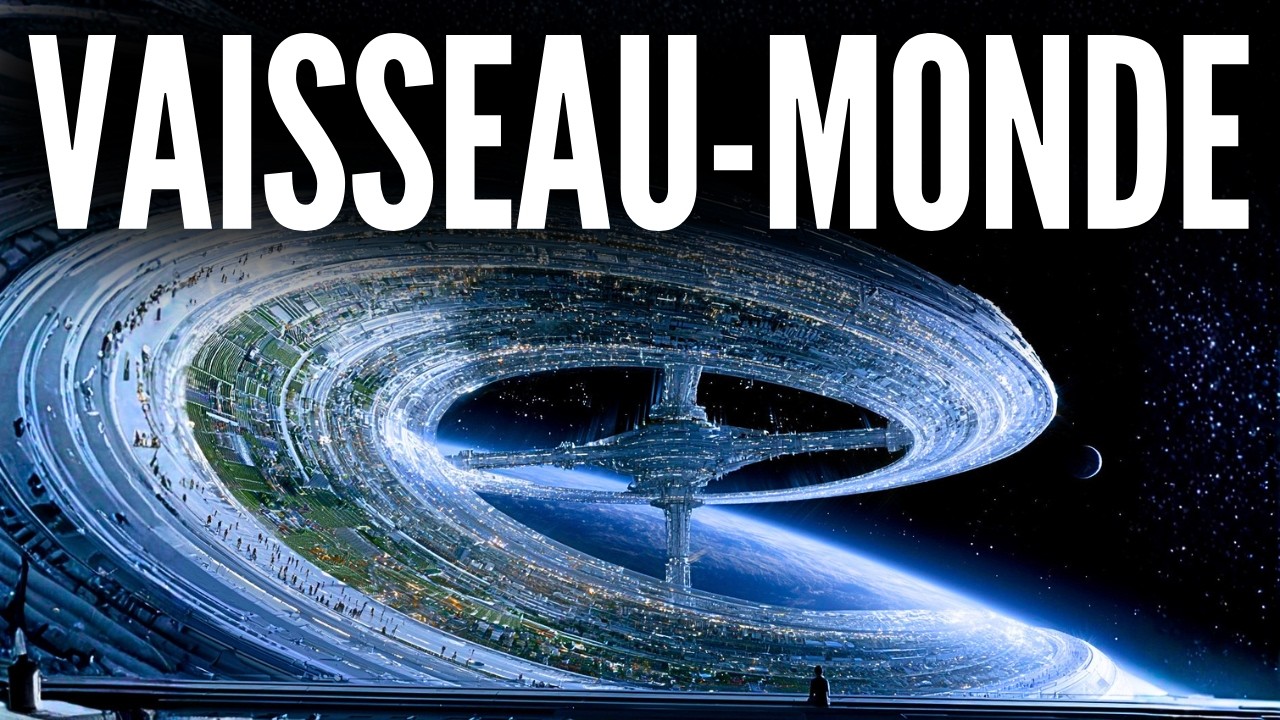
Peut-on CONSTRUIRE un VAISSEAU-MONDE ?
Keywords
Summary
201 words
Critical Evaluation
The video provides a comprehensive and scientifically accurate overview of artificial gravity, effectively balancing theoretical physics with practical engineering considerations. The explanation of Einstein’s equivalence principle is clear and accessible, setting a solid foundation for the subsequent discussion. The use of historical experiments, such as NASA’s slow rotation rooms, adds credibility and illustrates real-world attempts to study the effects of rotation on humans. The discussion of the Coriolis effect is particularly well-done, explaining the physiological challenges in a way that is both understandable and scientifically sound. The video also appropriately addresses the engineering hurdles, such as material strength and the rocket equation, without oversimplifying the complexities. The sources cited in the description, including a scientific article on stellar engines, lend further credibility. However, the video occasionally ventures into speculative territory, such as magnetic gravity, which is clearly labeled as theoretical but could be mistaken for established science by less informed viewers. The pacing is good, and the visuals are engaging, though some AI-generated images may be slightly misleading. Overall, the video is a valuable resource for those interested in space exploration and the future of human spaceflight, offering a balanced and well-researched perspective.
193 words
Title / Content Match
The title accurately reflects the content, which explores the feasibility of constructing world ships and the challenges of artificial gravity.
Quality & Reliability
8/10
The video presents a well-structured and scientifically grounded explanation of artificial gravity concepts, referencing established physics (Einstein's equivalence principle, centrifugal force, Coriolis effect) and historical experiments (NASA's slow rotation rooms). The creator cites sources in the description, including a scientific article on stellar engines. The content is accurate and up-to-date, though some speculative elements (e.g., magnetic gravity) are clearly labeled as theoretical.
Chapters
- Peut-on fabriquer de la gravité ?
- L’humain n’est pas fait pour l’espace
- Le corps s’effondre sans gravité
- Première solution : accélérer
- Faire tourner un vaisseau
- Le piège de la gravité artificielle
- Construire des mondes dans l’espace
- Les premières expériences réelles
- Le retour des stations privées
- Pourquoi Mars change tout
- Peut-on créer une vraie gravité ?
- La piste magnétique
- Science-fiction ou futur possible ?
Cited Sources
- Stellar engines: Design considerations for maximizing acceleration — Referenced in the description as an article read during research, likely related to advanced propulsion concepts.
- L'Univers à portée de main — Recommended book by Christophe Galfard, likely for further exploration of physics concepts.
- Voyage Interstellaire : Réalité ou Science-fiction ? Nicolas Prantzos nous répond — Interview with scientist Nicolas Prantzos, recommended for deeper insight into interstellar travel.
- Christophe Pauly's website — Creator's official website, possibly containing additional resources and information.
Concurring Sources
- NASA's slow rotation room experiments — Historical experiments on human adaptation to rotation, mentioned in the video.
Dissenting Sources
- Magnetic gravity concept — The video briefly mentions magnetic gravity as a speculative idea, but no specific source is cited, and it is not widely accepted in the scientific community.
Contribution & Novelties
The video offers a clear and engaging synthesis of existing knowledge on artificial gravity, making complex physics accessible to a broad audience. It stands out for its balanced treatment of both the promise and the challenges of rotating habitats, and for grounding the discussion in historical experiments and current engineering realities.
Pour aller plus loin :
- O’Neill cylinder — The concept of a rotating space habitat, central to the video’s discussion.
- Coriolis effect — The physical phenomenon that poses challenges for rotating habitats, explained in the video.
- Equivalence principle — Einstein’s foundational idea that gravity and acceleration are locally equivalent, key to artificial gravity concepts.
- Rocket equation — The fundamental constraint on space travel, discussed in the context of linear acceleration.
121 words
Radar Profile
The radar profile shows high scores in information quality and reliability, with slightly lower scores in technical depth and information quantity, indicating a well-balanced but not overly technical presentation.
💬 Très positif : Sur les 30 commentaires analysés, le public exprime une admiration unanime pour la qualité de la vulgarisation, la clarté des explications et le travail de recherche, avec des éloges récurrents sur la pédagogie et le caractère inspirant de la vidéo.