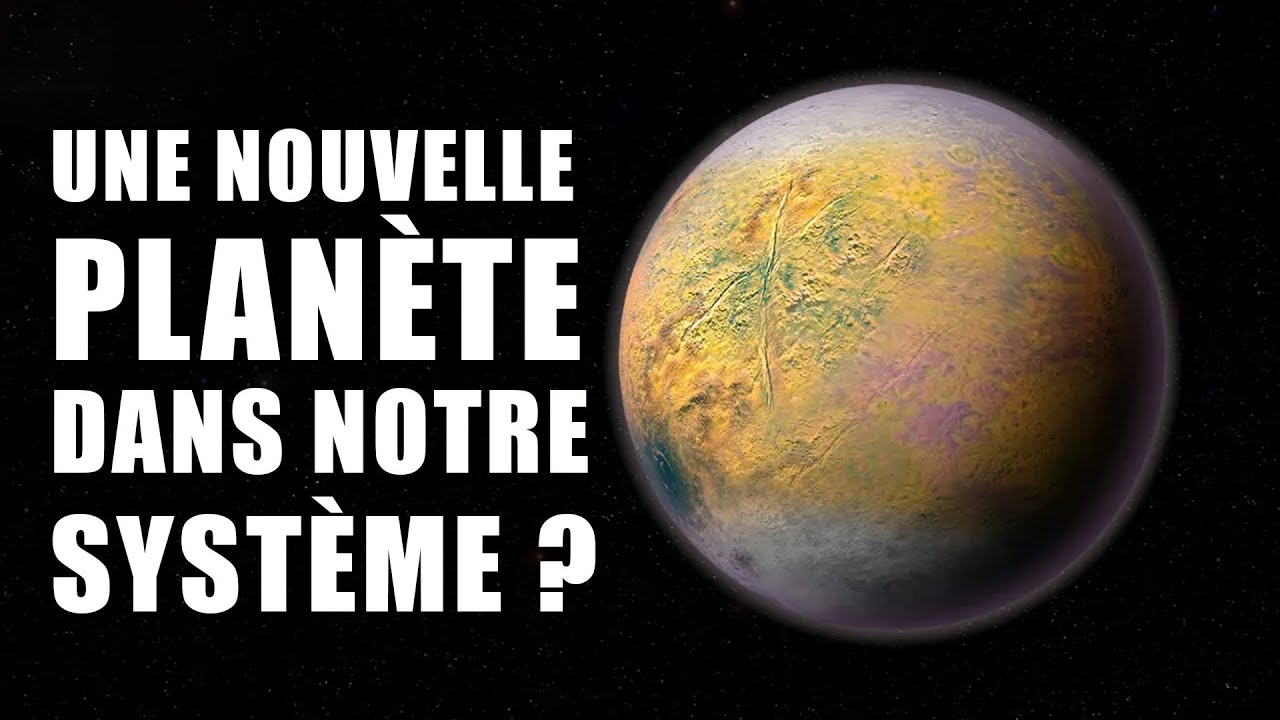
Une NOUVELLE PLANÈTE dans le système solaire (planète Y) ? DNDE 414
Keywords
Summary
161 words
Critical Evaluation
Value of the Information & Strength of the Argument
The video provides valuable information by summarizing recent scientific papers and news articles, making them accessible to a general audience. The argumentation is solid, as the host clearly distinguishes between hypotheses and established facts, and presents multiple perspectives. For example, regarding Planet Y, he explicitly states that it is not a discovery but a proposed explanation for observed orbital anomalies. He also provides context for the Orion/SLS discussion by explaining the budgetary pressures and the potential benefits of commercial launches. The host’s analysis is balanced, acknowledging uncertainties and potential counterarguments.
Scientific Rigor, Source Quality, Title Accuracy
The video demonstrates high scientific rigor by citing primary sources, such as the paper on Planet Y in the Monthly Notices of the Royal Astronomical Society, and reputable news outlets like Ars Technica and European Spaceflight. The host also mentions the Vera Rubin Observatory as a future tool to test these hypotheses. The title accurately reflects the main topic, and the content is well-structured. The video does not overstate claims and clearly labels speculative content. The sources are credible and relevant to the topics discussed.
190 words
Title / Content Match
The title accurately reflects the main topic of the video, which is the potential discovery of a new planet (Planet Y) in the solar system, while also covering other space news.
Quality & Reliability
8/10
The video presents a balanced review of recent space news, citing peer-reviewed research and reputable space news outlets. The host clearly distinguishes between hypotheses and established facts, and provides context for the scientific process. The main limitation is the reliance on secondary sources for some claims, but the overall presentation is rigorous and well-sourced.
Key Moments
Markers derived by PSI from the transcript: the creator did not define chapters.
- Introduction to the episode's topics: Planet Y, Orion/SLS, and Odin's Eye.
- Discussion of the historical discovery of planets and the context of the Kuiper Belt.
- Explanation of the Planet Nine hypothesis and the evidence from trans-Neptunian objects.
- Introduction of the Planet Y hypothesis, its proposed mass and distance.
- Discussion of the limitations of detecting Planet Y and the potential for future missions.
- Segment on Orion potentially being launched on commercial rockets instead of SLS.
- Discussion of the NASA administrator situation and its impact on the agency.
- Segment on the Odin's Eye missile warning satellite system and the European space industry.
Cited Sources
- A new planet in the solar system? (MNRAS paper) — Source for the Planet Y hypothesis.
- Once unthinkable, NASA and Lockheed now consider launching Orion on other rockets — Source for the Orion/SLS discussion.
- White House takes another look at Isaacman for NASA administrator — Source for the NASA administrator news.
- France and Germany agree to implement Odin's Eye missile warning system — Source for the Odin's Eye project.
Concurring Sources
- Planet Nine hypothesis — The video discusses the Planet Nine hypothesis as a separate but related concept.
- Orion spacecraft — The video discusses the potential for Orion to be launched on other rockets.
External References
Contribution & Novelties
The video provides a concise synthesis of recent space news, making complex topics accessible. Its main contribution is the clear explanation of the Planet Y hypothesis and its distinction from Planet Nine, as well as the analysis of the potential shift in NASA’s launch strategy for Orion. The host also highlights the growing European space industry and its military applications.
Pour aller plus loin :
- Kuiper belt — Essential context for understanding the region where Planet Y is hypothesized to exist.
- Vera C. Rubin Observatory — The upcoming survey telescope that may help discover or rule out Planet Y and Planet Nine.
- Artemis program — The NASA program that includes the Orion spacecraft and SLS, relevant to the discussion of their future.
122 words
Radar Profile
The radar profile shows high scores in information quantity, quality, and reliability, with a slightly lower technical level, indicating that the video is well-researched and informative but may not delve into the most technical details. The overall balance suggests a reliable source for space news summaries.
💬 Très positif. Sur les 30 commentaires analysés, la grande majorité exprime de l'appréciation pour la qualité et la rigueur du contenu, avec des remerciements et des encouragements, ainsi que des questions scientifiques pertinentes.