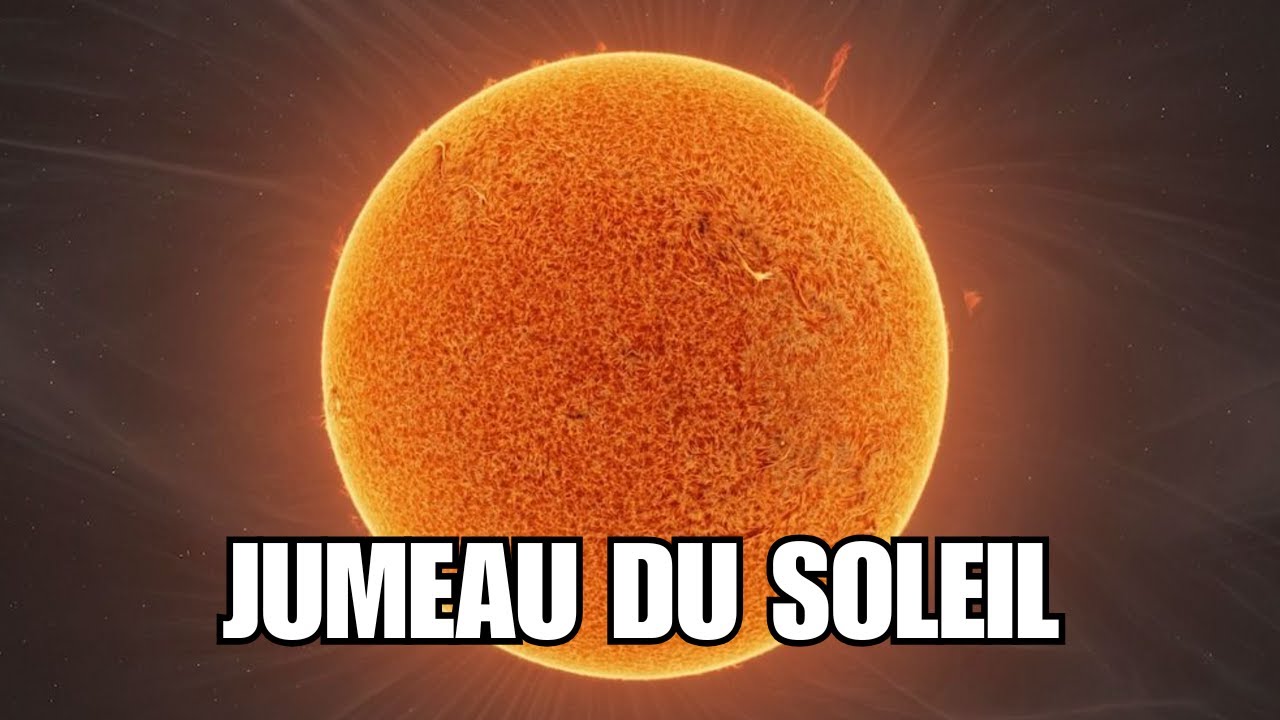
On a trouvé une étoile qui est un jumeau du soleil (née dans la même pouponnière)
Keywords
Summary
137 words
Critical Evaluation
Value of the Information & Strength of the Argument
The video provides a clear and engaging explanation of a complex astrophysical topic. It effectively uses analogies and step-by-step reasoning to build the case for how solar siblings can be identified. The argumentation is solid, presenting both the methods and the limitations, such as the chaotic nature of galactic dynamics over billions of years. The value lies in its ability to make cutting-edge research accessible without oversimplifying the scientific process.
Scientific Rigor, Source Quality, Title Accuracy
The video demonstrates scientific rigor by referencing specific studies and missions, such as the Gaia mission and the 2018 paper identifying HD 186302. The sources cited in the description are relevant and credible. The title accurately reflects the content, and the video maintains a high standard of factual accuracy, though it acknowledges uncertainties in the field.
141 words
Title / Content Match
The title accurately reflects the content, which discusses the discovery of a potential solar twin and the methods used to identify it.
Quality & Reliability
8/10
The video presents a well-structured overview of the search for solar siblings, referencing specific scientific studies and missions (Gaia, HD 162826, HD 186302). The information is accurate and up-to-date, though it simplifies some complexities for a general audience.
Key Moments
Markers derived by PSI from the transcript: the creator did not define chapters.
- Introduction to the new format and its purpose.
- Explanation of the Sun's formation and clues from meteorites.
- Discussion of the Gaia mission and astrometry techniques.
- Chemical analysis as a method to identify solar siblings.
- Presentation of HD 162826 and HD 186302 as candidates.
- Search for exoplanets around the best candidate and future prospects.
Cited Sources
- The chemical composition of the Sun and its possible solar twins — Referenced as a source for the chemical analysis of solar twins.
- HD 186302: A solar twin in the galactic disk — Referenced as the study identifying HD 186302 as a solar twin candidate.
- Astronomers think they can find the Sun's lost siblings — Referenced as a general article on the search for solar siblings.
Concurring Sources
- The chemical composition of the Sun and its possible solar twins — Supports the chemical similarity between the Sun and HD 162826.
- HD 186302: A solar twin in the galactic disk — Provides evidence for HD 186302 as a solar twin, though with some contested aspects.
Dissenting Sources
- Potential discordant source — No discordant sources were mentioned in the video.
External References
Contribution & Novelties
The video provides a concise and up-to-date summary of the search for solar siblings, a niche topic not widely covered in popular science media. It highlights the combination of astrometry and chemical analysis as complementary methods, and presents the current state of research, including the limitations and future prospects with Gaia data.
Pour aller plus loin :
- Gaia mission — Official ESA page for the Gaia mission, providing detailed information on its objectives and results.
- Stellar nucleosynthesis — Wikipedia article explaining the process by which elements are formed in stars, relevant to the chemical signatures discussed.
- HD 162826 — Wikipedia page for the star HD 162826, the strongest solar twin candidate mentioned in the video.
115 words
Radar Profile
The radar profile shows high scores in information quantity, quality, and reliability, with a slightly lower technical level, indicating a well-balanced presentation that is both informative and accessible.
💬 Très positif. Sur les 30 commentaires analysés, les spectateurs expriment un fort enthousiasme pour ce nouveau format, saluant son accessibilité et sa qualité, et demandent la poursuite de ce type de contenu.