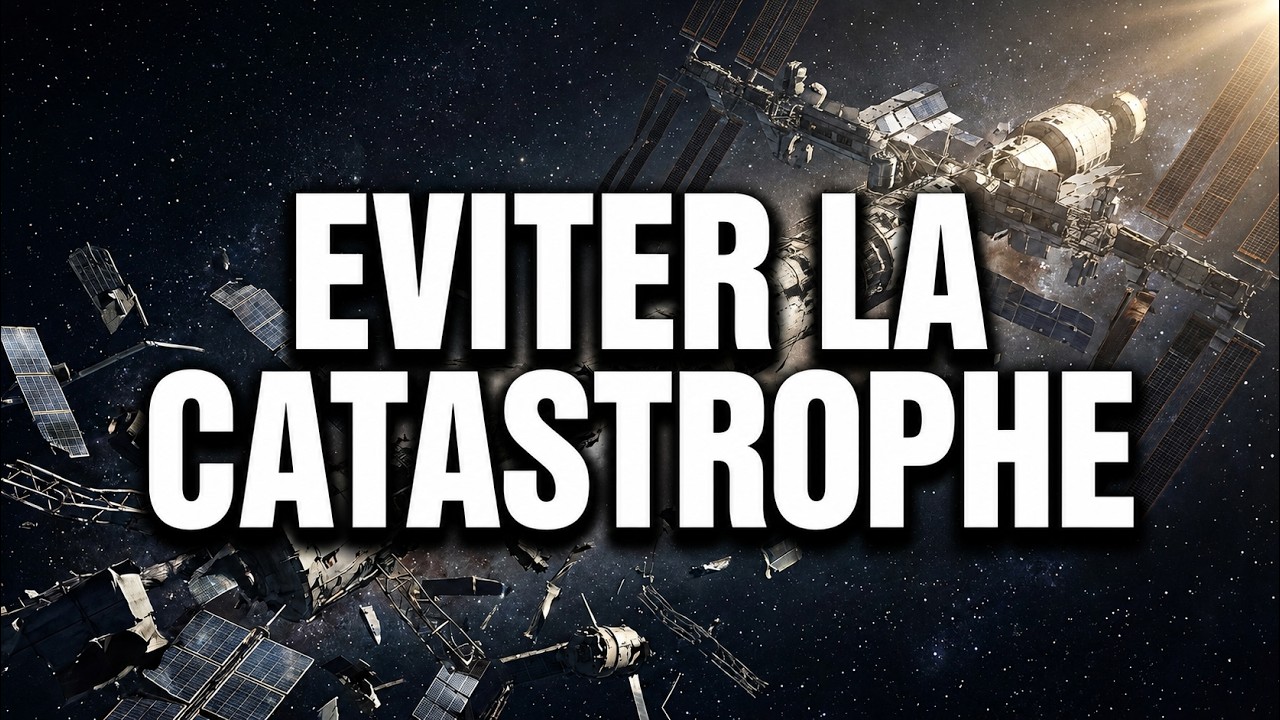
La LOI SPATIALE peut-elle empêcher un SYNDROME DE KESSLER ?
Keywords
Summary
156 words
Critical Evaluation
Value of the Information & Strength of the Argument
The video provides valuable information by clearly explaining the Kessler syndrome and the existing space law framework. The argumentation is logical and well-structured, moving from the problem (increasing debris and collision risk) to the legal mechanisms in place and their limitations. The author supports his points with concrete examples, such as the Chinese rocket breakup and the US-China collision avoidance coordination. However, the video is more of an expert opinion than a rigorous scientific analysis, and the author admits his limited expertise in space law. The discussion of legal gaps, such as the difficulty of proving fault and the lack of enforcement, is insightful and adds depth to the argument.
Scientific Rigor, Source Quality, Title Accuracy
The video demonstrates a good level of scientific rigor by referencing specific incidents and legal documents. The sources cited in the description are relevant and support the main points, including a CCTV+ article on the Chinese rocket breakup and a Global Times article on China’s space activities. The title accurately reflects the content, and the video stays on topic. However, the video could benefit from more detailed citations for some claims, such as the specific numbers of satellites proposed by various companies. The author’s acknowledgment of his non-specialist status in space law is honest but also indicates a limitation in the depth of legal analysis.
230 words
Title / Content Match
The title accurately reflects the content, which explores whether space law can prevent the Kessler syndrome.
Quality & Reliability
7/10
The video provides a clear and well-structured overview of space law and the Kessler syndrome, but relies on general knowledge and a few specific sources. The author acknowledges his non-specialist status in space law, which limits the depth of legal analysis. The information is accurate and up-to-date, but lacks detailed citations for some claims.
Key Moments
Markers derived by PSI from the transcript: the creator did not define chapters.
- Introduction: the rise of megaconstellations and the risk of Kessler syndrome
- Recent incident: Chinese rocket stage disintegrates into 150 pieces
- Explanation of the Kessler syndrome and its potential consequences
- The importance of space for human activities and the risk of losing it
- Overview of the 1967 Outer Space Treaty and its principles
- The 1972 Liability Convention and the 1976 Registration Convention
- The 25-year rule and the move to a 5-year rule for deorbiting satellites
- The role of the ITU in frequency allocation and the first-come, first-served principle
- Gaps in the legal framework: difficulty of establishing fault and lack of enforcement
- Example of US-China collision avoidance coordination and conclusion on the limits of space law
Cited Sources
- CCTV+ article on Chinese rocket breakup — Source for the incident of the Chinese rocket stage disintegrating into 150 pieces.
- China in Space article on Lanyue lunar lander — Source for China's space activities, possibly related to the context of the video.
- Global Times article on China's space program — Source for China's space activities and announcements.
Concurring Sources
- NASA Orbital Debris Program Office — Provides authoritative information on orbital debris and the Kessler syndrome.
External References
Contribution & Novelties
The video provides a clear and accessible synthesis of the legal framework governing space activities and its limitations in addressing the Kessler syndrome. It highlights the gap between the rapid growth of megaconstellations and the slow evolution of international law. The discussion of the first-come, first-served principle and the difficulty of establishing fault in orbital collisions offers a nuanced perspective on the challenges of space governance.
Pour aller plus loin :
- Kessler syndrome - Wikipedia — For a detailed scientific background on the Kessler syndrome.
- Outer Space Treaty - UNOOSA — For the full text and details of the 1967 treaty.
- Liability Convention - UNOOSA — For the 1972 convention on liability.
112 words
Radar Profile
The radar profile shows a balanced video with moderate scores across all dimensions. The quantity and quality of information are solid, and the technical level is appropriate for a general audience. The reliability is good, but the video is more of an expert opinion than a rigorous scientific study, which is reflected in the scores.
💬 No comments were provided for analysis.