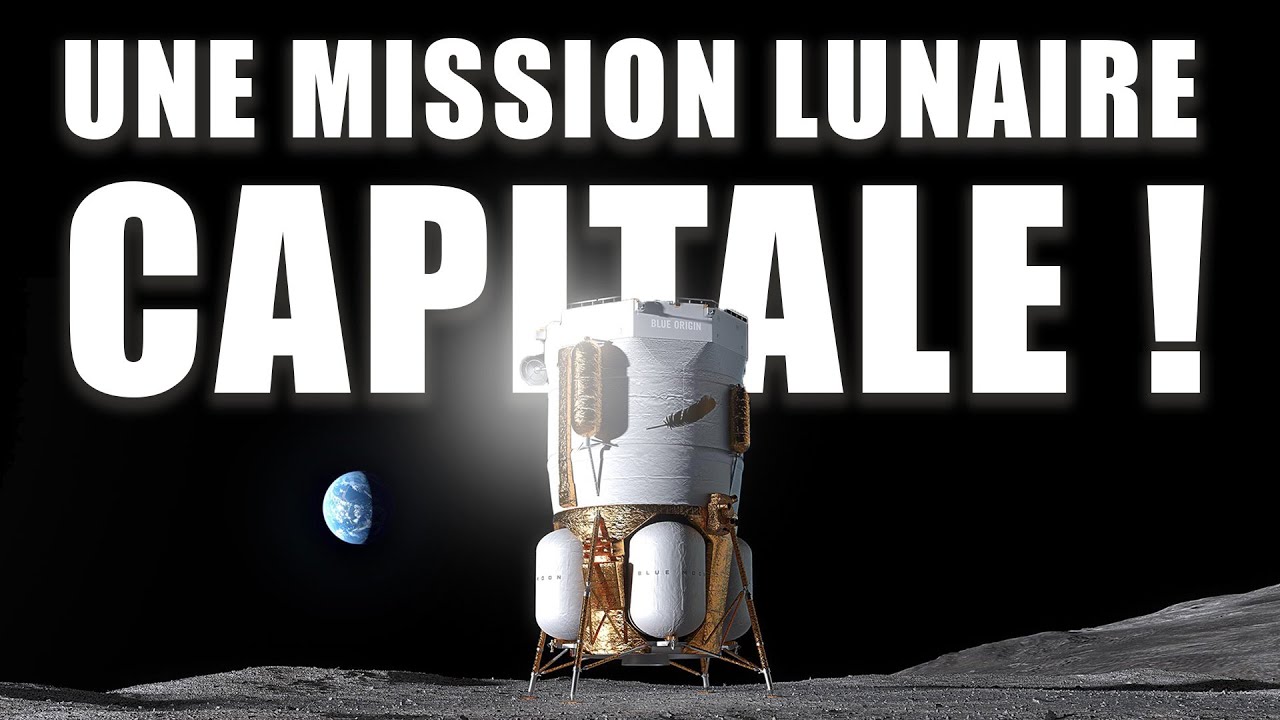
L'atterrisseur lunaire le plus ambitieux depuis Apollo décolle bientôt !
Keywords
Summary
148 words
Critical Evaluation
Value of the Information & Strength of the Argument
The video provides valuable insights into Blue Origin’s lunar lander program, offering detailed technical analysis of the vehicle’s design, propulsion, and mission profile. The argumentation is solid, based on official sources and reasonable inferences. The presenter acknowledges uncertainties and potential challenges, such as cryogenic propellant management and the difficulty of lunar landing, which adds credibility. The comparison with other landers and the discussion of future variants are well-reasoned and informative.
Scientific Rigor, Source Quality, Title Accuracy
The video demonstrates strong scientific rigor, citing official sources from Blue Origin and NASA. The technical details are accurate and well-explained. The title accurately reflects the content, focusing on the Blue Moon Mark 1 and its upcoming mission. The video maintains a balanced perspective, avoiding overhype and clearly distinguishing between confirmed facts and speculation. The inclusion of multiple sources and the mention of uncertainties enhance its reliability.
152 words
Title / Content Match
The title accurately reflects the content, focusing on the upcoming Blue Moon Mark 1 mission and its significance.
Quality & Reliability
8/10
The video is well-researched, citing official sources (Blue Origin, NASA) and providing technical details. The analysis is balanced, acknowledging uncertainties and potential challenges. Minor speculative elements are clearly flagged.
Key Moments
Markers derived by PSI from the transcript: the creator did not define chapters.
- Introduction to Blue Origin's recent success with New Glenn booster recovery.
- Overview of Blue Moon Mark 1 design and its hydrogen-oxygen engine.
- Discussion of cryogenic propellant storage challenges and thermal insulation.
- Explanation of precision landing capabilities and importance for lunar south pole.
- Comparison with other lunar landers and future variants like Mark 1 Plus.
- Conclusion and outlook for the first mission and Artemis program.
Cited Sources
- Blue Moon Mark 1 - Blue Origin — Official product page for Blue Moon Mark 1.
- NASA Selects Blue Origin to Deliver VIPER Rover to Moon's South Pole — NASA press release announcing the contract for VIPER rover delivery.
- SpaceX, Blue Origin share new lunar landing profiles — Article comparing lunar landing profiles of SpaceX and Blue Origin.
Concurring Sources
- Blue Moon Mark 1 - Blue Origin — Official specifications and mission details.
- NASA Selects Blue Origin to Deliver VIPER Rover to Moon's South Pole — Confirms the contract for VIPER delivery.
Dissenting Sources
- SpaceX, Blue Origin share new lunar landing profiles — May present alternative perspectives on landing approaches, but not necessarily conflicting.
External References
Contribution & Novelties
The video provides a comprehensive and up-to-date analysis of Blue Origin’s Blue Moon Mark 1 lander, highlighting its unique technological choices and strategic importance for lunar exploration. It offers insights into the challenges of cryogenic propellant management and precision landing, and discusses potential future variants that could enable crewed missions. The video also contextualizes the lander within the broader Artemis program and competitive landscape.
Pour aller plus loin :
- Artemis program — Overview of NASA’s lunar exploration program.
- Cryogenic propellant management — Background on challenges of storing cryogenic fuels.
- Blue Origin — Company overview and history.
96 words
Radar Profile
The radar profile shows high scores across all dimensions, indicating a well-rounded and reliable video. The strongest aspects are the quantity and quality of information, with a slightly lower technical depth, reflecting its accessible yet detailed approach.
💬 Très positif. Sur les 30 commentaires analysés, la grande majorité exprime de l'enthousiasme et de la gratitude pour la qualité des informations, avec quelques discussions techniques constructives sur les défis de l'hydrogène et des atterrissages lunaires.