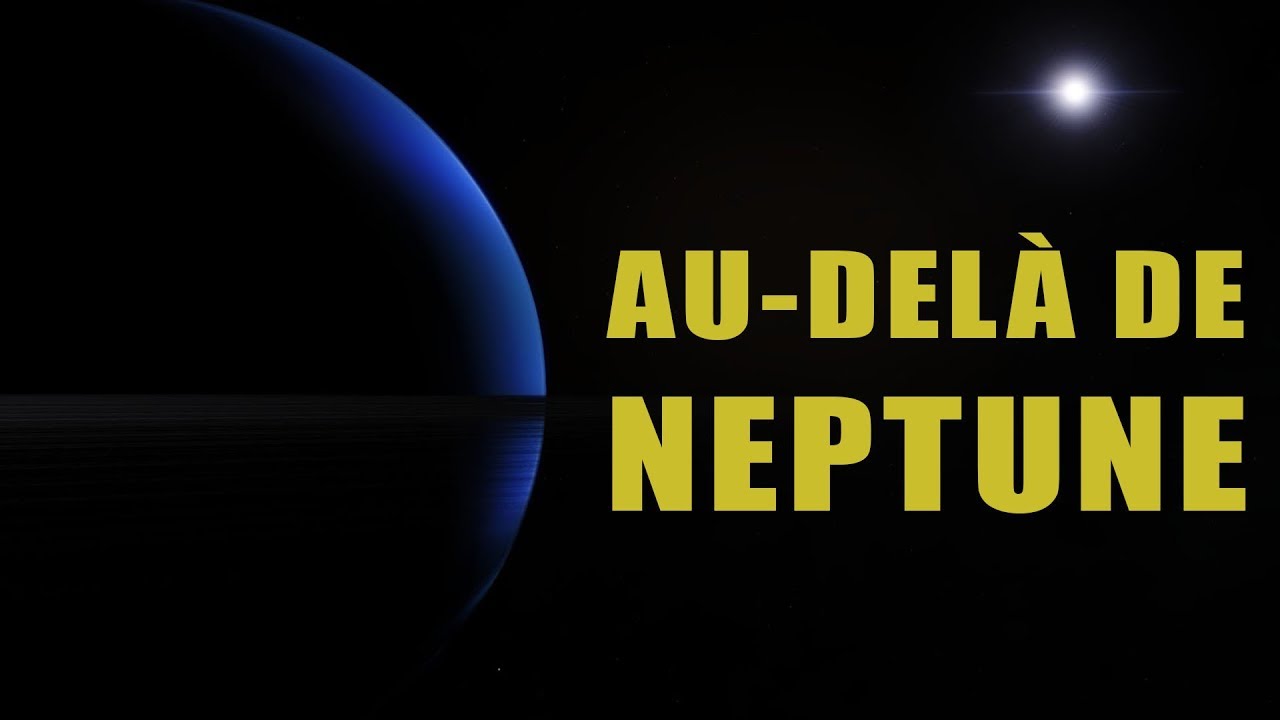
Au-delà de Neptune : une NEUVIÈME PLANÈTE ? LDDE
Keywords
Summary
125 words
Critical Evaluation
Value of the Information & Strength of the Argument
The video provides a solid overview of the outer solar system, synthesizing current knowledge and hypotheses. It effectively explains orbital resonances and the evidence for Planet Nine, presenting both supporting observations and skepticism. The argumentation is logical and well-paced, guiding the viewer from the known Kuiper Belt to the more speculative Oort Cloud and Planet Nine. The use of specific examples like Sedna and 2012 VP113 strengthens the scientific narrative.
Scientific Rigor, Source Quality, Title Accuracy
The video cites reputable sources, including NASA, EarthSky, Universe Today, and Astronomy Now, which are listed in the description. The information is consistent with scientific consensus as of 2018. The title accurately reflects the content, focusing on the search for a ninth planet. The video maintains a high level of scientific rigor, with clear explanations and appropriate caveats about the hypothetical nature of Planet Nine and the Oort Cloud.
154 words
Title / Content Match
The title accurately reflects the content, which explores the region beyond Neptune and discusses the hypothetical Planet Nine.
Quality & Reliability
8/10
The video presents a well-structured overview of the outer solar system, relying on established scientific concepts and citing reputable sources such as NASA and astronomy publications. The information is accurate and up-to-date as of 2018, with clear explanations of orbital resonances and the Kuiper belt. Minor simplifications are present but do not compromise scientific integrity.
Key Moments
Markers derived by PSI from the transcript: the creator did not define chapters.
- Introduction to the outer solar system and the Kuiper Belt.
- Explanation of the Kuiper Belt's structure and resonant populations.
- Discussion of the Kuiper cliff and the scattered disk.
- Introduction of Sedna and the Planet Nine hypothesis.
- Overview of the Oort Cloud and its role as a comet reservoir.
- New Horizons mission and future exploration of the Kuiper Belt.
Cited Sources
- Kuiper Belt Overview - NASA Solar System Exploration — Source for general information on the Kuiper Belt.
- New evidence for Planet 9 - EarthSky — Source for the Planet Nine hypothesis and supporting evidence.
- The Oort Cloud - Universe Today — Source for information on the Oort Cloud.
- Extreme trans-Neptunian objects lead the way to Planet Nine - Astronomy Now — Source for the orbital anomalies of extreme trans-Neptunian objects.
Concurring Sources
- NASA - Kuiper Belt — Confirms the existence and structure of the Kuiper Belt.
- EarthSky - Planet 9 evidence — Supports the Planet Nine hypothesis with recent evidence.
Dissenting Sources
- No Planet Nine? - Some researchers are skeptical — The video mentions that some researchers are skeptical about Planet Nine's existence, but no specific source is provided.
External References
Contribution & Novelties
The video provides a clear and engaging synthesis of the outer solar system, particularly valuable for a general audience. It effectively connects the Kuiper Belt, scattered disk, and Oort Cloud, explaining their significance and the ongoing search for Planet Nine. The presentation of the Planet Nine hypothesis is balanced, acknowledging both evidence and skepticism.
Pour aller plus loin :
- Kuiper Belt — Overview of the Kuiper Belt, its structure, and history.
- Planet Nine — Detailed article on the hypothesized planet, including evidence and search efforts.
- Oort Cloud — Comprehensive information on the Oort Cloud and its role in the solar system.
- Sedna (dwarf planet) — Information on Sedna, a key object in the Planet Nine discussion.
116 words
Radar Profile
The radar profile shows high scores in information quantity, quality, and technical level, with a slightly lower but still strong reliability score. This indicates a well-researched and informative video that maintains scientific accuracy while being accessible.
💬 Très positif. Sur les 30 commentaires analysés, les spectateurs expriment une admiration constante pour la qualité du contenu, la clarté des explications et la régularité des publications, sans aucune critique négative.