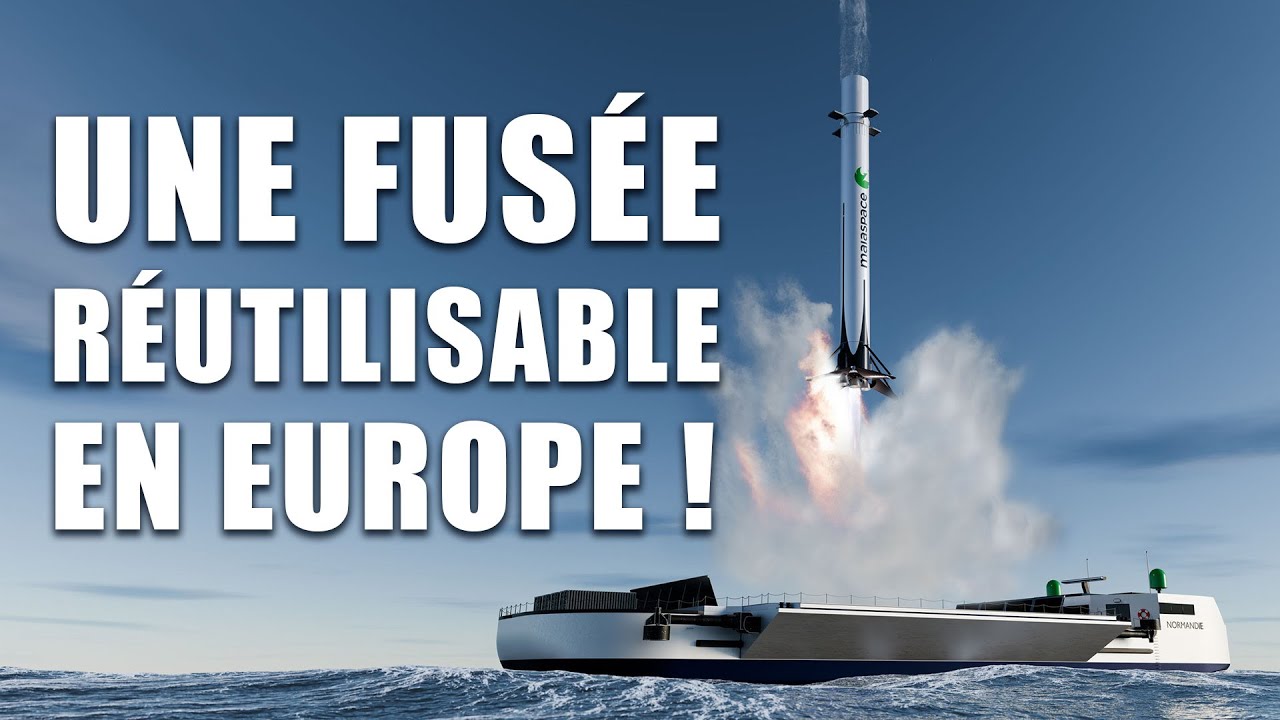
Enfin une FUSÉE RÉUTILISABLE en EUROPE ! MAIA SPACE documentaire
Keywords
Summary
190 words
Critical Evaluation
Value of the Information & Strength of the Argument
The video provides valuable insights into Maia Space’s strategy and technical choices, based on interviews with company collaborators. The argumentation is coherent, explaining the rationale behind the spin-off structure, the use of Prometheus, and the economic challenges of reusability. The comparison with Falcon 9 and other European startups adds depth. However, some claims, such as the exact payload capacities and cost estimates, are presented without detailed sources, relying on the interviewees’ statements. The video also tends to be promotional, highlighting the advantages of Maia Space while downplaying potential risks.
Scientific Rigor, Source Quality, Title Accuracy
The video cites sources in the description, including Maia Space’s official website and a Dailymotion video, but does not provide direct links to technical documents or academic papers. The title accurately reflects the content, focusing on Maia Space’s reusable rocket. The video is well-produced and the information appears reliable, but the lack of formal citations for specific data points limits its scientific rigor. The comments show a positive reception, with some viewers adding technical details from their own experience, which enhances credibility.
186 words
Title / Content Match
The title accurately reflects the content, which focuses on Maia Space's reusable rocket and its significance for Europe.
Quality & Reliability
7/10
The video is a well-structured documentary featuring interviews with two Maia Space collaborators, providing firsthand insights. The information is generally accurate and up-to-date as of mid-2024, but some technical details (e.g., exact payload capacities) are presented without formal citations, and the video has a promotional tone.
Key Moments
Markers derived by PSI from the transcript: the creator did not define chapters.
- Introduction to Maia Space and its mission.
- Explanation of Maia Space's creation as a spin-off from ArianeGroup.
- Discussion on the Prometheus engine and its advantages.
- Overview of the Maia rocket's design and specifications.
- Analysis of the economic trade-offs of reusability.
- Comparison with other European startups and competitive landscape.
- Future plans and expectations for Maia Space.
Cited Sources
- Maia Space official website — Official company website providing information about the Maia rocket and Prometheus engine.
- Dailymotion video (likely interview with Johann Leroy) — Video referenced in the description, possibly containing an interview with Maia Space's CEO.
Concurring Sources
- ArianeGroup official website — ArianeGroup's official site provides information on Prometheus and Maia Space as a subsidiary.
External References
Contribution & Novelties
The video provides an original and detailed look at Maia Space, a relatively new player in the European space industry. It offers insights from internal interviews, explaining the company’s strategy and technical choices. The comparison with other startups and the analysis of reusability economics add value. The video also highlights the potential of the Prometheus engine and its role in future European launchers.
Pour aller plus loin :
- ArianeGroup Prometheus engine — Official page on the Prometheus engine, providing technical details.
- European Space Agency (ESA) on reusable launchers — ESA’s overview of reusable launcher concepts and challenges.
- SpaceX Falcon 9 — Wikipedia article on Falcon 9, the inspiration for Maia’s design.
111 words
Radar Profile
The radar profile shows a balanced performance with high scores in information quantity and technical level, but slightly lower in quality and reliability due to the lack of formal citations. The video is informative and technically sound, but could benefit from more rigorous sourcing.
💬 Très positif. Sur les 30 commentaires analysés, les spectateurs expriment un fort enthousiasme pour le sujet et la qualité de la vidéo, avec des éloges pour le travail de Hugo Lisoir et des discussions techniques constructives, notamment de la part de personnes travaillant dans le secteur spatial.