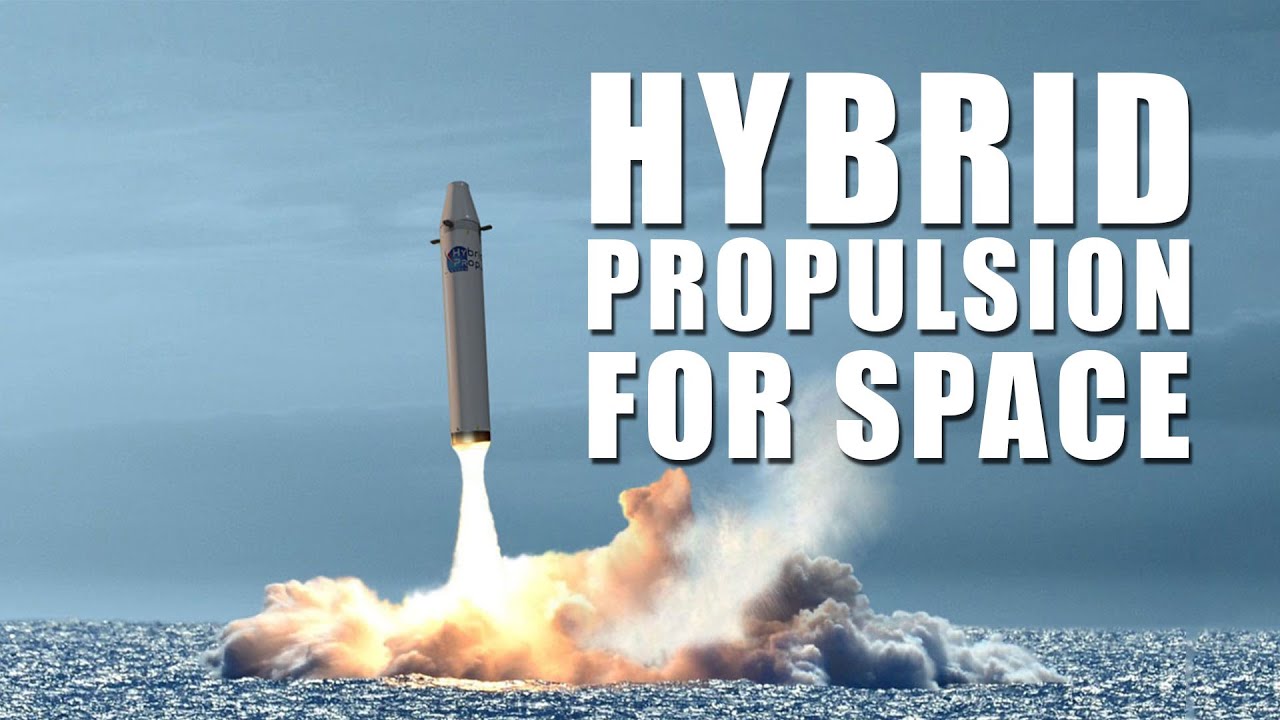
PODCAST - Hybrid Propulsion for Space - Le développement d'un moteur spatial innovant en France !
Keywords
Summary
176 words
Critical Evaluation
Value of the Information & Strength of the Argument
The podcast provides valuable insights into hybrid propulsion technology and its potential applications. The founders present a coherent argument for why their innovation could overcome the historical limitations of hybrid rockets, particularly the issue of poor mixing in large combustion chambers. They support their claims with references to past projects, such as the AMROC tests in the 1990s, and explain the technical challenges in an accessible manner. The discussion is well-structured, moving from basic principles to specific applications and market positioning. However, the argumentation is primarily from the perspective of the company, and there is limited critical examination of potential drawbacks or alternative solutions. The value lies in the firsthand account of a French startup’s approach to space propulsion, offering a unique perspective on the new space industry.
Scientific Rigor, Source Quality, Title Accuracy
The scientific rigor is moderate. The founders demonstrate a solid understanding of the technical aspects, but the conversation is largely based on their own expertise and company claims rather than peer-reviewed sources. They mention historical examples like the AMROC tests and the SpaceShipTwo, but do not provide detailed references. The title accurately reflects the content, which is a podcast interview about the company’s development. The description includes links to their social media and podcast platforms, but no direct references to external scientific sources. Overall, the information is presented with reasonable accuracy, but it should be considered as an expert opinion rather than a rigorously sourced scientific review.
250 words
Title / Content Match
The title accurately reflects the content: a podcast interview with the founders of Hybrid Propulsion for Space about their innovative hybrid rocket engine development.
Quality & Reliability
7/10
The podcast features three founders with relevant engineering backgrounds and direct experience in hybrid propulsion. They explain technical concepts clearly and acknowledge limitations. However, the discussion is largely promotional and lacks independent verification or detailed technical data.
Key Moments
Markers derived by PSI from the transcript: the creator did not define chapters.
- Introduction of the guests and their backgrounds.
- Explanation of hybrid propulsion and its advantages.
- Discussion of the technological challenge of mixing in large combustion chambers.
- Description of the company's innovation and its potential to overcome the mixing issue.
- Market analysis and focus on micro-launchers.
- Comparison with competitors and advantages of hybrid propulsion.
- Discussion of cost and safety benefits.
- Future plans and potential partnerships.
Cited Sources
- HyPrSpace website — Mentioned as the company's website where the MK1 and MK2 launcher architectures are presented.
- AMROC hybrid rocket tests — Referenced as a historical example of a 100-tonne thrust hybrid rocket tested in the 1990s.
- SpaceShipTwo — Mentioned as the most powerful current application of hybrid propulsion.
Concurring Sources
- Hybrid rocket propulsion — General information on hybrid rockets, consistent with the technical explanations given.
Dissenting Sources
- Potential limitations of hybrid rockets — Some sources suggest that hybrid rockets may have inherent performance limitations that could hinder their scalability, which contrasts with the company's optimistic outlook.
External References
Contribution & Novelties
The podcast offers an insider’s view of a French startup’s efforts to innovate in hybrid propulsion, a niche area in the space industry. The founders explain their unique approach to solving the mixing problem, which could enable larger hybrid engines. This is a relatively novel contribution to the public discourse on space propulsion, as most attention is on liquid and solid rockets.
Pour aller plus loin :
- Hybrid rocket propulsion — Provides a general overview of hybrid rocket technology.
- AMROC (American Rocket Company) — Historical context on the company that tested large hybrid rockets.
- SpaceShipTwo — Details on the current use of hybrid propulsion in suborbital spaceflight.
107 words
Radar Profile
The radar profile shows high scores in information quantity and quality, reflecting the detailed technical discussion and the founders' expertise. The technical level is moderate, suitable for a general audience. The global reliability is slightly lower due to the promotional nature of the content and lack of independent verification.
💬 Très positif. Sur les 30 commentaires analysés, la majorité exprime un soutien enthousiaste pour l'entreprise et le contenu, avec des encouragements et des questions techniques pertinentes.