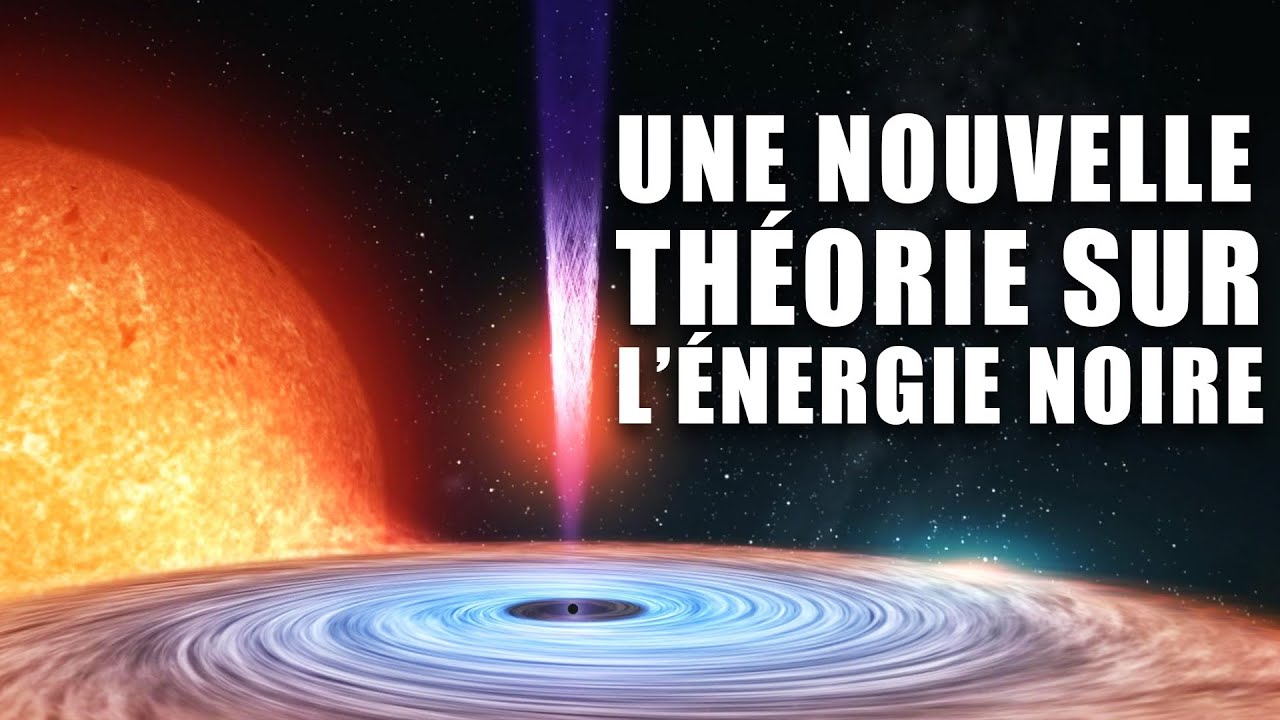
Une NOUVELLE THÉORIE sur l'origine de l'ENERGIE NOIRE !
Keywords
Summary
150 words
Critical Evaluation
Value of the Information & Strength of the Argument
The video provides valuable information on recent space science topics, presenting them in an accessible manner. The argumentation is generally solid, with the host explaining the reasoning behind scientific findings and acknowledging uncertainties. For example, he clearly states that the dark energy-black hole correlation is not yet a solid theory. The DART mission results are presented with specific data, such as the 33-minute orbital period change. The discussion on lunar water includes quantitative estimates, which adds credibility. However, some topics are simplified, and the host occasionally makes claims without deep justification, such as the potential for indefinite colony sustainability.
Scientific Rigor, Source Quality, Title Accuracy
The video demonstrates a good level of scientific rigor, referencing specific missions (DART, Dragonfly) and publications (The Astrophysical Journal). However, the description lacks direct links to these sources, which limits verifiability. The title accurately reflects the main topic, though the video covers multiple subjects. The host’s explanations are generally accurate, but he sometimes presents estimates as more certain than they are, such as the lunar water reserves. Overall, the content is reliable for a general audience, but viewers seeking in-depth scientific detail would need to consult primary sources.
202 words
Title / Content Match
The title highlights the dark energy theory, which is the first and main topic, though the video also covers other space news.
Quality & Reliability
7/10
The video presents recent scientific findings (e.g., the dark energy-black hole correlation, DART results) with reasonable accuracy, but simplifies complex topics and lacks detailed source citations in the description.
Key Moments
Markers derived by PSI from the transcript: the creator did not define chapters.
- Introduction to the video and the first question about dark energy.
- Explanation of the new theory linking dark energy to supermassive black holes.
- Discussion of the DART mission results and the impact on Dimorphos.
- Answer about lunar water ice and its potential for sustaining a colony.
- Exploration of the moons of Uranus and Neptune, focusing on Triton.
- Final question about Titan's temperature and the role of methane.
Cited Sources
- Book on Amazon — Promotion of the channel's book.
- Book on Fnac — Alternative link for the book.
- Tipeee support page — Support the channel via Tipeee.
- uTip support page — Support the channel via uTip.
- Music by Pedro — Music used in the video.
- Utho Riley YouTube channel — Music used in the video.
Concurring Sources
- NASA DART mission page — Official results of the DART mission.
- The Astrophysical Journal — Journal where the dark energy-black hole study was published.
Dissenting Sources
- Comment on Titan's methane — A commenter pointed out that the host's claim about Titan's methane percentage might be outdated, suggesting it is less than 5%.
External References
Contribution & Novelties
The video brings recent space science news to a general audience, synthesizing findings from multiple missions and studies. It highlights a novel hypothesis about dark energy, which is not yet widely known. The host also provides context and explanations that make complex topics accessible.
Pour aller plus loin :
- Dark energy - Wikipedia — Overview of dark energy and its mysteries.
- Supermassive black hole - Wikipedia — Background on the black holes discussed.
- DART mission - NASA — Official NASA page for the DART mission.
- Lunar water - Wikipedia — Information on water on the Moon.
- Titan (moon) - Wikipedia — Details about Titan’s atmosphere and temperature.
107 words
Radar Profile
The radar profile shows high scores in information quantity and quality, with moderate technical depth and reliability. This indicates a well-rounded educational video that is informative but not overly technical, suitable for a general audience interested in space science.
💬 Très positif. Sur les 30 commentaires analysés, la grande majorité exprime des remerciements et des éloges pour la qualité du contenu, avec quelques questions supplémentaires et une remarque critique sur un point scientifique.