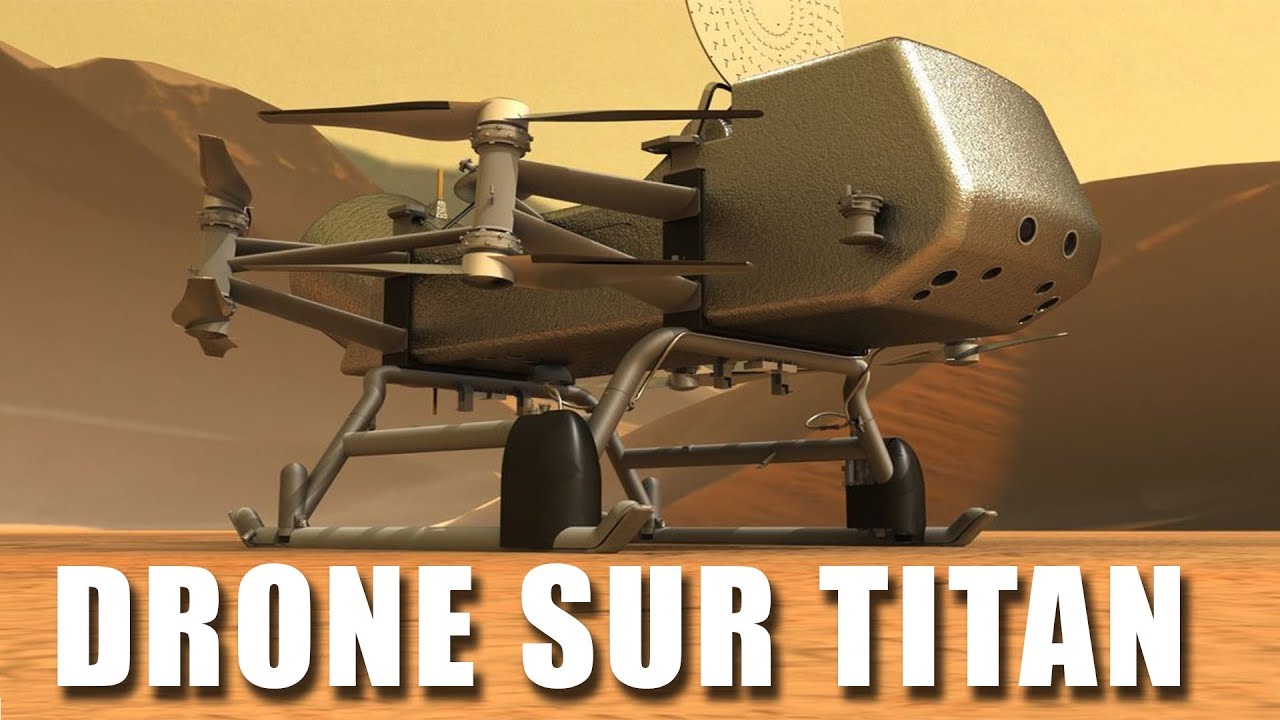
La NASA valide le DRONE sur TITAN ! DNDE #113
Keywords
Summary
141 words
Critical Evaluation
Value of the Information & Strength of the Argument
The video provides substantial value by summarizing recent space mission approvals and scientific findings in an accessible manner. The argumentation is solid, presenting facts and context without overstatement. For instance, the Dragonfly section explains the mission’s objectives, timeline, and the scientific rationale for exploring Titan, supported by details about its atmosphere and surface. The Comet Interceptor segment clarifies the mission’s unique ‘wait and intercept’ strategy and its potential to study pristine comets or interstellar objects. The FRB story is presented with appropriate scientific caution, noting the mystery remains and that different explanations may be needed for repeating and non-repeating bursts. The host’s enthusiasm is balanced with accurate reporting, and the inclusion of multiple sources in the description enhances credibility.
Scientific Rigor, Source Quality, Title Accuracy
The video demonstrates strong scientific rigor by referencing official sources such as NASA, ESA, and research publications. The description includes links to relevant articles and mission pages, which supports the information presented. The title accurately reflects the main topic, and the content covers additional news items as promised. The production quality is high, with clear visuals and a well-structured narrative. The host’s presentation is professional and engaging, and the video avoids sensationalism, particularly in discussing the FRB mystery. Overall, the sources are credible and the title-content alignment is good.
223 words
Title / Content Match
The title accurately reflects the main topic (NASA's Dragonfly selection) and the video covers it prominently, with additional space news segments.
Quality & Reliability
8/10
The video presents accurate and up-to-date information on three space science topics, citing official sources (NASA, ESA, observatories) and providing context. The presentation is clear and well-structured, with minor simplifications typical of science communication.
Key Moments
Markers derived by PSI from the transcript: the creator did not define chapters.
- Introduction and overview of the episode's topics
- NASA's selection of Dragonfly mission to Titan
- Details of Dragonfly mission: launch, arrival, and objectives
- ESA's Comet Interceptor mission announcement
- Comet Interceptor's strategy and potential targets
- Introduction to Fast Radio Bursts and their mystery
- Localization of a single FRB to a distant galaxy
- Discussion of possible explanations for FRBs and conclusion
Cited Sources
- NASA drone to explore Titan for life's chemistry — Source for Dragonfly mission details
- Dragonfly mission official site — Official mission page for Dragonfly
- ESA's new mission to intercept a comet — ESA announcement of Comet Interceptor
- Meet the Comet Interceptor: It'll wait patiently in space for a comet, then pounce on it — Universe Today article on Comet Interceptor
- Astronomers pinpoint location of a single fast radio burst for the first time — Source for FRB localization story
Concurring Sources
- NASA's Dragonfly mission to Titan — NASA press release confirming Dragonfly selection
- ESA's Comet Interceptor mission — ESA official page for Comet Interceptor
External References
Contribution & Novelties
The video provides a concise and engaging summary of three recent space science developments, making them accessible to a broad audience. Its original contribution lies in synthesizing these news items with clear explanations and visual aids, helping viewers understand the significance of each mission and discovery. The coverage of Dragonfly and Comet Interceptor highlights the strategic decisions in planetary exploration, while the FRB segment underscores the ongoing mystery and the importance of observational advances.
Pour aller plus loin :
- Dragonfly mission — Wikipedia article on the Dragonfly mission, providing background and updates.
- Comet Interceptor — Wikipedia article on the Comet Interceptor mission.
- Fast radio burst — Wikipedia article on fast radio bursts, covering their discovery and theories.
- Titan (moon) — Wikipedia article on Titan, detailing its atmosphere and surface features.
- Oort cloud — Wikipedia article on the Oort cloud, relevant to Comet Interceptor’s targets.
144 words
Radar Profile
The radar profile shows high scores across all dimensions, indicating a well-rounded and reliable science communication video. The strong scores in information quantity and quality reflect the comprehensive coverage of three distinct topics, while the technical level is appropriate for an informed audience. The overall reliability is supported by the use of credible sources and clear presentation.
💬 Très positif. Sur les 30 commentaires analysés, les spectateurs expriment un enthousiasme marqué pour la qualité des informations, le montage et la passion communicative de l'animateur, avec de nombreux remerciements et encouragements.