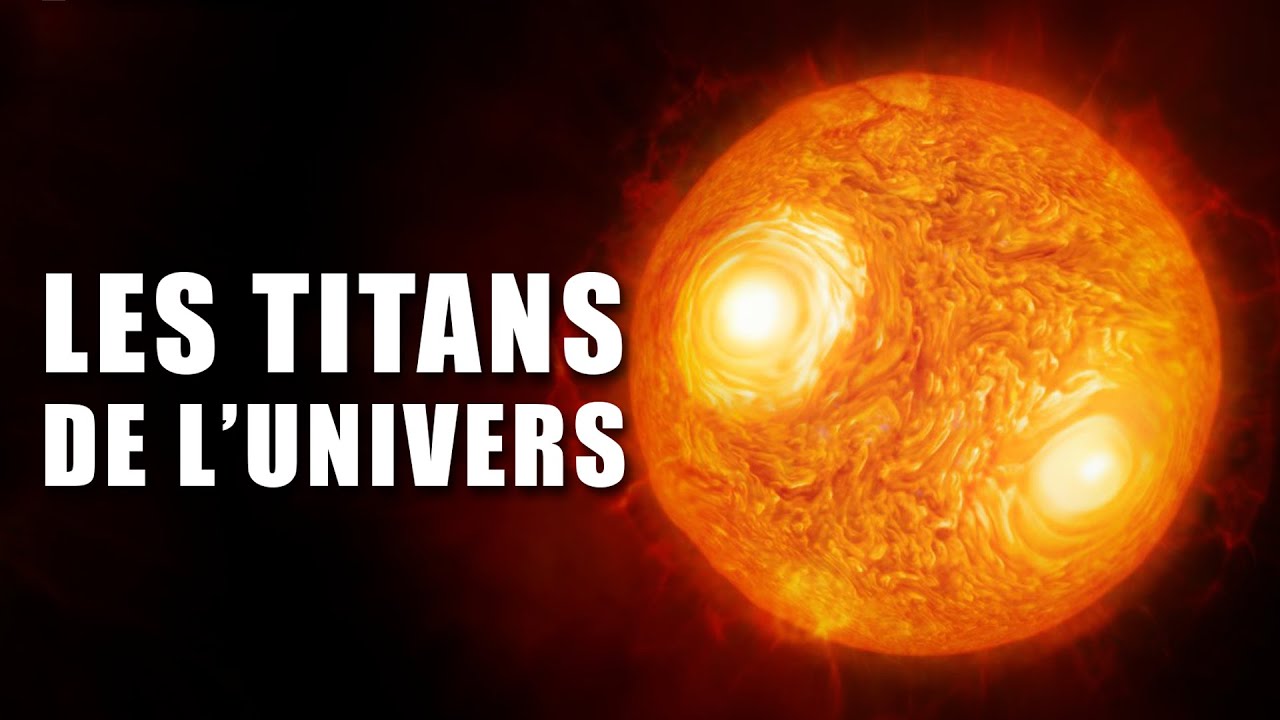
Les plus GRANDES ÉTOILES de L'UNIVERS - LDDE
Keywords
Summary
172 words
Critical Evaluation
Value of the Information & Strength of the Argument
The video provides valuable information by presenting a nuanced view of stellar sizes, avoiding oversimplification. It effectively argues that the concept of the ’largest star’ is not straightforward due to measurement challenges and stellar variability. The argumentation is solid, supported by examples and references to scientific studies. The host explains complex concepts clearly, making the content accessible without sacrificing accuracy.
Scientific Rigor, Source Quality, Title Accuracy
The video demonstrates scientific rigor by citing multiple sources, including peer-reviewed articles and space agency websites. It acknowledges uncertainties and updates, such as the Gaia data revision, which enhances credibility. The title accurately reflects the content, and the video’s structure aligns with the stated topic. The use of sources from IOP, HubbleSite, ScienceDirect, and Space.com adds to the reliability. The video also mentions the limitations of current knowledge, which is a sign of good scientific practice.
151 words
Title / Content Match
The title accurately reflects the content, which focuses on the largest known stars and the challenges in determining their sizes.
Quality & Reliability
8/10
The video presents a well-structured overview of the largest known stars, correctly highlighting the difficulties in measuring stellar sizes and distances. It cites several scientific sources (IOP, HubbleSite, ScienceDirect, Space.com) and acknowledges uncertainties in measurements, including the Gaia data revision for UY Scuti. The information is generally accurate and up-to-date as of 2020, though some specific values (e.g., Stephenson 2-18's size) have been refined since.
Key Moments
Markers derived by PSI from the transcript: the creator did not define chapters.
- Introduction to the Sun as a typical star and the question of the largest star.
- Discussion of Eta Carinae and its eruptions.
- VY Canis Majoris and the difficulty of measuring stellar diameters.
- UY Scuti and the impact of Gaia distance measurements.
- Other candidates like MY Cephei and Stephenson 2-18.
- Evolution and fate of red supergiants, including supernovae and black holes.
Cited Sources
- IOP chapter on stellar evolution — Referenced as a source for stellar properties.
- HubbleSite news release 1997-33 — Referenced for information on Eta Carinae.
- ScienceDirect article on red supergiants — Referenced for scientific background on red supergiants.
- Space.com article on the biggest star — Referenced for information on the largest known star.
Concurring Sources
- NASA's HubbleSite on Eta Carinae — Supports the video's description of Eta Carinae's eruptions.
- Space.com article on the biggest star — Corroborates the discussion on UY Scuti and other large stars.
Dissenting Sources
- Gaia Data Release 2 — The video mentions that Gaia data revised the distance to UY Scuti, leading to a smaller size estimate, which contrasts with earlier measurements.
External References
Contribution & Novelties
The video provides a clear and engaging synthesis of current knowledge about the largest stars, highlighting the uncertainties and the dynamic nature of stellar measurements. It goes beyond simple lists by explaining the underlying physics and the challenges astronomers face. The discussion of habitability around red supergiants adds a unique perspective.
Pour aller plus loin :
- Red supergiant — Overview of red supergiants and their properties.
- Gaia (spacecraft) — Mission that provided updated distances for stars like UY Scuti.
- Stephenson 2-18 — One of the largest known stars, discussed in the video.
92 words
Radar Profile
The radar profile shows high scores across all dimensions, indicating a well-rounded and reliable video. The strongest aspects are the quantity and quality of information, with a slightly lower but still solid technical level and global reliability.
💬 Très positif. Sur les 30 commentaires analysés, les spectateurs expriment une forte appréciation pour la qualité du travail, la clarté des explications et la régularité des publications, avec quelques demandes de sujets supplémentaires.