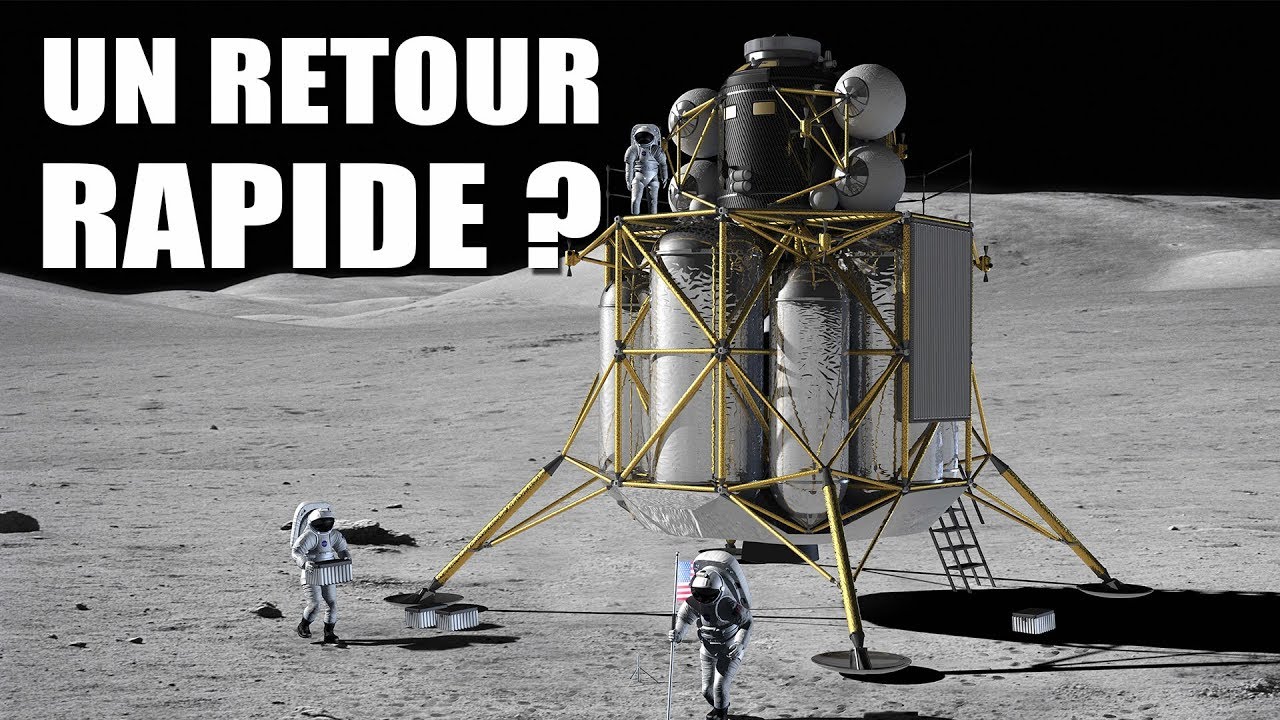
La NASA veut accélérer son retour sur la Lune ! DNDE 95
Keywords
Summary
196 words
Critical Evaluation
Value of the Information & Strength of the Argument
The video provides valuable, up-to-date information on multiple space missions, with a clear and engaging presentation. The argumentation is solid, as the presenter distinguishes between confirmed facts (e.g., NASA’s budget, mission schedules) and hypotheses (e.g., the geological history of Charon). The explanations are accessible but not oversimplified, and the use of visuals aids understanding. The episode is well-structured, moving from lunar plans to Mars, asteroid, solar, and outer solar system news, maintaining viewer interest throughout.
Scientific Rigor, Source Quality, Title Accuracy
The video demonstrates strong scientific rigor by citing specific sources in the description, including NASA’s official documents, SpaceNews articles, and peer-reviewed papers (e.g., the Charon study in Icarus). The title accurately reflects the main topic, and the content aligns with the stated sources. The presenter also acknowledges uncertainties, such as the risk of the InSight drill encountering rocks, and clearly labels speculative scenarios for Charon’s geology. Overall, the sourcing is transparent and reliable.
163 words
Title / Content Match
The title accurately reflects the main topic: NASA's accelerated plans to return to the Moon, with the episode number for context.
Quality & Reliability
8/10
The video is a weekly space news review, based on recent official announcements and scientific publications. The presenter clearly cites sources in the description, including NASA documents and peer-reviewed articles. The information is accurate and up-to-date as of February 2019, with a clear distinction between facts and hypotheses.
Key Moments
Markers derived by PSI from the transcript: the creator did not define chapters.
- Introduction to the episode and overview of lunar news
- NASA's announcement to accelerate lunar return, CLPS program details
- NASA's lunar architecture: transfer, descent, and ascent modules
- NASA's 2019 budget increase and call for proposals
- InSight update: seismometer deployment and HP3 drill preparation
- Hayabusa2 sample collection attempt on Ryugu
- Parker Solar Probe second solar encounter
- Charon's geology: possible subsurface ocean and resurfacing
Cited Sources
- NASA HLS BAA Industry Forum — NASA's presentation on the Human Landing System procurement
- NASA seeks to accelerate work on lunar missions — SpaceNews article on NASA's lunar acceleration plans
- NASA, il reste quelques milliards, je vous les mets — French blog post discussing NASA's budget and lunar plans
- InSight Mars temperature — Article about InSight's heat flow probe deployment
- Japan's Hayabusa2 mission will mine an asteroid this week — Astronomy.com article on Hayabusa2's sampling attempt
- Charon's icy surface erupted from an underground ocean — Article on the study of Charon's geology
- ScienceDirect article on Charon — Peer-reviewed paper on Charon's resurfacing
Concurring Sources
- NASA's Lunar Exploration Program Overview — NASA's official overview of its lunar exploration plans, consistent with the video's claims.
- Parker Solar Probe Mission Updates — NASA's mission page for Parker Solar Probe, confirming the spacecraft's status and encounters.
External References
Contribution & Novelties
The video synthesizes recent space news into an accessible format, highlighting NASA’s accelerated lunar plans and the scientific findings from various missions. It provides context and analysis that go beyond simple reporting, such as explaining the implications of NASA’s budget increase and the technical challenges of sample collection.
Pour aller plus loin :
- NASA Artemis program — Official NASA page on the Artemis program, which evolved from the plans discussed in the video.
- Hayabusa2 mission — Wikipedia article providing detailed information on the mission and its achievements.
- InSight mission — Wikipedia article on the InSight lander and its scientific objectives.
- Charon (moon) — Wikipedia article on Charon, including its geology and the hypothesis of a subsurface ocean.
117 words
Radar Profile
The radar profile shows high scores in information quantity, quality, and reliability, with a slightly lower technical level, indicating that the video is well-researched and reliable but accessible to a broad audience. The balance between these dimensions suggests a strong educational value without excessive jargon.
💬 Très positif. Sur les 30 commentaires analysés, les spectateurs expriment un enthousiasme marqué pour la qualité des vidéos, la passion du présentateur, et la richesse des informations, avec quelques suggestions constructives sur la distinction entre images réelles et simulations.