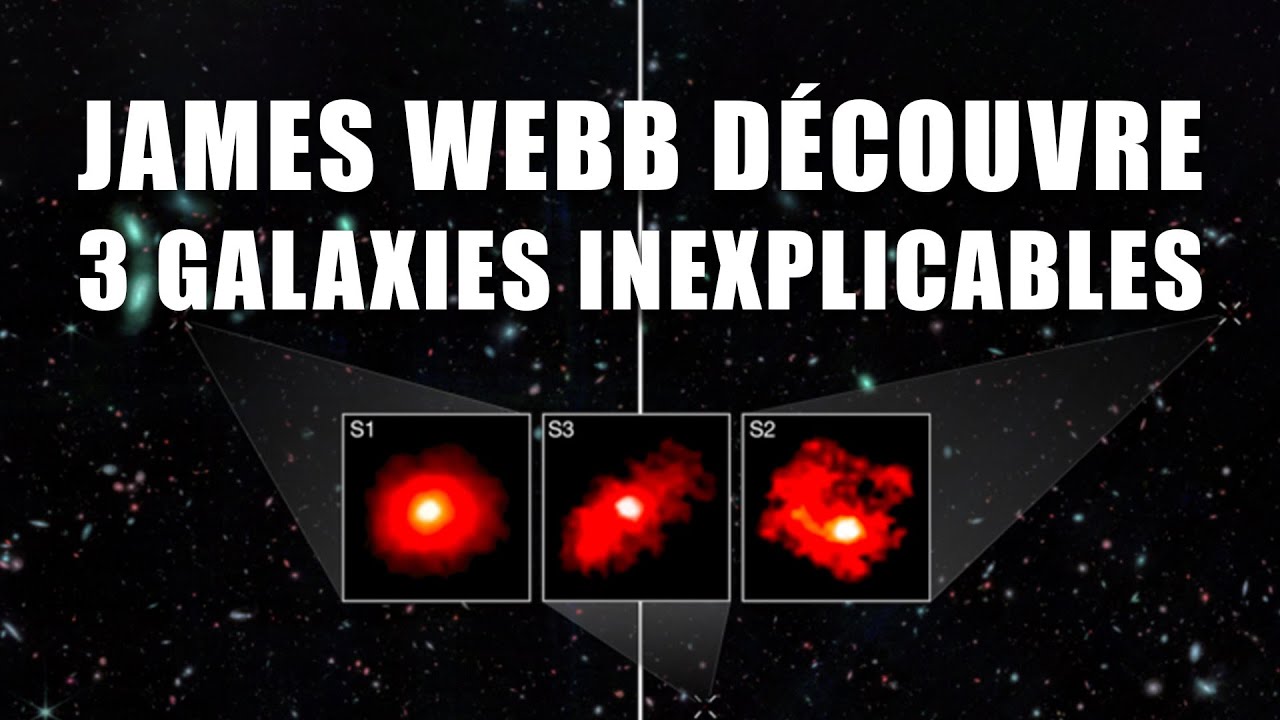
JAMES WEBB découvre 3 MONSTRES ROUGES ! DNDE 369
Keywords
Summary
126 words
Critical Evaluation
Value of the Information & Strength of the Argument
The video provides valuable information on recent astronomical discoveries and space industry developments. The host presents the scientific findings on the ‘Red Monsters’ with appropriate nuance, explaining the tension between observations and theoretical models. He also offers insightful analysis on the geopolitical and industrial aspects of space exploration, such as the US-China cooperation dynamics and the challenges facing the European space industry. The argumentation is generally solid, with the host clearly distinguishing between established facts, hypotheses, and his own opinions.
Scientific Rigor, Source Quality, Title Accuracy
The video demonstrates good scientific rigor by referencing specific sources for each news item, including scientific press releases and industry reports. The host also acknowledges uncertainties and alternative explanations, which enhances credibility. The title accurately reflects the main topic, and the content aligns well with the channel’s usual format of summarizing space news. The inclusion of a sponsored segment is clearly disclosed and does not detract from the overall quality.
165 words
Title / Content Match
The title accurately reflects the main topic of the video, which focuses on the discovery of three massive red galaxies by the James Webb Space Telescope.
Quality & Reliability
8/10
The video presents recent astronomical discoveries and space industry news with references to scientific sources and official announcements. The host clearly distinguishes between established facts, hypotheses, and personal opinions, maintaining a balanced and critical perspective.
Chapters
Cited Sources
- EurekAlert: Three red monsters — Source for the discovery of the three red galaxies by James Webb.
- SpaceNews: Chinese official endorses cooperation with the U.S. — Source for the Chinese official's statement on cooperation.
- Flying Magazine: FAA moves to streamline launch licenses — Source for FAA efforts to streamline launch licensing.
- European Spaceflight: ESA releases findings of super-heavy lift rocket studies — Source for the PROTEIN study on super-heavy lift rockets.
- European Spaceflight: The Exploration Company raises $160M — Source for The Exploration Company's funding round.
Concurring Sources
- EurekAlert: Three red monsters — Primary source for the main scientific discovery.
- SpaceNews: Chinese official endorses cooperation with the U.S. — Corroborates the report on China's openness to cooperation.
External References
Contribution & Novelties
The video synthesizes recent space news, providing a comprehensive overview of developments in astronomy and the space industry. It highlights the significance of the ‘Red Monsters’ discovery and its implications for our understanding of the early universe, while also covering geopolitical and industrial aspects. The host adds value by contextualizing these events and offering thoughtful analysis.
Pour aller plus loin :
- James Webb Space Telescope — Provides background on the telescope and its capabilities.
- Galaxy formation and evolution — Explains the theoretical framework that the ‘Red Monsters’ challenge.
- Starship — Details on the SpaceX vehicle discussed in the video.
- Wolf Amendment — Legal context for US-China space cooperation restrictions.
109 words
Radar Profile
The radar profile shows high scores across all dimensions, indicating a well-rounded and reliable video. The strong performance in information quantity and quality, combined with solid technical depth and global reliability, suggests a content that is both informative and trustworthy.
💬 Très positif. Sur les 30 commentaires analysés, les spectateurs expriment une grande appréciation pour la qualité de la vulgarisation et la régularité des vidéos, avec quelques remarques critiques sur l'ESA et des discussions sur les implications scientifiques.