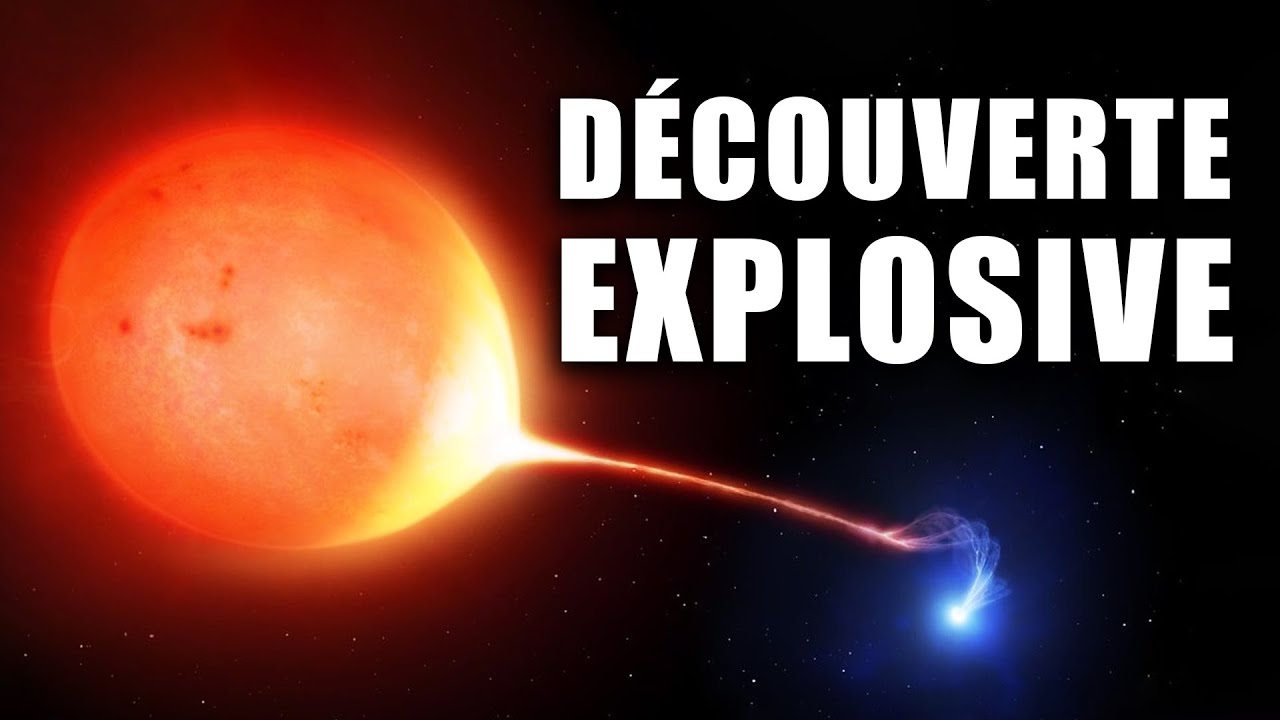
DÉCOUVERTE D'un NOUVEAU type D'EXPLOSION céleste : les MICRONOVAE ! DNDE 249
Keywords
Summary
147 words
Critical Evaluation
Value of the Information & Strength of the Argument
The video provides a clear and accessible explanation of the micronovae discovery, placing it in the context of known stellar explosion mechanisms. The argumentation is solid, based on the scientific paper published by ESO, and the presenter effectively communicates the significance of the finding. The coverage of other space news is informative and up-to-date, with sources provided for each topic. The video’s value lies in its ability to synthesize complex astronomical concepts and recent developments for a general audience, while maintaining scientific accuracy.
Scientific Rigor, Source Quality, Title Accuracy
The video demonstrates good scientific rigor by citing the original ESO scientific paper for the micronovae discovery and providing links to NASA blogs and SpaceNews for other topics. The sources are credible and directly relevant to the information presented. The title accurately reflects the main topic, though it could be more specific about the other news covered. The video’s content aligns well with the title, and the presentation is professional and well-structured.
170 words
Title / Content Match
The title accurately reflects the main topic, though the video also covers other space news.
Quality & Reliability
8/10
The video presents a recent astronomical discovery (micronovae) with references to the original ESO scientific paper, and covers other space news with links to NASA and SpaceNews. The information is accurate and well-sourced, though the format is a news roundup rather than an in-depth analysis.
Key Moments
Markers derived by PSI from the transcript: the creator did not define chapters.
Cited Sources
- ESO Science Paper on Micronovae — Original scientific paper describing the discovery of micronovae.
- NASA Webb Blog - In Full Focus — Update on James Webb Space Telescope status.
- NASA OFT-2 Blog — Mission updates for Boeing's Starliner OFT-2 test flight.
- SpaceNews - First Dream Chaser Vehicle Takes Shape — Article about the progress of the Dream Chaser spaceplane.
- Space.com - FAA SpaceX Starship Review Delayed — News about the delay in FAA's environmental review for Starship.
Concurring Sources
- ESO Science Paper on Micronovae — Primary source for the micronovae discovery.
- NASA Webb Blog — Confirms the status of James Webb as described.
- SpaceNews Dream Chaser Article — Confirms the progress of Dream Chaser.
External References
Contribution & Novelties
The video brings to light a recent astronomical discovery (micronovae) that may not be widely known to the general public, explaining its significance in the context of stellar evolution. It also provides a concise update on several ongoing space missions, making it a valuable resource for space enthusiasts.
Pour aller plus loin :
- Nova (Wikipedia) — Provides background on classical novae, which are essential to understand micronovae.
- White dwarf (Wikipedia) — Explains the nature of white dwarfs, the stars involved in micronovae.
- TESS (NASA) — The space observatory used to detect micronovae; official NASA page.
- Very Large Telescope (ESO) — The ground-based telescope used in the discovery.
107 words
Radar Profile
The radar profile shows high scores across all dimensions, indicating a well-rounded and reliable science communication video. The strongest aspects are the quantity and quality of information, with slightly lower scores in technical depth and global reliability, reflecting the concise nature of a news roundup.
💬 Très positif. Sur les 30 commentaires analysés, les spectateurs expriment une grande appréciation pour la qualité des vidéos, posent des questions techniques pertinentes et montrent un intérêt enthousiaste pour les sujets spatiaux.