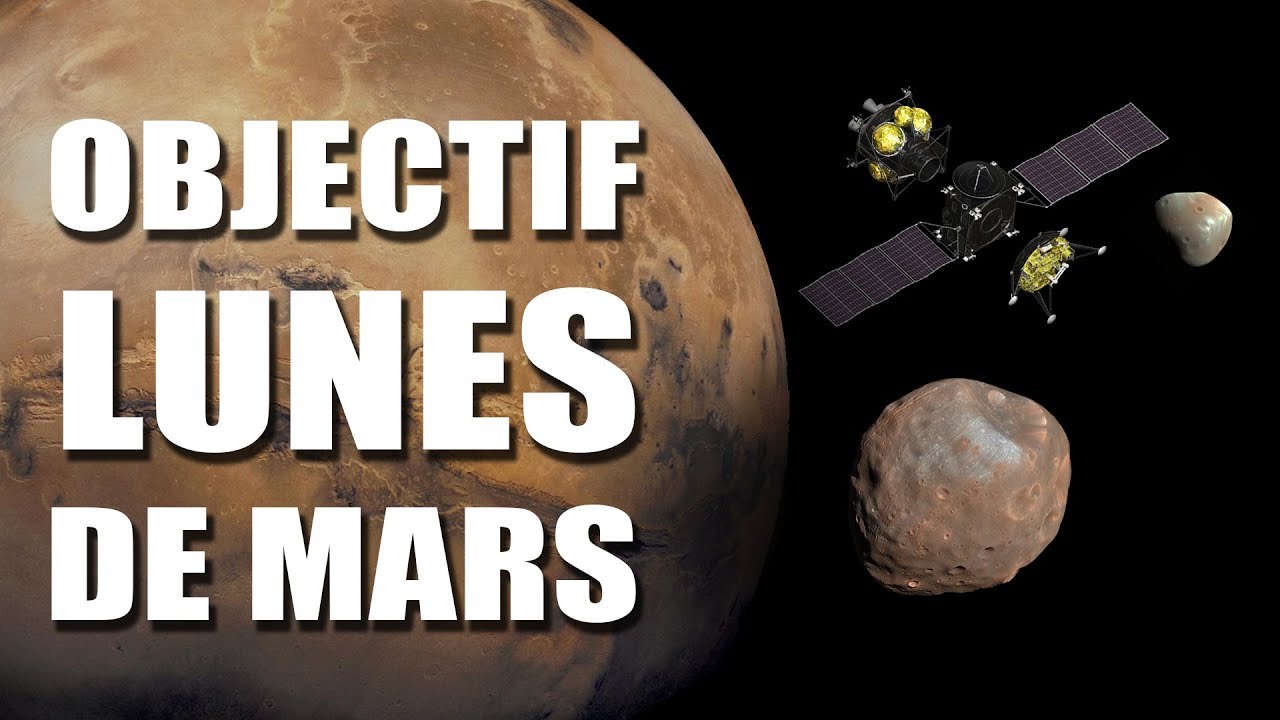
L’Europe et le Japon vont atterrir sur une lune de Mars – DNDE #78
Keywords
Summary
136 words
Critical Evaluation
Value of the Information & Strength of the Argument
The video provides valuable, up-to-date information on space exploration, with clear explanations of the scientific context and significance of each news item. The argumentation is solid: for MMX, the presenter explains the mission’s objectives and the European contribution, linking it to the success of MASCOT. For the exomoon, he presents the evidence and the necessary caution, noting the 75% confidence level and the need for further observations. For 2015 TG387, he discusses the orbital characteristics and the ongoing debate about Planet Nine, presenting alternative explanations. The reasoning is logical and well-structured, making complex topics accessible without oversimplifying.
Scientific Rigor, Source Quality, Title Accuracy
The video demonstrates scientific rigor by citing specific sources for each news item: a Space.com article for MMX, an arXiv paper for the exomoon study, and an Astronomy.com article for 2015 TG387. These sources are credible and directly related to the discussed topics. The title accurately reflects the main focus of the episode, and the content aligns with the show’s format of summarizing space news. The presenter also mentions the limitations of current data and the need for further observations, showing a balanced approach. The adéquation between title and content is good, with the main topic being the MMX mission, as promised.
214 words
Title / Content Match
The title accurately reflects the main topic of the episode, focusing on the European-Japanese mission to Phobos. Other news items are secondary but consistent with the show's format.
Quality & Reliability
8/10
The video is a well-structured news review of recent space exploration developments, citing specific missions (MMX, Hayabusa2) and scientific studies (exomoon candidate, 2015 TG387). The information is presented with appropriate caution and references to primary sources. Minor imprecisions in the transcription (e.g., 'hugo' for Ryugu, 'loch ness' for DLR) do not affect the scientific content.
Key Moments
Markers derived by PSI from the transcript: the creator did not define chapters.
- Introduction and recap of MASCOT landing on Ryugu
- Announcement of MMX mission to Phobos and Deimos
- Details on European contributions to MMX (CNES, DLR) and the new rover
- Discussion of potential exomoon around Kepler-1625b
- Evidence from Hubble observations and future observation plans
- Discovery of 2015 TG387 and its implications for Planet Nine
- Conclusion and call for comments
Cited Sources
- MASCOT Lander for Japan's MMX Mission to Mars Moon Phobos — Source for the MMX mission and European contributions.
- Evidence for a large exomoon orbiting Kepler-1625b — Scientific paper presenting the exomoon candidate.
- Goblin planet: New dwarf planet found at the edge of the solar system — Source for the discovery of 2015 TG387.
Concurring Sources
- MASCOT Lander for Japan's MMX Mission to Mars Moon Phobos — Confirms the MMX mission details and European involvement.
- Evidence for a large exomoon orbiting Kepler-1625b — Primary source for the exomoon candidate.
- Goblin planet: New dwarf planet found at the edge of the solar system — Confirms the discovery of 2015 TG387.
Dissenting Sources
- No exomoon yet: Alternative explanations for Kepler-1625b's transit — Some astronomers have proposed that the observed transit anomalies could be due to stellar activity or instrumental effects, not a moon. This is not mentioned in the video but is part of the scientific debate.
External References
Contribution & Novelties
The video synthesizes recent space news with clear explanations, providing an accessible overview of missions and discoveries. It highlights the international collaboration in space exploration and the scientific questions driving these missions. The discussion of the exomoon candidate and the Planet Nine hypothesis offers a glimpse into cutting-edge research.
Pour aller plus loin :
- MMX Mission (JAXA) — Official mission page for details on objectives and instruments.
- Exomoon — Overview of exomoon detection methods and candidates.
- Planet Nine — Summary of the hypothesis and evidence.
85 words
Radar Profile
The radar profile shows high scores in information quantity, quality, and reliability, with a slightly lower technical level. This indicates a well-balanced, informative video that is accessible to a general audience while maintaining scientific credibility.
💬 Très positif. Sur les 30 commentaires analysés, tous expriment un soutien enthousiaste et des remerciements pour la qualité du contenu, avec des félicitations pour le cap des 100 000 abonnés.