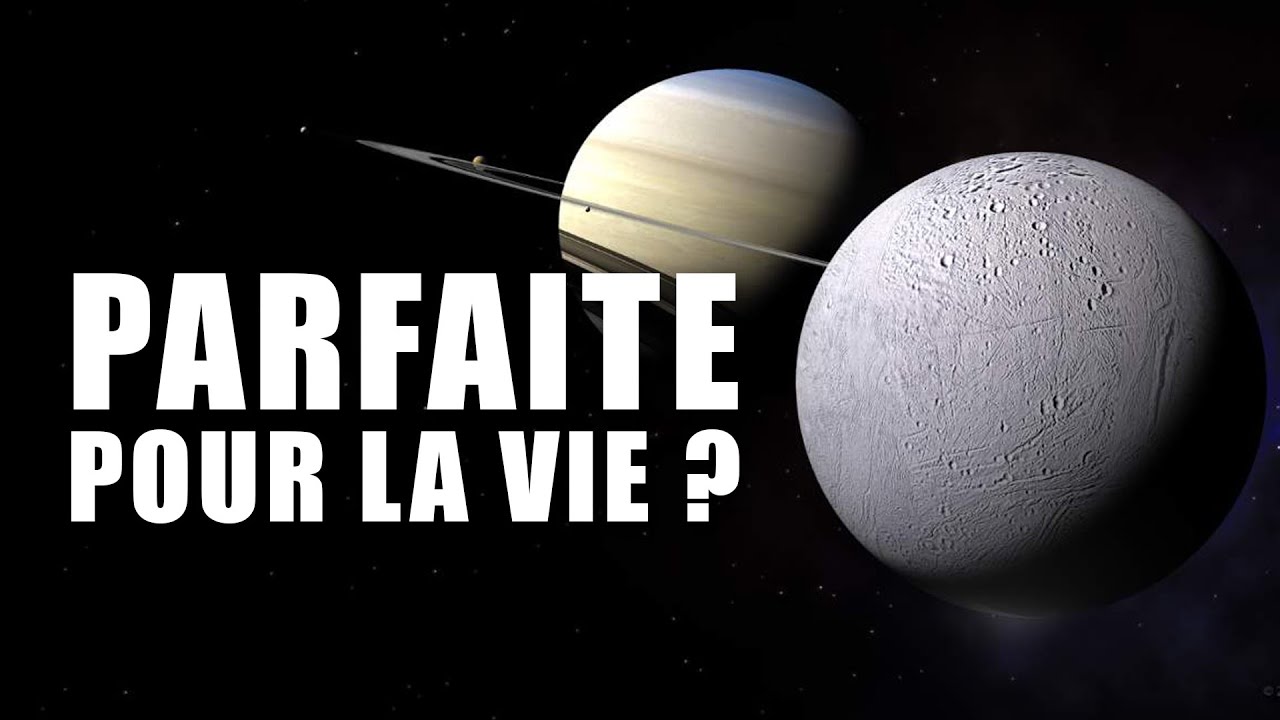
ENCELADE, UNE LUNE IDÉALE POUR LA VIE ? DNDE #184
Keywords
Summary
161 words
Critical Evaluation
Value of the Information & Strength of the Argument
The video provides valuable information by summarizing recent scientific findings and space exploration developments. The main segment on Enceladus is well-argued, presenting the scientific rationale for considering Enceladus as a potential habitat. The host explains the concept of redox reactions as energy sources for life, citing specific chemical compounds (hydrogen peroxide, potassium-40) and their potential origins. The argumentation is logical and grounded in the cited study. The other segments are informative but less detailed, serving as brief news updates. The host also encourages critical thinking by noting the uncertainties and the need for future missions to confirm habitability.
Scientific Rigor, Source Quality, Title Accuracy
The video demonstrates scientific rigor by citing specific sources for each segment. For Enceladus, the host references a study published in Icarus and a press release from SwRI, both of which are credible. The information is presented accurately, with appropriate caveats. The title accurately reflects the main topic, and the content is consistent with the title. The video also includes a sponsorship segment (Tipeee/uTip) but it is clearly separated from the editorial content. The host does not overstate claims and acknowledges the speculative nature of some hypotheses.
200 words
Title / Content Match
The title accurately reflects the main topic of the video, which focuses on Enceladus and its potential for life, while the video also covers other space news.
Quality & Reliability
8/10
The video is a weekly space news review that cites specific scientific studies and official sources. The main segment on Enceladus is based on a peer-reviewed study (Icarus) and a press release from SwRI. Other segments reference NASA/JPL activities and contracts. The information is presented with appropriate nuance, acknowledging uncertainties. The host maintains a clear distinction between established facts and hypotheses.
Key Moments
Markers derived by PSI from the transcript: the creator did not define chapters.
- Introduction to the video and topic of icy moons.
- Discussion of Enceladus's potential for life, including the detection of dihydrogen in geysers.
- Presentation of the December 2020 study on oxidants in Enceladus's ocean.
- Mention of future missions to Enceladus (Enceladus Life Finder) and comparison with Europa missions.
- Segment on the Au-Spot robotic dog for Mars exploration.
- Segment on the ESPRIT module for the Lunar Gateway.
- Segment on Skyrora XL static fire test and upcoming SpaceX Starship test.
Cited Sources
- Enceladus' Metabolic Menu: Subsurface Ocean of Saturn's Moon Could Host Life — Press release from SwRI about the study on Enceladus's ocean chemistry.
- ScienceDirect article on Enceladus — Peer-reviewed study published in Icarus (December 2020) on oxidants in Enceladus's ocean.
- Space.com article on Au-Spot — Article about the robotic dog concept for Mars exploration.
- Boston Dynamics Spot applications — Official page describing the use of Spot by JPL.
- SpaceNews article on ESPRIT module — Article about the contract for the ESPRIT module.
Concurring Sources
- NASA - Enceladus Overview — NASA's official page on Enceladus, providing background information consistent with the video.
- ESA - Enceladus — ESA's page on Enceladus, offering additional details on the moon's geology and geysers.
External References
Contribution & Novelties
The video provides a concise synthesis of recent space news, with a focus on the astrobiological potential of Enceladus. It highlights a specific study that adds new insights into the possible energy sources for life in Enceladus’s ocean. The video also covers other developments, such as the Au-Spot robot and the ESPRIT module, offering a broad overview of current space exploration efforts.
Pour aller plus loin :
- Enceladus - Wikipedia — Overview of Enceladus, its characteristics, and exploration history.
- Astrobiology - Wikipedia — Introduction to the field of astrobiology and its methods.
- Cassini-Huygens - Wikipedia — Details on the Cassini mission that discovered Enceladus’s geysers.
105 words
Radar Profile
The radar profile shows high scores in information quantity, quality, and reliability, with a moderate technical level. This indicates a well-researched and informative video that is accessible to a general audience while still providing scientific depth.
💬 Très positif. Sur les 30 commentaires analysés, la grande majorité exprime de l'enthousiasme et de l'appréciation pour la qualité des vidéos, avec des remarques sur le contenu passionnant et le travail de recherche.