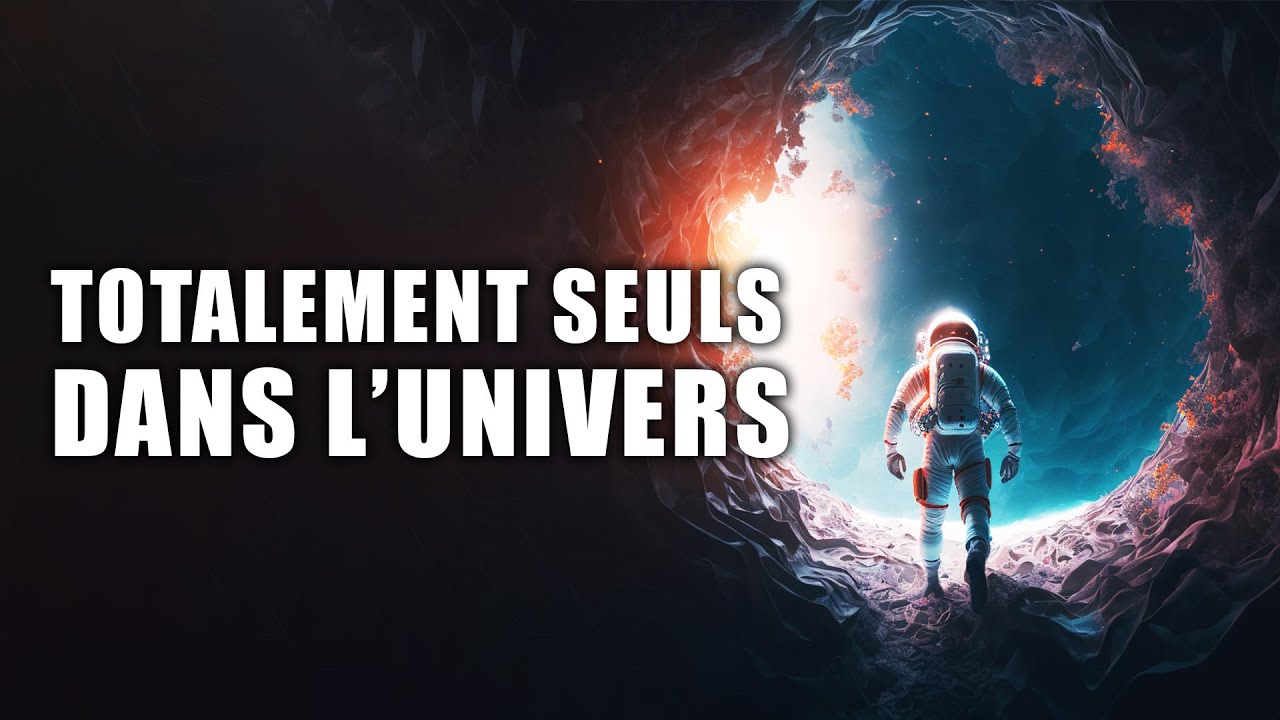
Et si nous étions SEULS dans L'UNIVERS ?
Keywords
Summary
173 words
Critical Evaluation
Value of the Information & Strength of the Argument
The video provides a valuable and thought-provoking perspective on the Fermi paradox, moving beyond the usual ‘where is everyone?’ to explore the epistemological and existential consequences of a negative result. The argumentation is well-structured, progressing logically from the current state of the search to the potential outcomes and their implications. It effectively balances scientific reasoning with philosophical reflection, making it accessible without oversimplifying. The use of concrete examples (e.g., Viking experiments, Allan Hills meteorite) strengthens the argument, and the discussion of planetary protection and directed panspermia adds depth. The video does not shy away from uncomfortable conclusions, which enhances its intellectual honesty.
Scientific Rigor, Source Quality, Title Accuracy
The video demonstrates a good level of scientific rigor, referencing credible sources such as NASA’s Exoplanet Exploration page, Astronomy.com, and American Scientist. These sources are reputable and directly relevant to the topics discussed. The title accurately reflects the content, which is a balanced exploration of the possibility of human solitude. The video does not overstate claims and acknowledges uncertainties, which is commendable. However, it could have benefited from more explicit citations within the narration, as some statements lack direct references. Overall, the title and content are well-aligned, and the sources used are appropriate for the level of discussion.
215 words
Title / Content Match
The title accurately reflects the content, which explores the scientific and philosophical implications of humanity being alone in the universe.
Quality & Reliability
7/10
The video presents a well-structured scientific reflection on the possibility of humanity's solitude in the universe, drawing on established concepts such as the Fermi paradox and the Rare Earth hypothesis. It cites reputable sources (NASA, Astronomy.com, American Scientist) and maintains a cautious, nuanced tone. However, it lacks detailed citations for some claims and does not engage deeply with counterarguments.
Key Moments
Markers derived by PSI from the transcript: the creator did not define chapters.
- Introduction: The search for life in the solar system and beyond.
- The possibility of never finding life, and the challenges of detecting it.
- Challenges of finding life in the solar system (Mars, Europa, Titan).
- The difficulty of confirming life on exoplanets and the ambiguity of biosignatures.
- The potential for intelligent life to be the easiest to detect, but also the rarest.
- The scenario of a future where no life is found, and the end of optimism.
- The consequences of confirmed solitude: planetary protection becomes seeding, and Earth's uniqueness gains new significance.
Cited Sources
- Rare Earth hypothesis: why we might really be alone in the universe — Referenced as a source for the Rare Earth hypothesis.
- Alone in the Universe — Referenced as a source for the discussion on human solitude.
- Are We Alone? - Exoplanet Exploration — Referenced as a source for NASA's search for life.
Concurring Sources
- Rare Earth hypothesis: why we might really be alone in the universe — Supports the idea that complex life may be rare.
- Alone in the Universe — Supports the discussion on the possibility of human solitude.
Dissenting Sources
External References
Contribution & Novelties
The video offers a fresh perspective on the Fermi paradox by focusing on the epistemological and existential consequences of a negative result, rather than just the possible explanations. It synthesizes current knowledge and presents a coherent narrative that is both scientifically grounded and philosophically engaging. The discussion of planetary protection evolving into directed panspermia is a particularly original angle.
Pour aller plus loin :
- Fermi paradox — The classic paradox that frames the discussion.
- Rare Earth hypothesis — The hypothesis that complex life is extremely rare in the universe.
- Directed panspermia — The concept of intentionally seeding life on other planets, which the video discusses as a potential consequence of solitude.
- Biosignature — The types of evidence that could indicate life on other worlds, relevant to the discussion of detection challenges.
131 words
Radar Profile
The radar profile shows a balanced video with strong scores in information quality and reliability, but slightly lower in technical depth and quantity of information. This reflects a well-researched but accessible presentation that prioritizes clarity and thought-provoking content over exhaustive technical detail.
💬 Très positif : Sur les 30 commentaires analysés, l'immense majorité exprime une profonde appréciation pour la qualité de la réflexion et de la narration, avec des remerciements chaleureux et des vœux de fin d'année. Plusieurs commentaires soulignent l'impact émotionnel et philosophique de la vidéo, tandis qu'un seul commentaire propose une perspective alternative sur la rareté de la vie intelligente.