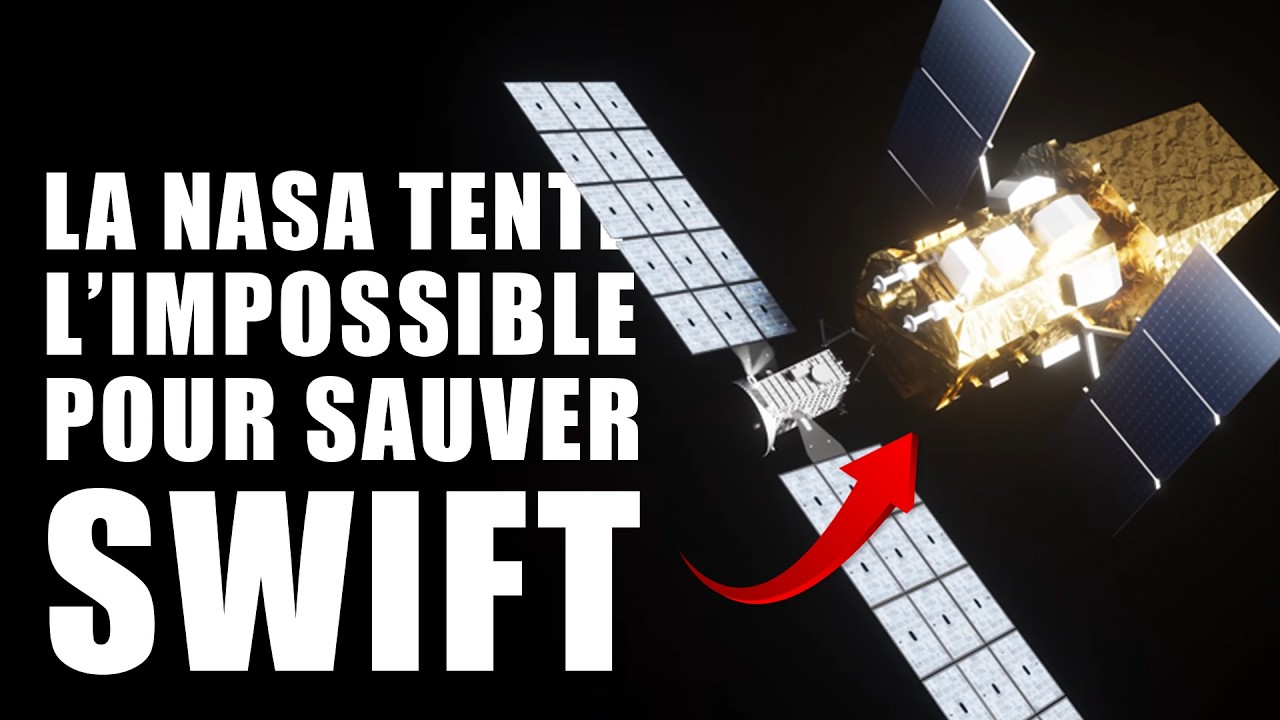
Le sauvetage le plus FOU de la NASA (250M$ en jeu)
Keywords
Summary
147 words
Critical Evaluation
Value of the Information & Strength of the Argument
The video provides valuable information about a real and timely space mission, explaining the technical aspects clearly. The argumentation is solid, presenting the mission as a logical and cost-effective solution while acknowledging the risks. The comparison with previous missions like MEV adds credibility. The presenter effectively argues for the significance of this mission in the context of space sustainability and future capabilities.
Scientific Rigor, Source Quality, Title Accuracy
The video cites a NASA source in the description, which is a reliable primary source. The information appears accurate and up-to-date. The title is engaging and accurately reflects the content, though it slightly exaggerates the stakes (250M$ vs. 30M$ mission cost, but the potential loss of Swift’s capabilities is indeed significant). The video does not present conflicting sources, but the reliance on a single source limits the depth of verification.
147 words
Title / Content Match
The title is catchy and accurately reflects the content, which is about a daring NASA mission to save the Swift observatory.
Quality & Reliability
8/10
The video is well-structured, based on a NASA source, and presents technical details accurately. The main limitation is the lack of independent verification and the reliance on a single official source.
Key Moments
Markers derived by PSI from the transcript: the creator did not define chapters.
- Introduction to Swift's critical situation and the rescue mission concept.
- Overview of Swift's mission and its scientific importance.
- Explanation of the altitude decay problem and the urgency.
- Details of the rescue mission: Catalyst Space Technologies and the Lynx vehicle.
- Discussion of the Pegasus XL rocket and its unique air-launch capability.
- The capture and boost phase: robotic arms and ion propulsion.
- Risks and uncertainties, and the broader implications for satellite servicing.
Cited Sources
- Swift Boost Mission - Cast — Official NASA page providing details about the mission team and objectives.
Concurring Sources
- NASA's Swift Observatory — Official NASA page about the Swift mission, confirming its status and capabilities.
External References
Contribution & Novelties
The video provides a comprehensive and accessible overview of a novel space mission, highlighting the shift towards satellite servicing and rapid mission development. It explains the technical challenges and the potential paradigm shift in space operations.
Pour aller plus loin :
- Orbital servicing — Provides background on the concept and previous missions.
- Mission Extension Vehicle — Details on Northrop Grumman’s MEV, which is referenced in the video.
- Gamma-ray burst — Explains the phenomena Swift studies.
75 words
Radar Profile
The radar profile shows high scores in information quantity, quality, and technical level, with a slightly lower but still strong reliability score. This indicates a well-researched and informative video with minor limitations in source diversity.
💬 Positive: The 30 comments analyzed are overwhelmingly positive, with viewers expressing enthusiasm for the mission and appreciation for the video's clarity and detail.