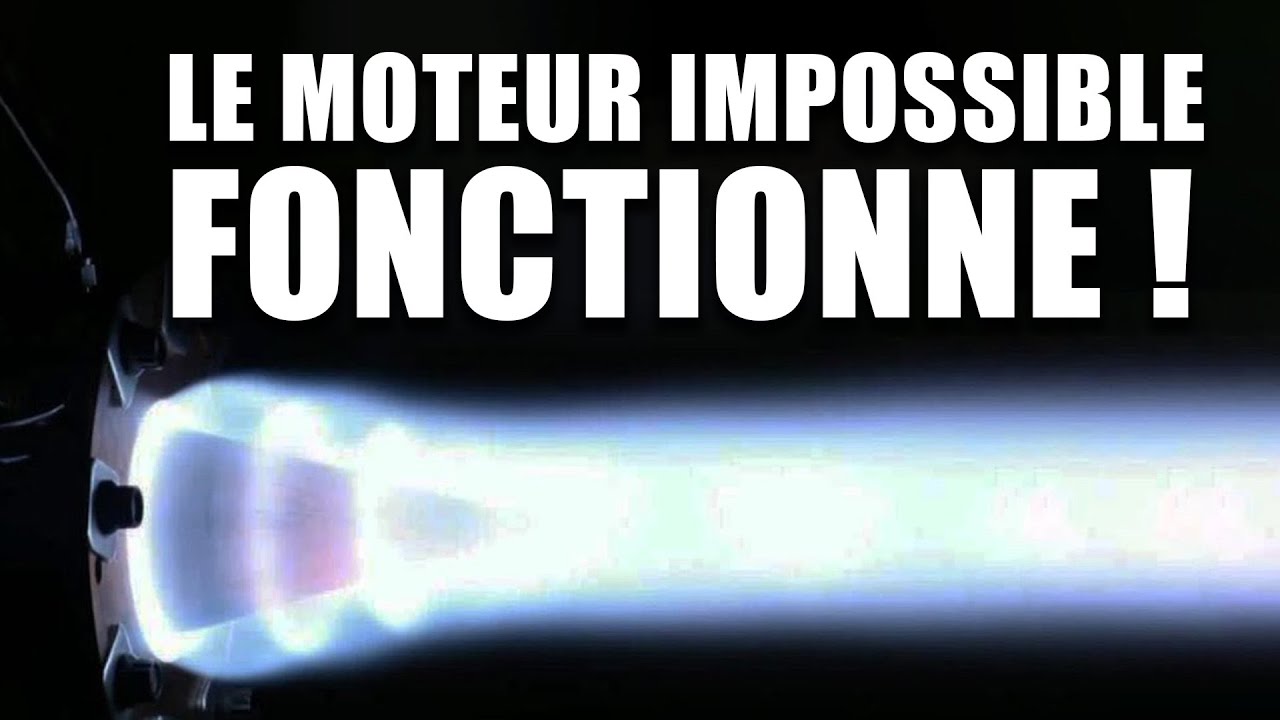
La NASA a mis au point un moteur révolutionnaire ! DNDE 327 (détonation rotative)
Keywords
Summary
121 words
Critical Evaluation
Value of the Information & Strength of the Argument
The video provides valuable, up-to-date information on several space-related topics, with a focus on propulsion technology. The argumentation is generally solid: the creator explains the significance of the NASA RDE test, contextualizes it within the broader development of the technology, and compares it to other advanced concepts like nuclear thermal propulsion. The discussion of the Kuiper Belt study is presented with appropriate scientific caution, clearly distinguishing between confirmed observations and hypothetical models. The coverage of SpaceX and Sirius is factual and balanced. The video’s strength lies in its ability to synthesize complex technical news into an accessible format without oversimplifying the underlying science.
Scientific Rigor, Source Quality, Title Accuracy
The video demonstrates good scientific rigor by citing specific sources in the description, including NASA’s official announcement, a peer-reviewed article in The Astrophysical Journal Letters (IOP), and a Space.com article. The creator also mentions the source for the Sirius test (LinkedIn). The title accurately reflects the main topic, though it might slightly overstate the ‘revolutionary’ aspect, but this is common in popular science communication. The content is well-structured, and the creator is careful to distinguish between confirmed facts and speculation, particularly regarding the hypothetical planets in the Kuiper Belt. Overall, the sourcing is transparent and appropriate for a news roundup format.
219 words
Title / Content Match
The title accurately reflects the main topic (NASA's rotating detonation engine) and the video's content, though it also covers other news items.
Quality & Reliability
8/10
The video is a weekly space news roundup. It covers recent developments in propulsion technology (NASA's rotating detonation rocket engine test, Sirius Space Services' engine test, SpaceX's static fires) and a scientific study on the possible existence of Earth-sized planets in the Kuiper Belt. The information is presented with appropriate caution, distinguishing between confirmed tests and hypothetical scenarios. The creator cites sources in the description, including NASA, Space.com, and a peer-reviewed paper (IOP). The tone is informative and balanced, with no obvious sensationalism. Minor limitations: the video is a summary, not a detailed technical analysis, and some claims (e.g., about the future of RDE) are speculative.
Key Moments
Markers derived by PSI from the transcript: the creator did not define chapters.
- Introduction and New Year wishes
- NASA's rotating detonation rocket engine test (251 seconds)
- Comparison with nuclear thermal propulsion and future applications
- Sirius Space Services' Star 1 engine test and company overview
- SpaceX's static fire tests of Super Heavy and Starship
- Discussion of possible Earth-sized planets in the Kuiper Belt
- Conclusion and upcoming content
Cited Sources
- NASA's 3D-printed Rotating Detonation Rocket Engine Test a Success — Source for the NASA RDE test details.
- Sirius Space Services LinkedIn post — Source for the Sirius Star 1 engine test.
- SpaceX Starship Super Heavy Flight 3 Engine Tests Video — Source for SpaceX static fire tests.
- A Search for Earth-sized Planets in the Kuiper Belt — Peer-reviewed study on possible planets in the Kuiper Belt.
Concurring Sources
- NASA's 3D-printed Rotating Detonation Rocket Engine Test a Success — Confirms the NASA RDE test details.
- A Search for Earth-sized Planets in the Kuiper Belt — Confirms the scientific study on Kuiper Belt planets.
External References
Contribution & Novelties
The video provides a timely synthesis of recent space propulsion developments, particularly the NASA RDE test, which is a significant milestone. It also highlights the growing European private space sector (Sirius) and the ongoing progress of SpaceX. The discussion of the Kuiper Belt study adds a scientific dimension, presenting a plausible hypothesis for the existence of Earth-sized planets in the outer solar system. The video’s value lies in making these complex topics accessible to a general audience while maintaining scientific accuracy.
Pour aller plus loin :
- Rotating detonation engine - Wikipedia — Overview of the technology and its principles.
- Kuiper belt - Wikipedia — Background on the Kuiper Belt and its objects.
- Planet Nine - Wikipedia — Context on the hypothetical Planet Nine and related searches.
126 words
Radar Profile
The radar profile shows high scores in information quantity and quality, with a slightly lower technical level, indicating a good balance between depth and accessibility. The overall reliability is strong, supported by credible sources.
💬 Très positif. Sur les 30 commentaires analysés, la grande majorité exprime des vœux pour la nouvelle année et des remerciements pour la qualité des vidéos, avec un enthousiasme marqué pour le contenu.