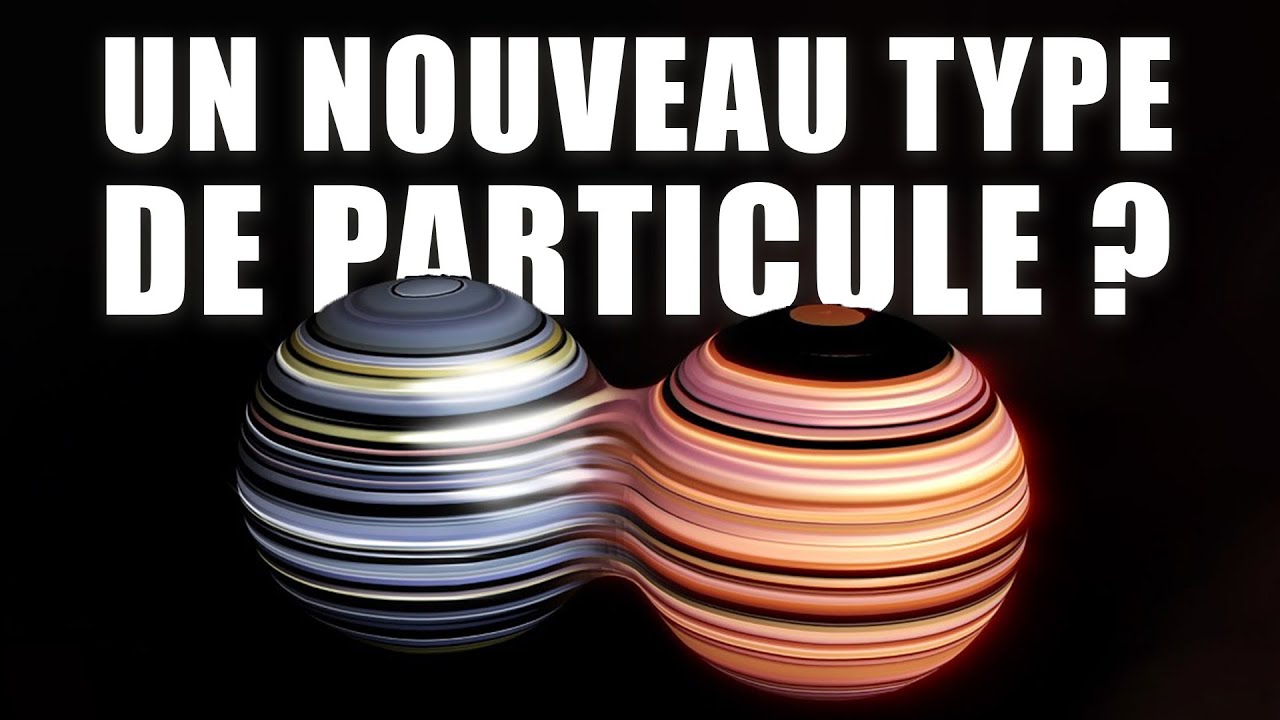
Une NOUVELLE CLASSE de PARTICULES qui pourrait faire évoluer la PHYSIQUE ! DNDE 381
Keywords
Summary
136 words
Critical Evaluation
Value of the Information & Strength of the Argument
The video provides valuable information on recent scientific discoveries and space missions, with a clear and engaging presentation. The argumentation is solid, as it relies on official sources and explains complex concepts in an understandable manner. The discussion of paraparticles is well-contextualized within the standard model, and the implications are presented without overstatement. The coverage of the Bennu samples is accurate and highlights the significance of the findings. The asteroid threat is presented with appropriate nuance, emphasizing the low probability and the existing mitigation capabilities. The European projects are presented with enthusiasm but also with a realistic assessment of their potential impact.
Scientific Rigor, Source Quality, Title Accuracy
The video demonstrates a high level of scientific rigor by citing primary sources from Nature, NASA, and ESA. The sources are relevant and directly support the claims made. The title accurately reflects the content, focusing on the new class of particles, which is the first and most prominent topic. The video also includes a clear disclaimer about the preliminary nature of some findings. The presentation is well-structured, with smooth transitions between topics. The comments section shows a positive reception, with viewers appreciating the quality and clarity of the content.
206 words
Title / Content Match
The title accurately reflects the main topic of the video, which focuses on a new class of particles, and the content matches the promise of discussing recent physics developments.
Quality & Reliability
8/10
The video presents recent scientific findings and space news with references to primary sources (Nature, NASA, ESA). The presentation is clear and well-structured, with appropriate caveats about preliminary results. The channel has a consistent track record of science communication.
Key Moments
Markers derived by PSI from the transcript: the creator did not define chapters.
- Introduction to the episode's topics
- Discussion of the new class of particles (paraparticles)
- Explanation of the standard model and bosons/fermions
- Bennu sample analysis and implications for life's origins
- Asteroid 2024 YR4 risk assessment and monitoring
- European lunar lander Argonaut and its capabilities
- Envision mission to Venus and its scientific goals
Cited Sources
- Paraparticles: A new class of particles? — The paper presenting the theoretical framework for paraparticles.
- NASA's Asteroid Bennu Sample Reveals Mix of Life's Ingredients — NASA press release about the Bennu sample analysis.
- ESA actively monitoring near-Earth asteroid 2024 YR4 — ESA page about the monitoring of asteroid 2024 YR4.
- Argonaut: a first European lunar lander — ESA page about the Argonaut lunar lander.
- Envision: Signed and sealed, Envision can move towards construction — ESA page about the Envision mission to Venus.
Concurring Sources
- NASA's OSIRIS-REx mission page — Official mission page providing details on the Bennu sample return.
External References
Contribution & Novelties
The video provides a concise and accessible overview of recent developments in particle physics and space exploration, highlighting the potential implications of paraparticles and the significance of asteroid sample returns. It also offers a European perspective on lunar and Venus exploration.
Pour aller plus loin :
- Standard Model — Overview of the theoretical framework that paraparticles could extend.
- Pauli exclusion principle — Fundamental principle distinguishing fermions from bosons.
- OSIRIS-REx — Mission that returned samples from Bennu.
- Asteroid impact avoidance — Techniques for deflecting potentially hazardous asteroids.
- Venus exploration — Overview of past and future missions to Venus.
97 words
Radar Profile
The radar profile shows high scores in information quantity, quality, and reliability, with a slightly lower technical level, indicating that the video is informative and trustworthy but not overly technical. The balance suggests it is suitable for a general audience interested in science news.
💬 Très positif. Sur les 30 commentaires analysés, la grande majorité exprime des remerciements et des éloges pour la qualité de la vulgarisation et la fluidité du montage. Quelques commentaires apportent des compléments d'information ou des réflexions personnelles, mais aucun ne remet en cause le contenu.