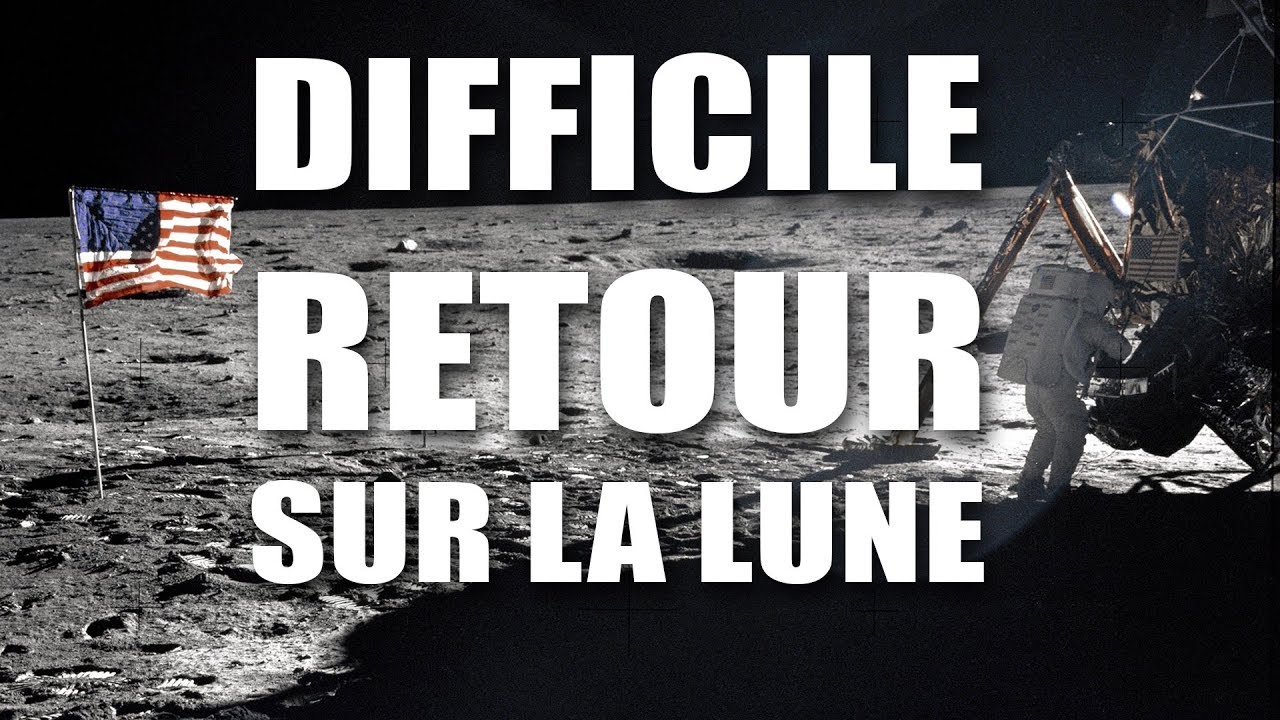
Pourquoi est il si dur de retourner sur la lune ? - EC
Keywords
Summary
187 words
Critical Evaluation
Value of the Information & Strength of the Argument
The video provides substantial value by addressing common misconceptions about lunar return, offering a nuanced explanation that combines historical context, engineering realities, and current opportunities. The argumentation is solid: it logically breaks down the problem into funding, workforce, and technology, and supports each point with concrete examples. The explanations of red dwarfs, CMB, and orbital mechanics are accurate and well-illustrated, making complex topics understandable. The discussion of the dark matter stream is particularly insightful, connecting a recent discovery to broader research efforts. The reasoning is coherent and evidence-based, with appropriate caveats about uncertainties.
Scientific Rigor, Source Quality, Title Accuracy
The video demonstrates scientific rigor by presenting established facts and clearly distinguishing between confirmed knowledge and hypotheses. The explanation of the CMB is mostly accurate, though a minor error (electrons and protons forming hydrogen) was corrected by viewers. The video does not cite specific sources, but the information aligns with current scientific consensus. The title accurately reflects the content, which focuses on the Moon return question while also addressing other space-related queries. The video’s quality is high, with clear visuals and a well-structured narrative.
192 words
Title / Content Match
The title accurately reflects the main topic, which is the difficulty of returning to the Moon, and the video delivers a clear, multi-faceted answer.
Quality & Reliability
8/10
The video provides accurate and well-structured explanations of spaceflight challenges, cosmology, and astrophysics, with appropriate caveats. Minor imprecision in the CMB explanation (electrons and protons forming hydrogen) is corrected by viewers, but overall the content is reliable.
Key Moments
Markers derived by PSI from the transcript: the creator did not define chapters.
- Introduction and main question about Moon return difficulty.
- Explanation of Apollo's massive scale and funding.
- Loss of know-how and industrial base.
- Modern opportunities and private industry.
- Question about red dwarf stars and habitability.
- Explanation of cosmic microwave background.
- Mars launch windows and Hohmann transfer orbits.
- Dark matter hurricane S1 and its implications.
Cited Sources
- Hugo Lisoir on Twitch — Mentioned in the video description as a way to follow the creator.
Concurring Sources
- NASA Artemis Program — Current NASA plans to return to the Moon, aligning with the video's discussion of modern efforts.
Contribution & Novelties
The video offers a clear synthesis of why returning to the Moon is challenging, emphasizing the loss of institutional knowledge and the role of private industry. It also provides accessible explanations of red dwarf variability, the cosmic microwave background, and orbital mechanics, making these topics understandable to a general audience. The discussion of the dark matter stream S1 is particularly timely and informative.
Pour aller plus loin :
- Apollo program — Historical context of the Moon landings.
- Hohmann transfer orbit — Explanation of the most fuel-efficient orbital transfer.
- Cosmic microwave background — Detailed information on the CMB and its significance.
- Red dwarf — Overview of red dwarf stars and their properties.
- Dark matter — Introduction to dark matter and detection efforts.
121 words
Radar Profile
The radar profile shows high scores in information quantity, quality, and reliability, with a slightly lower technical level, indicating that the video is informative and trustworthy while remaining accessible. The balance suggests a well-rounded educational content.
💬 Très positif. Sur les 30 commentaires analysés, les spectateurs expriment une grande appréciation pour la clarté et la qualité des explications, avec quelques corrections factuelles mineures et des suggestions de sujets futurs.