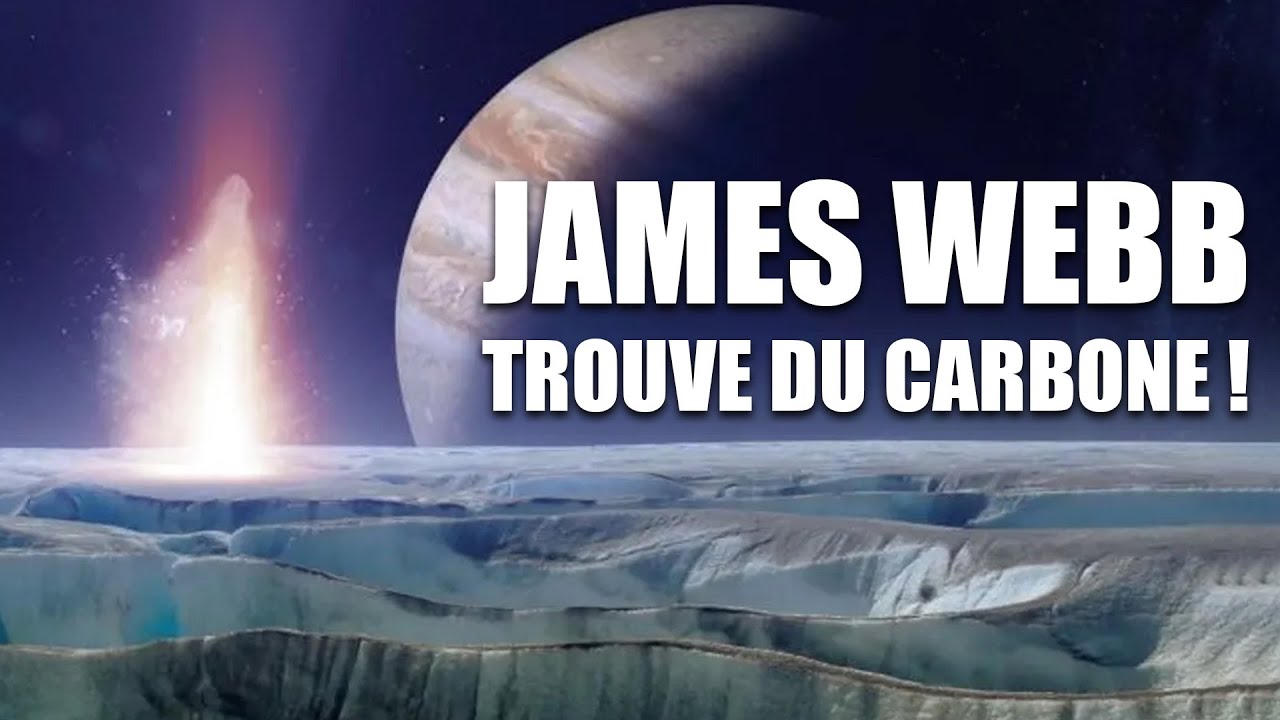
JAMES WEBB découvre du carbone sur Europe ! Il vient de L'OCÉAN ! DNDE 313
Keywords
Summary
124 words
Critical Evaluation
Value of the Information & Strength of the Argument
The video provides valuable, up-to-date information on recent space discoveries and industry developments. The argumentation is generally solid, with clear explanations of the scientific significance of the James Webb findings. The host effectively connects the detection of CO2 on Europa to the broader question of habitability, while acknowledging the limits of current data. The coverage of European cargo spacecraft is informative, though some details are speculative. The reporting on Rocket Lab and Ariane 6 is factual and well-contextualized.
Scientific Rigor, Source Quality, Title Accuracy
The video demonstrates good scientific rigor by citing primary sources such as NASA and Space.com in the description. The information is presented accurately, with appropriate caveats about uncertainties. The title accurately reflects the main topic, though it emphasizes the James Webb discovery while the video also covers other news. The content is well-structured and the sources are credible.
151 words
Title / Content Match
The title accurately reflects the main topic, though it emphasizes the James Webb discovery while the video also covers other news.
Quality & Reliability
8/10
The video presents recent scientific findings and space industry news with references to primary sources (NASA, ESA, Space.com). The information is generally accurate and up-to-date, though some interpretations are speculative (e.g., implications for life).
Key Moments
Markers derived by PSI from the transcript: the creator did not define chapters.
- Introduction and overview of the episode's topics
- James Webb discovers CO2 on Europa, focusing on Tara Regio
- Implications of carbon for potential life and future missions (JUICE, Europa Clipper)
- European commercial cargo spacecraft: RFA's Argo and The Exploration Company's Nyx
- ESA's commercial cargo program and potential for crewed vehicles
- OSIRIS-REx sample return and extended mission to Apophis
- Rocket Lab Electron launch failure and its implications
- Ariane 6 delay due to hydraulic anomaly and outlook for first flight
Cited Sources
- NASA's Webb Finds Carbon Source on Surface of Jupiter's Moon Europa — Primary source for the James Webb discovery of CO2 on Europa.
- RFA-led consortium submit Argo for ESA commercial cargo initiative — Source for the Argo cargo spacecraft project.
- Rocket Lab Electron launch failure September 2023 — Source for the Rocket Lab launch failure.
- Tweet by Josef Aschbacher on Ariane 6 anomaly — Source for the Ariane 6 delay announcement.
Concurring Sources
- NASA's Webb Finds Carbon Source on Surface of Jupiter's Moon Europa — Confirms the detection of CO2 on Europa.
External References
Contribution & Novelties
The video provides a concise and accessible synthesis of recent space news, with a focus on the James Webb discovery on Europa. It adds value by explaining the scientific significance of finding CO2 in a geologically active region, linking it to the potential habitability of subsurface oceans. The coverage of European cargo spacecraft initiatives is timely and informative.
Pour aller plus loin :
- Europa (moon) - Wikipedia — Background on Europa’s characteristics and exploration.
- James Webb Space Telescope - Wikipedia — Overview of the telescope’s capabilities and mission.
- Europa Clipper - Wikipedia — Details on the upcoming NASA mission to Europa.
- JUICE (spacecraft) - Wikipedia — Information on ESA’s mission to Jupiter’s icy moons.
- OSIRIS-REx - Wikipedia — Details on the asteroid sample return mission.
125 words
Radar Profile
The radar profile shows high scores in information quantity, quality, and reliability, with a slightly lower technical level, indicating a well-balanced and accessible science communication video.
💬 Très positif. Sur les 30 commentaires analysés, les spectateurs expriment une forte appréciation pour la qualité et la régularité de l'émission, avec des remerciements et des encouragements, et montrent un intérêt marqué pour les sujets traités.