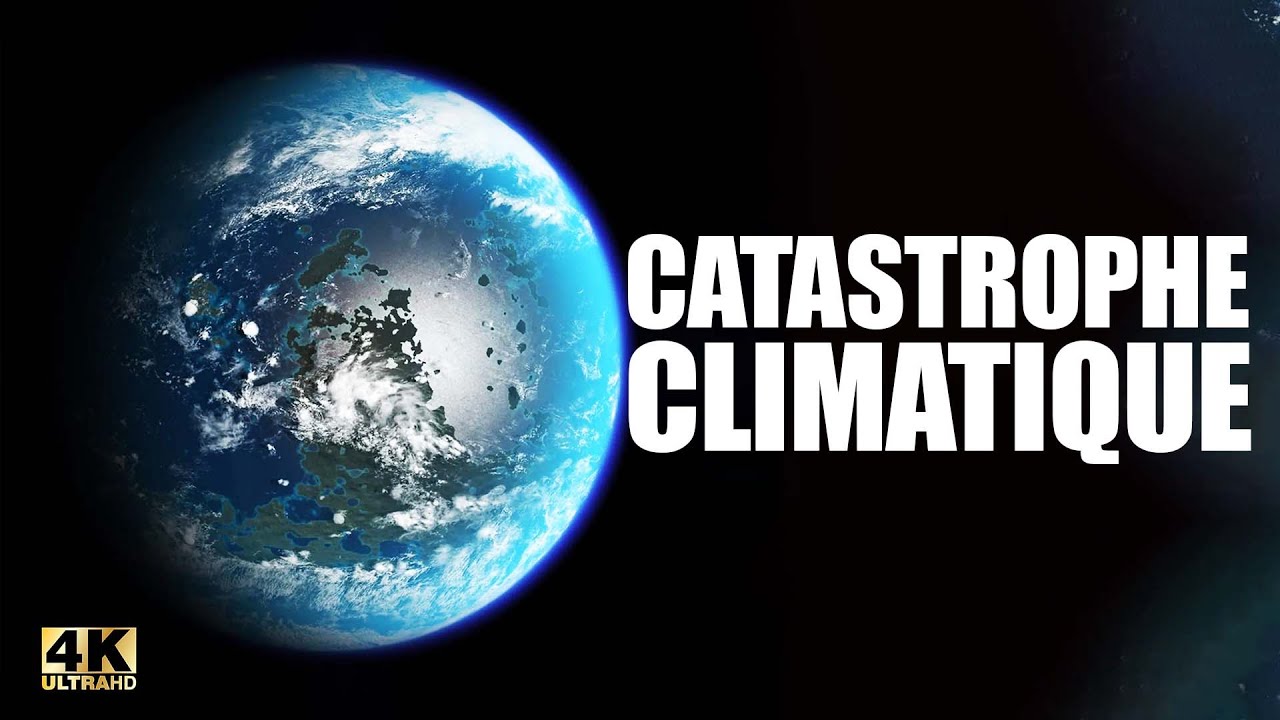
VÉNUS - L'HISTOIRE d'une CATASTROPHE CLIMATIQUE - 4K
Keywords
Summary
147 words
Critical Evaluation
Value of the Information & Strength of the Argument
The video provides a comprehensive and engaging overview of Venus’s climatic history, effectively synthesizing current scientific knowledge and hypotheses. It presents multiple lines of evidence—geological, atmospheric, and rotational—to explore the possibility of past oceans and habitability. The argumentation is balanced, acknowledging uncertainties and contrasting different models, such as the recent simulation suggesting a dry early Venus versus the ocean-based hypothesis. The inclusion of upcoming missions adds value by contextualizing future research. The video excels in making complex planetary science accessible without oversimplifying the scientific debate.
Scientific Rigor, Source Quality, Title Accuracy
The video demonstrates strong scientific rigor by referencing peer-reviewed studies and institutional sources. The description includes links to Nature, IOP, and university pages, which are credible. The content aligns well with the title, focusing on the climatic catastrophe and its historical context. The video clearly distinguishes between established facts and hypotheses, and the presentation is faithful to the sources. The title accurately reflects the content, and the video does not overstate conclusions, appropriately highlighting the ongoing scientific uncertainty.
178 words
Title / Content Match
The title accurately reflects the content, focusing on Venus's climatic catastrophe and its history.
Quality & Reliability
8/10
The video presents a well-structured overview of Venus's climatic history, citing recent scientific studies and missions. It distinguishes between established facts and hypotheses, and includes references to peer-reviewed sources. Minor simplifications are present but do not compromise accuracy.
Key Moments
Markers derived by PSI from the transcript: the creator did not define chapters.
- Introduction: Venus as Earth's twin, but with extreme conditions.
- Explanation of Venus's greenhouse effect and surface conditions.
- Magellan mission findings: volcanic features and young surface.
- Discussion of the resurfacing event ~500 million years ago.
- Evidence for past water: deuterium/hydrogen ratio from Pioneer Venus.
- Hypothesis of ancient oceans and potential habitability for 3 billion years.
- Recent simulations suggesting Venus may have never had liquid water.
- Slow rotation as evidence for past oceans.
- Upcoming missions to Venus: NASA, ESA, and others.
- Conclusion: future exploration may reveal Venus's secrets.
Cited Sources
- Water on Venus (Vanderbilt University) — Source for deuterium/hydrogen ratio and water loss.
- Oceans on Venus? (University of Geneva) — Source for the hypothesis of ancient oceans.
- Nature article: Venus's climate history — Recent study on Venus's atmosphere and potential habitability.
- IOP article: Venus's rotation and oceans — Study linking Venus's slow rotation to past oceans.
Concurring Sources
- NASA Venus missions — Official NASA page on Venus missions, supporting the video's mention of upcoming exploration.
Dissenting Sources
- Alternative model: Venus never had oceans — This study suggests Venus may have been too hot for liquid water, contradicting the ocean hypothesis.
External References
Contribution & Novelties
The video synthesizes recent research and missions, providing an updated overview of Venus’s climatic history. It highlights the debate between the ‘ocean’ hypothesis and the ‘dry Venus’ simulation, offering viewers a nuanced understanding of current scientific uncertainty. The inclusion of upcoming missions adds forward-looking value.
Pour aller plus loin :
- Runaway greenhouse effect — Concept central to Venus’s current state.
- Deuterium/hydrogen ratio — Used as evidence for water loss.
- Venus exploration missions — Overview of past and future missions.
79 words
Radar Profile
The radar profile shows high scores in information quantity and quality, with a moderate technical level. The video is well-balanced, providing substantial content without being overly technical, making it accessible to a general audience while maintaining scientific depth.
💬 Très positif. Sur les 30 commentaires analysés, la majorité exprime une forte appréciation pour la qualité des vidéos, la passion du créateur, et la capacité à susciter l'intérêt pour l'exploration spatiale. Plusieurs commentaires posent des questions scientifiques pertinentes, montrant un engagement actif du public.