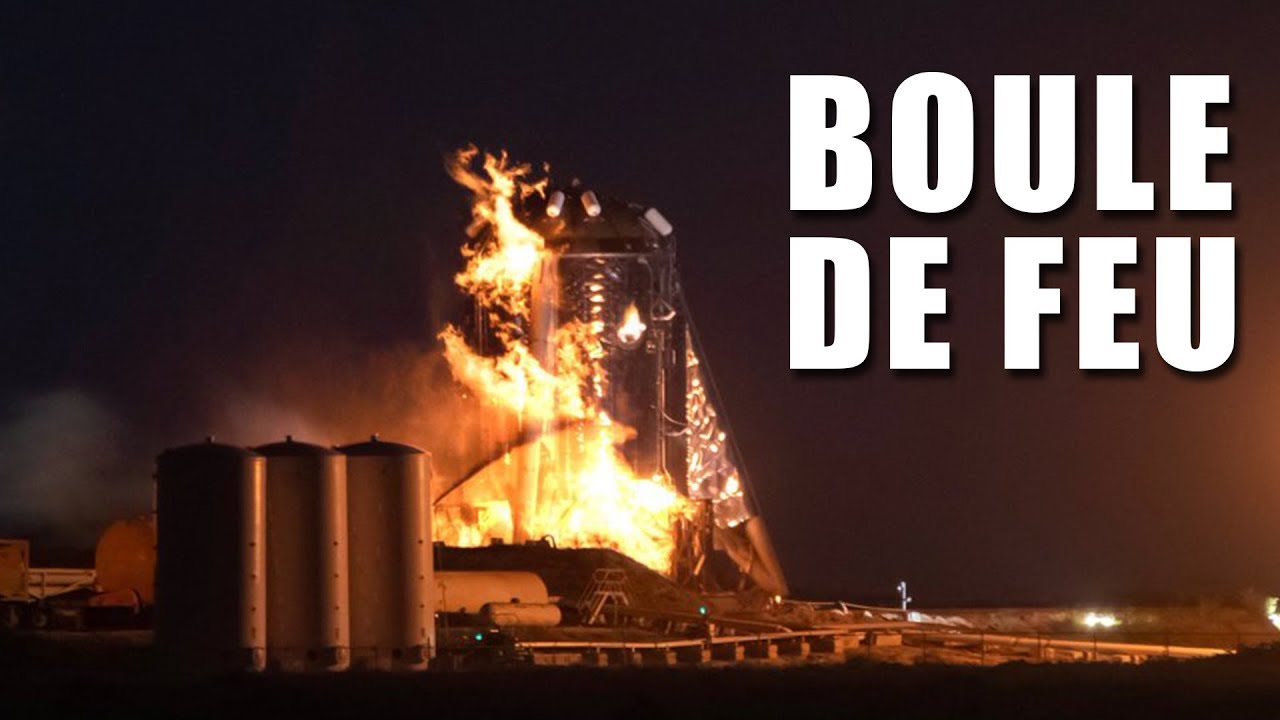
SpaceX - Boule de feu lors des tests du StarHopper ! EC
Keywords
Summary
170 words
Critical Evaluation
Value of the Information & Strength of the Argument
The video provides valuable, up-to-date information on multiple space topics, synthesizing recent news and scientific findings. The argumentation is generally solid, presenting facts and hypotheses clearly. For instance, the explanation of the StarHopper incident is plausible and based on available evidence, while the discussion on Titan’s atmosphere presents multiple scientific hypotheses without overstating certainty. The host also contextualizes the significance of each event, such as the implications of the asteroid discovery for planetary defense.
Scientific Rigor, Source Quality, Title Accuracy
The video demonstrates scientific rigor by referencing official sources like NASA and ESA missions, and by providing links to relevant videos (e.g., Everyday Astronaut). The title accurately reflects the main content, focusing on the StarHopper incident, though the video covers additional topics. The host distinguishes between confirmed facts and speculation, such as in the Crew Dragon investigation, where he notes that the engines were not directly responsible. Overall, the sources are credible and the title-content alignment is good.
167 words
Title / Content Match
The title accurately reflects the main topic, focusing on the StarHopper incident, though the video covers additional space news.
Quality & Reliability
7/10
The video provides accurate and up-to-date information on recent space events, citing official sources and missions. However, some speculative elements are presented without clear distinction from established facts.
Key Moments
Markers derived by PSI from the transcript: the creator did not define chapters.
- Introduction and overview of the episode
- Discussion of StarHopper fireball incident
- Update on Crew Dragon explosion investigation
- Asteroid 2019 LF6 discovery and characteristics
- Brazilian space agency and Alcântara launch site
- Titan's atmosphere and possible origins
- Why Pragyan rover cannot survive lunar night
Cited Sources
- Everyday Astronaut video on StarHopper — Referenced for additional footage and analysis of the StarHopper test.
- Pedro Macedo Camacho music — Background music used in the video.
- Utho Riley YouTube channel — Background music used in the video.
- Hugo Lisoir Twitch channel — Promotion of the creator's Twitch channel.
- Hugo Lisoir uTip page — Support page for the channel.
Concurring Sources
- Everyday Astronaut video on StarHopper — Provides additional footage and analysis consistent with the incident described.
Contribution & Novelties
The video offers a concise synthesis of recent space news, with a focus on the StarHopper incident and its implications for SpaceX’s development. It also highlights lesser-known topics like the asteroid 2019 LF6 and the Brazilian space program, providing educational value. The discussion on Titan’s atmosphere presents multiple scientific hypotheses, encouraging viewers to think critically about planetary science.
Pour aller plus loin :
- StarHopper test article on Wikipedia — Provides background on the StarHopper prototype and its test program.
- Asteroid 2019 LF6 on NASA JPL — Official data on near-Earth objects, including 2019 LF6.
- Titan’s atmosphere on Wikipedia — Detailed information on the composition and theories of Titan’s atmosphere.
- Chandrayaan-2 mission on ISRO — Official mission page for the Indian lunar mission.
- Dragonfly mission on NASA — Official site for the upcoming Titan rotorcraft mission.
135 words
Radar Profile
The radar profile shows a balanced performance across all dimensions, with slightly higher scores in information quantity and technical level, indicating a well-rounded and informative video. The lower score in information quality suggests some room for improvement in depth or precision.
💬 Très positif. Sur les 30 commentaires analysés, tous expriment un soutien enthousiaste et des remerciements pour la qualité du contenu, sans aucune critique négative.