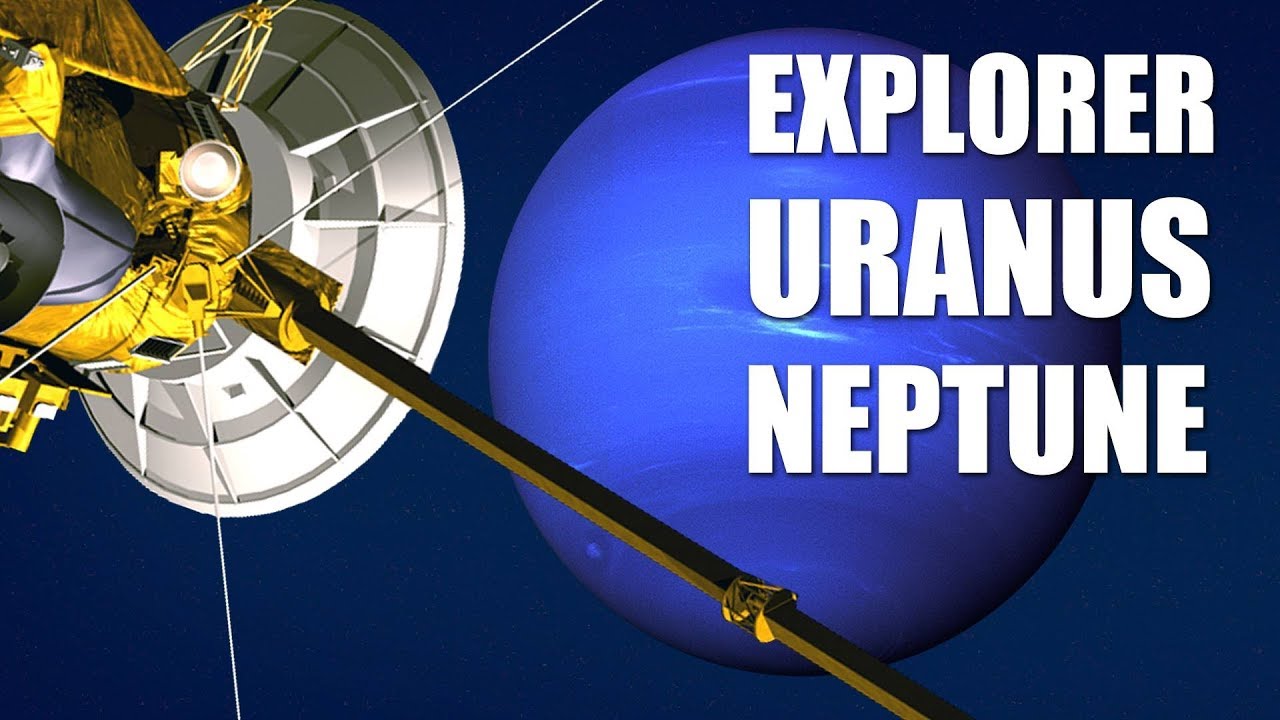
Explorer Uranus et Neptune - LDDE
Keywords
Summary
149 words
Critical Evaluation
Value of the Information & Strength of the Argument
The video provides a comprehensive overview of the scientific value of exploring Uranus and Neptune, emphasizing their unique characteristics and the unanswered questions about their formation and internal structure. The argumentation is solid, logically progressing from the scientific importance to the technical challenges and potential mission architectures. The presenter effectively uses data from NASA’s mission study to support his points, and the discussion of trade-offs between different mission types is well-reasoned. The video also contextualizes the exploration of ice giants within the broader search for exoplanets, strengthening the case for such missions.
Scientific Rigor, Source Quality, Title Accuracy
The video demonstrates strong scientific rigor, citing a NASA mission study and articles from reputable sources like The Planetary Society and ScienceDirect. The information is presented accurately, with clear explanations of complex concepts like gravity assists and orbital insertion. The title accurately reflects the content, and the video stays on topic throughout. The sources are appropriately referenced in the description, allowing viewers to verify the information. The video also acknowledges uncertainties, such as the unexplained heat emission from Neptune, which adds to its credibility.
191 words
Title / Content Match
The title accurately reflects the content, which focuses on the exploration of Uranus and Neptune.
Quality & Reliability
8/10
The video is well-researched, citing NASA mission studies and scientific articles. The information is accurate and up-to-date as of 2019, with clear explanations of orbital mechanics and mission constraints. Minor simplifications are present but do not detract from overall reliability.
Key Moments
Markers derived by PSI from the transcript: the creator did not define chapters.
- Introduction to Uranus and Neptune as the forgotten planets
- Comparison of Uranus and Neptune's physical characteristics
- Discussion of the challenges of distance and travel time
- Explanation of gravity assist maneuvers and launch windows
- Overview of NASA's 2010 mission study and possible scenarios
- Details on propulsion options and spacecraft design
- Discussion of potential international collaboration and future prospects
Cited Sources
- Ice Giants Mission Study Final Report — NASA's 2010 mission study referenced for mission scenarios and technical details.
- How We Would Explore Uranus or Neptune — Article from The Planetary Society discussing mission concepts.
- ScienceDirect Article on Ice Giants — Scientific paper on ice giant exploration.
- Discover Magazine Blog Post — Blog post about potential missions to Uranus and Neptune.
- Support Hugo Lisoir on uTip — Crowdfunding platform for the channel.
- Hugo Lisoir on Twitch — Twitch channel of the creator.
- Utho Riley YouTube Channel — Music used in the video.
Concurring Sources
- NASA Ice Giants Mission Study — The video's main source, providing mission scenarios and technical details.
- The Planetary Society Article — Supports the discussion on mission concepts.
Contribution & Novelties
The video synthesizes existing mission studies and scientific literature into an accessible format, highlighting the current state of exploration for Uranus and Neptune. It provides a clear overview of the technical challenges and potential solutions, making a complex topic understandable to a broad audience. The video also emphasizes the scientific importance of these planets, linking them to exoplanet research.
Pour aller plus loin :
- NASA Ice Giants Mission Study — The primary source for mission concepts.
- Uranus (Wikipedia) — General information about Uranus.
- Neptune (Wikipedia) — General information about Neptune.
- Gravity assist (Wikipedia) — Explanation of the maneuver used for interplanetary travel.
- Ion thruster (Wikipedia) — Technology discussed for propulsion.
110 words
Radar Profile
The radar profile shows high scores in information quantity and quality, with a slightly lower technical level, indicating a well-balanced presentation that is both informative and accessible. The reliability score is also high, reflecting the use of credible sources.
💬 Très positif. Sur les 30 commentaires analysés, l'enthousiasme est unanime : les spectateurs saluent la qualité de la vidéo, la clarté des explications et le choix du sujet, exprimant le souhait de voir ces planètes explorées.