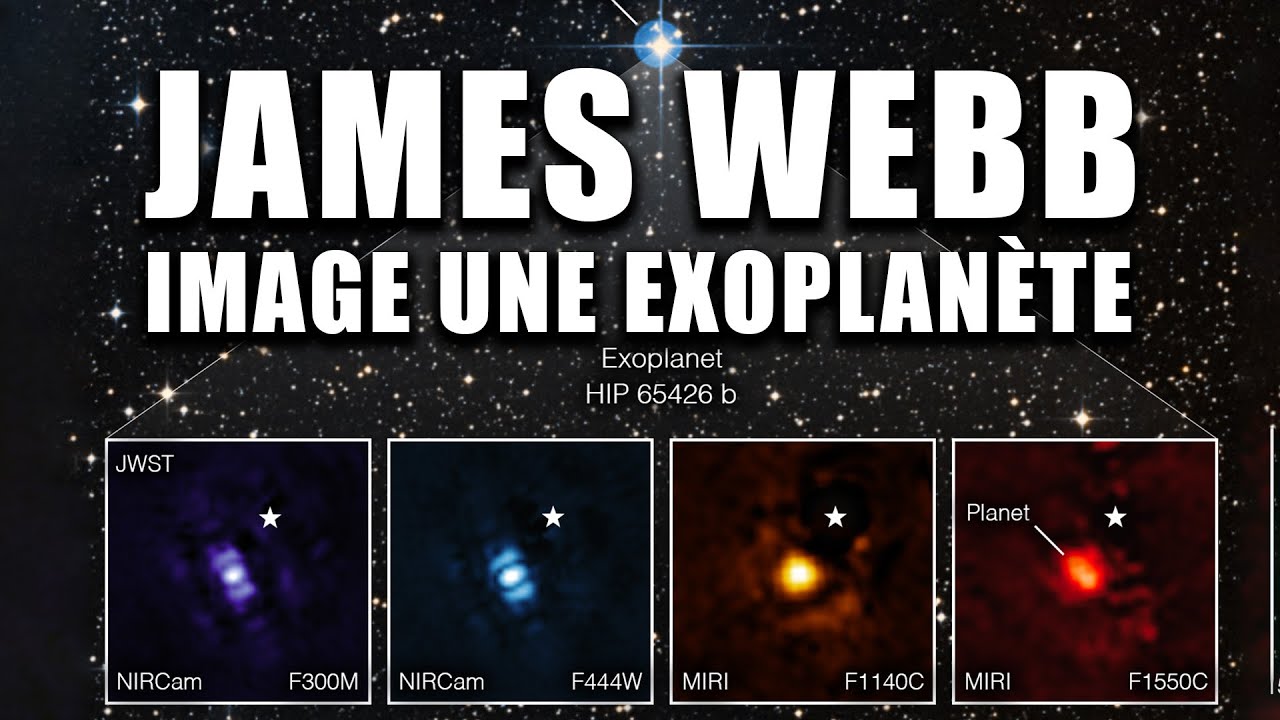
JAMES WEBB dévoile sa PREMIÈRE IMAGE directe d'une EXOPLANÈTE ! DNDE 263
Keywords
Summary
141 words
Critical Evaluation
Value of the Information & Strength of the Argument
The video provides valuable, up-to-date information on multiple space missions, with a clear explanation of the JWST exoplanet observation’s scientific importance. The argumentation is solid, as the host explains technical concepts (e.g., direct vs. indirect detection) and contextualizes the news within broader space exploration trends. The discussion of SpaceX’s launch rate and lunar programs is well-reasoned, though some projections are speculative.
Scientific Rigor, Source Quality, Title Accuracy
The video demonstrates scientific rigor by citing primary sources, including an arXiv paper for the exoplanet observation and SpaceNews articles for Artemis and South Korea’s lunar plans. The title accurately reflects the main content, and the video maintains a high standard of accuracy. The host also mentions the limitations of ground-based observations, showing attention to detail. The sources are credible and appropriately referenced in the description.
142 words
Title / Content Match
The title accurately highlights the main topic (JWST's first direct exoplanet image) and the video covers this prominently, along with other space news.
Quality & Reliability
8/10
The video presents recent space news with references to primary sources (arXiv paper, SpaceNews articles) and provides technical details. The information is generally accurate and well-contextualized, though some claims (e.g., SpaceX launch rates) are based on extrapolation.
Key Moments
Markers derived by PSI from the transcript: the creator did not define chapters.
- Introduction to the episode and main topic: JWST's first direct exoplanet image.
- Explanation of direct vs. indirect exoplanet detection methods.
- Details of the JWST observation of HIP 65426 b, including mass and atmospheric composition.
- Discussion of Artemis 1 launch scrub due to hydrogen leak and next launch windows.
- SpaceX Starship static fire with three Raptor engines and plans for 2023.
- China's lunar program updates: YF-79 engine test and lander development.
- South Korea's Danuri orbiter and lunar lander plans.
Cited Sources
- arXiv paper on JWST direct imaging of exoplanet — Primary source for the JWST exoplanet observation.
- SpaceNews article on Artemis 1 scrub — Source for the Artemis 1 launch scrub details.
- SpaceNews article on South Korea lunar lander — Source for South Korea's lunar lander budget request.
- YouTube video of Booster 7 static fire — Visual source for SpaceX Booster 7 static fire.
Concurring Sources
- NASA's JWST exoplanet press release — Confirms the JWST direct imaging result.
- SpaceNews article on Artemis 1 — Confirms the launch scrub details.
Dissenting Sources
- No discordant sources found — The video's claims align with available sources.
External References
Contribution & Novelties
The video provides a timely and accessible summary of recent space developments, particularly the JWST exoplanet imaging breakthrough, which is a significant scientific milestone. It also offers insights into the competitive landscape of lunar exploration, comparing US, Chinese, and South Korean programs. The host’s explanations help viewers understand the technical aspects without oversimplifying.
Pour aller plus loin :
- Direct imaging of exoplanets — Overview of the method and its challenges.
- James Webb Space Telescope — Background on the telescope and its capabilities.
- Artemis program — Details on NASA’s lunar exploration program.
- SpaceX Starship — Information on the Starship launch system.
100 words
Radar Profile
The radar profile shows high scores across all dimensions, indicating a well-rounded and reliable video. The balance between information quantity, quality, technical depth, and reliability suggests a strong educational resource for space enthusiasts.
💬 Très positif. Sur les 30 commentaires analysés, les spectateurs expriment un enthousiasme marqué pour la qualité des vidéos et la passion de l'animateur, avec des remerciements et des encouragements.