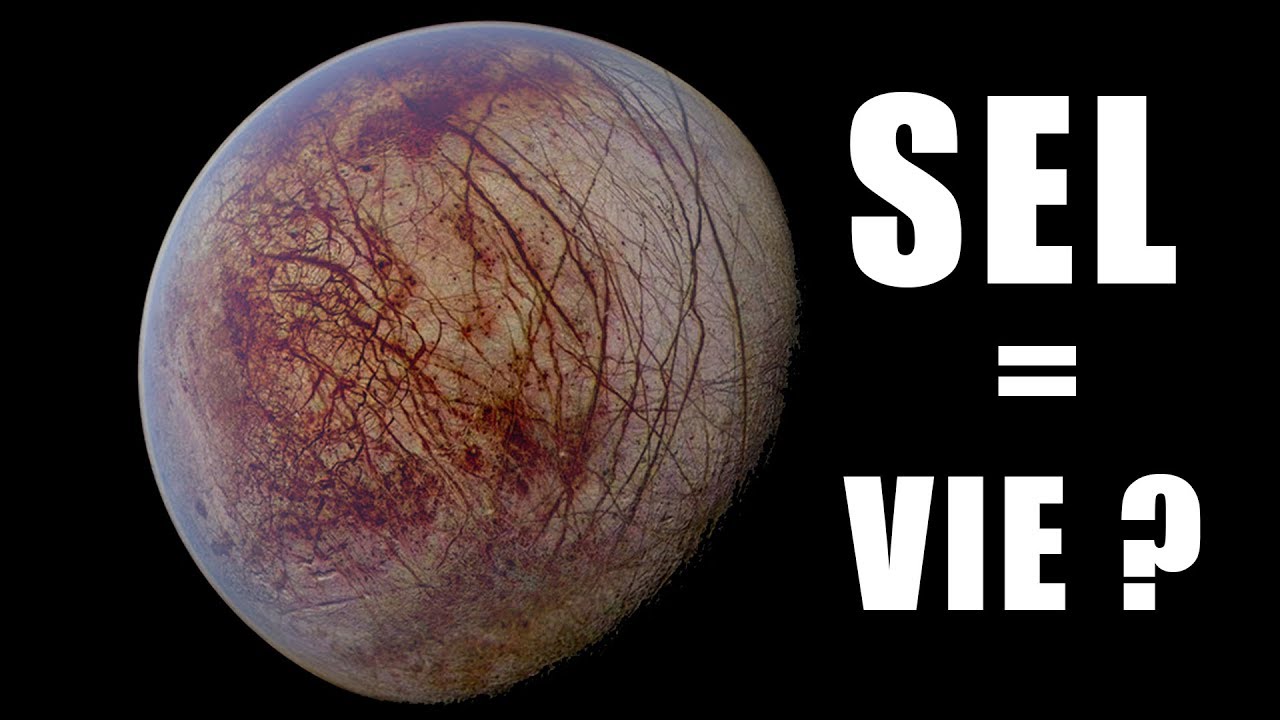
Du SEL dans l'Océan d'EUROPE ! DNDE #111
Keywords
Summary
181 words
Critical Evaluation
Value of the Information & Strength of the Argument
The video provides valuable and up-to-date information on space exploration, presenting recent scientific discoveries and mission milestones. The argumentation is solid, as the presenter clearly explains the reasoning behind the scientific interpretations, such as why the detection of sodium chloride on Europa’s leading hemisphere is more indicative of the ocean’s composition than the sulfates found on the trailing side. He also appropriately notes the need for confirmation by future missions like Europa Clipper. The presentation of the OSIRIS-REx mission and the NIAC projects is clear and informative, with technical details explained in an accessible manner.
Scientific Rigor, Source Quality, Title Accuracy
The video demonstrates scientific rigor by citing specific sources for each news item, including a peer-reviewed article in Science Advances for the Europa study and NASA/JPL press releases for the OSIRIS-REx and Psyche missions. The presenter distinguishes between confirmed facts and hypotheses, and acknowledges uncertainties. The title accurately reflects the main topic, and the content aligns well with the title. The video also provides links to the sources in the description, allowing viewers to verify the information.
187 words
Title / Content Match
The title accurately reflects the main topic (salt in Europa's ocean) and the video covers this story prominently, alongside other space news.
Quality & Reliability
8/10
The video presents recent scientific findings and mission updates with references to primary sources (journal articles, NASA pages). The presenter clearly distinguishes confirmed data from hypotheses and mentions uncertainties. The information is accurate and well-contextualized for a general audience.
Key Moments
Markers derived by PSI from the transcript: the creator did not define chapters.
- Erratum: Europa is a moon of Jupiter, not Saturn.
- Introduction to Europa's subsurface ocean and the question of its salinity.
- Explanation of the study detecting sodium chloride on Europa's leading hemisphere.
- Discussion on the implications for habitability and future missions like Europa Clipper.
- OSIRIS-REx lowers its orbit around Bennu to under 700 meters.
- Bennu's mysterious particle ejection activity and plans to investigate.
- Upcoming missions: Lucy to Jupiter's Trojans and Psyche to a metal asteroid.
- NASA's NIAC program selects innovative projects, including TransAstra's optical mining.
- Details of TransAstra's asteroid mining concept and its potential.
Cited Sources
- Science Advances - Europa study — Primary source for the detection of sodium chloride on Europa.
- Phys.org article on Europa discovery — Secondary source reporting on the Europa study.
- NASA NIAC program page — Source for the NIAC 2019 Phase I and Phase II selections.
- NASA NIAC Mini Bee Prototype page — Source for TransAstra's Mini Bee prototype.
- Space.com article on OSIRIS-REx orbit — Source for OSIRIS-REx's record close orbit around Bennu.
- JPL news on Psyche mission — Source for the Psyche mission's progress.
- TransAstra optical mining page — Source for TransAstra's optical mining concept.
Concurring Sources
- Science Advances - Europa study — The primary peer-reviewed source for the Europa salt detection.
- Phys.org article on Europa discovery — Independent science news outlet reporting the same finding.
External References
Contribution & Novelties
The video provides a clear and accessible synthesis of recent space news, with a focus on the Europa salt discovery. It adds value by explaining the scientific significance of the findings and placing them in the context of future missions. The coverage of the NIAC program and TransAstra’s optical mining concept offers insight into emerging space technologies.
Pour aller plus loin :
- Europa (moon) - Wikipedia — Overview of Europa’s characteristics and exploration history.
- Europa Clipper - NASA — Official page for the upcoming NASA mission to Europa.
- OSIRIS-REx - NASA — Mission page for the asteroid sample return mission.
- Psyche (spacecraft) - Wikipedia — Information on the Psyche mission to a metal asteroid.
- Innovative Advanced Concepts (NIAC) - NASA — Overview of NASA’s NIAC program.
126 words
Radar Profile
The radar profile shows high scores in information quantity, quality, and reliability, with a slightly lower technical level. This indicates a well-researched and informative video that remains accessible to a general audience.
💬 Très positif. Sur les 30 commentaires analysés, les spectateurs expriment un fort enthousiasme pour la qualité du contenu, la clarté des explications et la régularité des publications, avec quelques remarques humoristiques sur le sel et des remerciements pour le travail fourni.