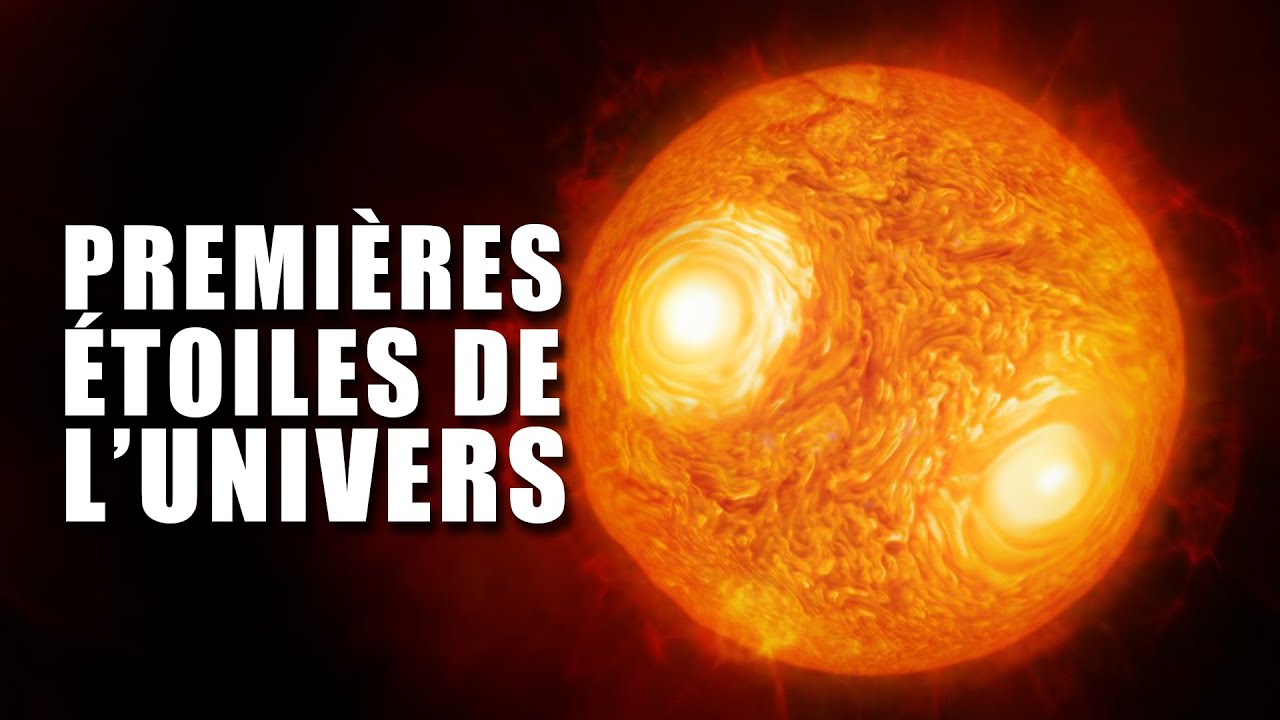
Les premières étoiles de l'univers - LDDE
Keywords
Summary
194 words
Critical Evaluation
Value of the Information & Strength of the Argument
The video provides a comprehensive and well-argued overview of the current understanding of Population III stars. It effectively combines theoretical models with observational constraints, such as the metallicity of ancient stars, to build a coherent narrative. The argumentation is logical, progressing from the conditions of the early universe to the formation, life, and death of the first stars, and finally to the prospects for observation. The use of analogies and clear explanations makes complex astrophysical concepts accessible without oversimplifying the science.
Scientific Rigor, Source Quality, Title Accuracy
The video demonstrates strong scientific rigor by referencing multiple peer-reviewed sources, including arXiv papers and an article from Astronomy & Astrophysics. The inclusion of institutional sources like the Webb Telescope website adds credibility. The title accurately reflects the content, and the video stays focused on the topic. The sources are appropriately cited in the description, allowing viewers to verify the information. The video also acknowledges the speculative nature of some aspects, such as the exact masses of Population III stars, which is scientifically honest.
180 words
Title / Content Match
The title accurately reflects the content, which focuses on the first stars in the universe.
Quality & Reliability
8/10
The video is well-structured, relies on established cosmological models, and cites several peer-reviewed sources (arXiv, A&A) and institutional references (Webb Telescope). The content is accurate and up-to-date as of 2020, with clear explanations of complex concepts.
Key Moments
Markers derived by PSI from the transcript: the creator did not define chapters.
- Introduction to the video and the mystery of the first stars.
- Overview of the early universe: inflation, forces, and formation of neutral atoms.
- The dark ages and the formation of the first stars from hydrogen and helium clouds.
- Explanation of stellar nucleosynthesis and metallicity as a tool to estimate stellar age.
- Simulations suggest Population III stars could be extremely massive, up to hundreds of solar masses.
- Lifetimes of massive stars are short; some low-mass Population III stars might survive today.
- Examples of ancient low-metallicity stars like HE 0107-5240.
- James Webb Space Telescope's role in observing the first stars and galaxies.
- Possible detection of primordial supernovae or black holes as remnants.
- Conclusion and call for questions.
Cited Sources
- What Were the First Stars Like? — Institutional source from the Webb Telescope website, providing context on the first stars.
- The First Stars in the Universe — Scientific American article discussing the nature of the first stars.
- Formation of the first stars — arXiv paper on the formation of the first stars.
- The first stars: formation, properties, and impact — arXiv paper reviewing the properties and impact of the first stars.
- The first stars: mass growth and the transition to star formation — Article from Astronomy & Astrophysics on the mass growth of the first stars.
Concurring Sources
- What Were the First Stars Like? — Supports the idea that the first stars were massive and formed from primordial gas.
- The First Stars in the Universe — Discusses the properties and detection of the first stars, aligning with the video's content.
Dissenting Sources
- No discordant sources found — The video's content is consistent with the cited sources and current scientific consensus.
External References
Contribution & Novelties
The video synthesizes current research on Population III stars, explaining their expected properties and the methods to detect them. It highlights the role of the James Webb Space Telescope and the possibility of observing supernovae or black holes as remnants. The video also discusses the potential survival of low-mass Population III stars, a topic of ongoing research.
Pour aller plus loin :
- Population III stars — Wikipedia overview of Population III stars.
- Reionization — Wikipedia article on the epoch of reionization.
- James Webb Space Telescope — Wikipedia article on the JWST mission.
92 words
Radar Profile
The radar profile shows high scores in information quality and reliability, with slightly lower scores in quantity and technical depth. This indicates a well-researched and accurate video that is accessible to a broad audience, though it may not delve into the most advanced technical details.
💬 Très positif. Sur les 30 commentaires analysés, tous expriment une admiration et une gratitude pour la qualité pédagogique et la beauté des vidéos, avec des demandes de sujets supplémentaires et des encouragements pour la chaîne.