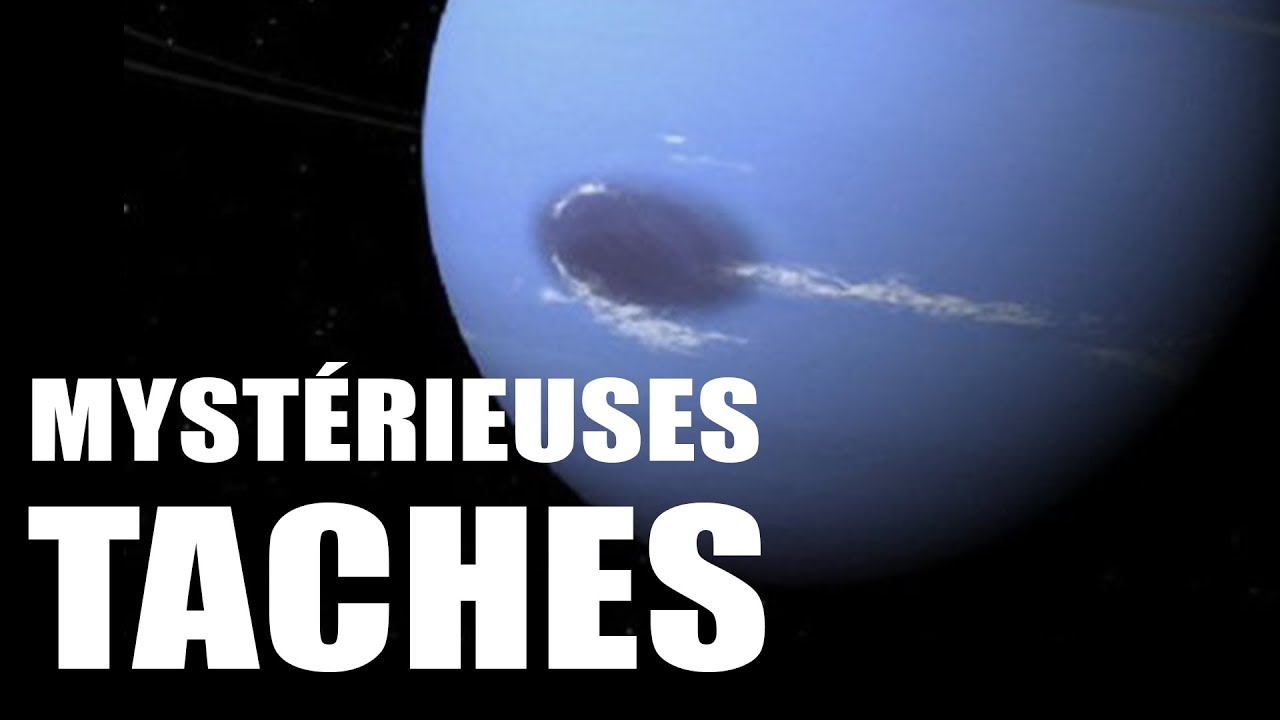
Les MYSTÉRIEUSES TACHES de Neptune ! EC
Keywords
Summary
208 words
Critical Evaluation
Value of the Information & Strength of the Argument
The video provides valuable and accurate information on several astronomical topics, with a clear and engaging presentation. Hugo Lisoir’s explanations are well-structured, and he effectively uses analogies and examples to make complex concepts understandable. The argumentation is solid, as he presents facts and observations without overstating certainty, and he acknowledges uncertainties when appropriate, such as the unknown nature of Neptune’s dark spots. The content is up-to-date and relevant, covering recent discoveries and missions.
Scientific Rigor, Source Quality, Title Accuracy
The video demonstrates a good level of scientific rigor, with accurate information and a clear presentation. However, it does not explicitly cite sources, which limits the ability to verify claims. The title accurately reflects the main topic, and the content is well-organized. The video is a science communication piece rather than a peer-reviewed source, but it is reliable for general audiences. The lack of citations is a minor weakness, but the information is consistent with established knowledge.
165 words
Title / Content Match
The title accurately reflects the main topic of the video, which focuses on Neptune's mysterious dark spots, while also covering other space-related questions.
Quality & Reliability
8/10
The video presents accurate and up-to-date scientific information on Neptune's dark spots, spacecraft design, the LSST, Wolf-Rayet stars, and the Hayabusa2 mission. The content is well-structured and based on established astronomical knowledge, though it lacks explicit citations to primary sources.
Key Moments
Markers derived by PSI from the transcript: the creator did not define chapters.
- Introduction to the video and the format of answering viewer questions.
- Discussion of Neptune's dark spots, their discovery by Voyager 2, and their transient nature.
- Explanation of the new moon Hippocamp and its possible origin from an impact on Proteus.
- Transition to the topic of spacecraft shapes and the factors that influence their design.
- Introduction to the LSST telescope and its capabilities.
- Explanation of Wolf-Rayet stars and their characteristics.
- Update on the Hayabusa2 mission and its successful landing on asteroid Ryugu.
Cited Sources
- Support the channel on Tipeee — Crowdfunding platform mentioned in the description.
- Support the channel on uTip — Crowdfunding platform mentioned in the description.
- Hugo Lisoir on Twitch — Streaming channel mentioned in the description.
Concurring Sources
- NASA - Neptune — NASA's overview of Neptune, including its dark spots.
- ESA - Hayabusa2 — ESA's page on the Hayabusa2 mission.
Contribution & Novelties
The video provides a concise and accessible overview of several recent astronomical topics, particularly Neptune’s dark spots, which are not widely covered in popular media. It also offers insights into spacecraft design and the upcoming LSST survey. The format of answering viewer questions adds a personal and engaging touch.
Pour aller plus loin :
- Neptune’s Dark Spots — Overview of the phenomenon.
- Large Synoptic Survey Telescope — Details on the LSST and its objectives.
- Wolf-Rayet star — Explanation of these massive stars.
- Hayabusa2 — Mission details and achievements.
88 words
Radar Profile
The radar profile shows high scores in information quantity, quality, technical level, and reliability, indicating a well-rounded and informative video. The balance between these dimensions suggests that the content is both accurate and accessible, with a strong emphasis on delivering substantial scientific information.
💬 Très positif. Sur les 30 commentaires analysés, l'écrasante majorité exprime des remerciements et des éloges pour la qualité du contenu et la régularité des vidéos, avec quelques suggestions de sujets et une correction factuelle mineure.