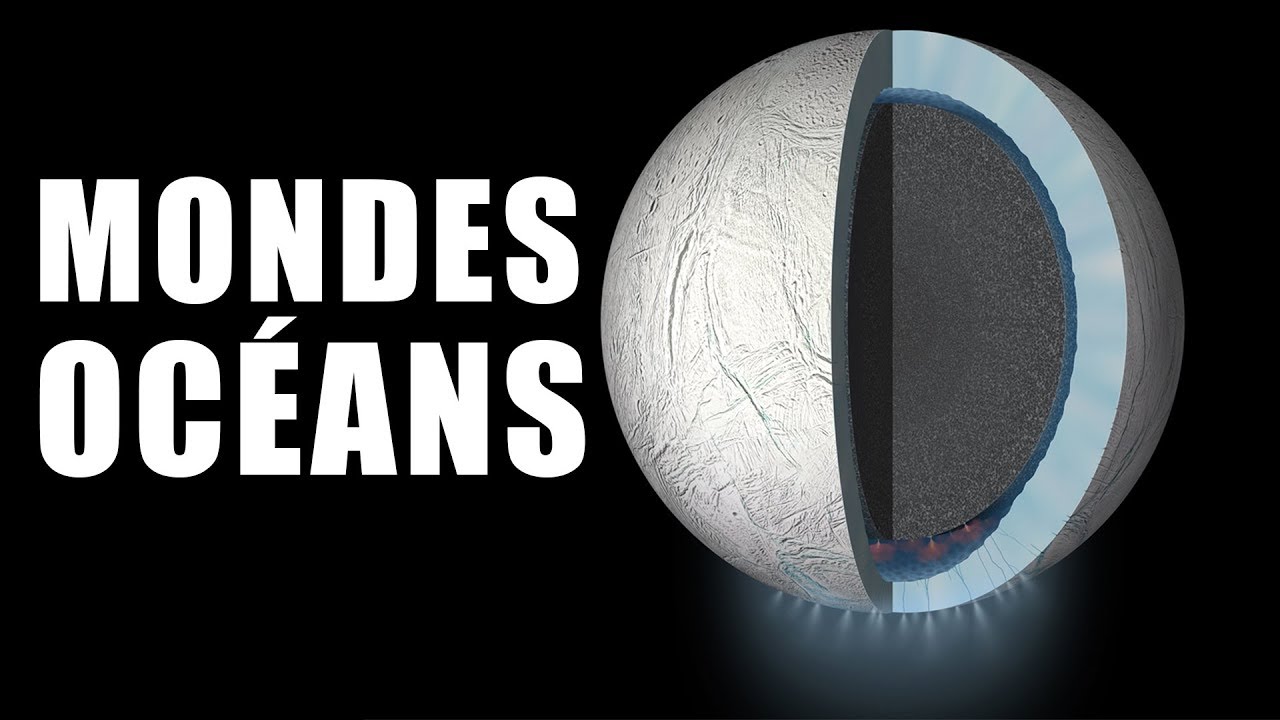
Des océans extraterrestres dans le système solaire ? LDDE
Keywords
Summary
186 words
Critical Evaluation
Value of the Information & Strength of the Argument
The video provides substantial value by synthesizing a complex topic into an accessible narrative, explaining the scientific methods used to infer subsurface oceans. The argumentation is solid, building from the initial hypothesis based on tidal heating to the conclusive magnetometry data from Galileo and the direct plume observations at Enceladus. It carefully distinguishes between confirmed and still-hypothetical cases, such as the geysers on Europa, and acknowledges uncertainties, like the energy source for Enceladus’s activity. The presentation is logical and well-paced, making it easy to follow the chain of evidence.
Scientific Rigor, Source Quality, Title Accuracy
The video demonstrates scientific rigor by referencing multiple credible sources, including NASA press releases, JPL news, and articles from reputable outlets like The New York Times and Astronomy.com. The sources are listed in the description, allowing viewers to verify the information. The title accurately reflects the content, and the video stays on topic throughout. The production quality is high, with clear visuals and appropriate music, enhancing the presentation without overshadowing the scientific content.
177 words
Title / Content Match
The title accurately reflects the content, which explores the evidence for and implications of subsurface oceans in the solar system.
Quality & Reliability
8/10
The video presents a well-structured overview of the evidence for subsurface oceans on several moons, relying on established scientific findings (Voyager, Galileo, Cassini, Hubble) and citing multiple reputable sources. The information is accurate and up-to-date as of 2019, with clear explanations of the methods used (magnetometry, gravity measurements, libration). Minor simplifications are present but do not compromise scientific integrity.
Key Moments
Markers derived by PSI from the transcript: the creator did not define chapters.
- Introduction to the topic of subsurface oceans in the solar system.
- Voyager 1's discovery of volcanic activity on Io and the concept of tidal heating.
- Voyager 2's observations of Europa's young surface and the initial hypothesis of an ocean.
- Galileo's magnetometer detects an induced magnetic field around Europa, providing strong evidence for a subsurface ocean.
- Hubble observations of possible water plumes on Europa.
- Cassini's discovery of plumes on Enceladus and evidence for a global ocean via gravity and libration measurements.
- Discussion of other candidate ocean worlds: Ganymede, Callisto, Ceres, and Pluto.
- Upcoming missions: JUICE and Europa Clipper, and the potential for habitability.
Cited Sources
- Cassini finds global ocean in Saturn's moon Enceladus — Source for the discovery of a global ocean on Enceladus.
- Enceladus plumes — Images of Enceladus plumes.
- Ocean on Saturn's moon Enceladus could be billions of years old — Source for the age of Enceladus's ocean.
- NASA's Hubble Spots Possible Water Plumes Erupting on Jupiter's Moon Europa — Source for Hubble observations of possible plumes on Europa.
- NASA's Galileo spacecraft finds evidence of Europa's ocean — Source for Galileo's magnetometry evidence.
- Margaret Kivelson on Europa's ocean — Interview with Margaret Kivelson about the discovery of Europa's ocean.
- Voyager mission to Jupiter moon Europa — Source for Voyager observations of Europa.
- NASA's Galileo spacecraft may have seen water plumes on Europa — Source for possible plume detection by Galileo.
Concurring Sources
- NASA's Hubble Spots Possible Water Plumes Erupting on Jupiter's Moon Europa — Supports the claim of possible plumes on Europa.
- Cassini finds global ocean in Saturn's moon Enceladus — Confirms the existence of a global ocean on Enceladus.
External References
Contribution & Novelties
The video provides a clear and engaging synthesis of the evidence for subsurface oceans in the solar system, making complex scientific findings accessible to a general audience. It effectively explains the methods used (magnetometry, gravity measurements, libration) and highlights the most compelling cases of Europa and Enceladus. The video also places these discoveries in the context of upcoming missions, offering a forward-looking perspective.
Pour aller plus loin :
- Subsurface ocean — Wikipedia overview of subsurface oceans.
- Tidal heating — Explanation of tidal heating, the mechanism behind the internal heat of these moons.
- Europa Clipper — NASA’s upcoming mission to Europa.
- JUICE (spacecraft) — ESA’s mission to Jupiter’s icy moons.
109 words
Radar Profile
The radar profile shows high scores across all dimensions, indicating a well-rounded and reliable video. The strongest aspects are the quantity and quality of information, while the technical level is slightly lower, reflecting the accessible presentation style.
💬 Très positif. Sur les 30 commentaires analysés, les spectateurs expriment un enthousiasme marqué pour la qualité du contenu, la beauté des images et la passion des créateurs, avec quelques remarques constructives comme la correction d'une erreur sur Triton.