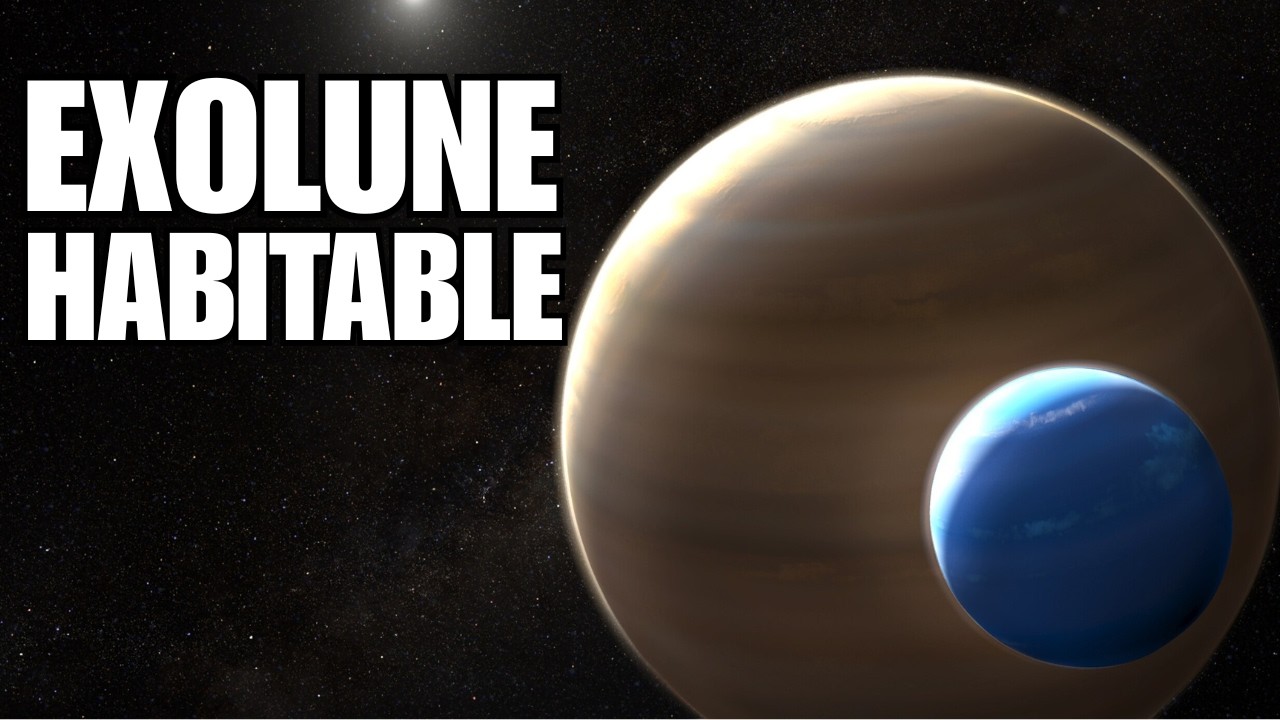
Faut-il chercher la VIE Sur les EXOLUNES !
Keywords
Summary
127 words
Critical Evaluation
Value of the Information & Strength of the Argument
The video provides valuable information by synthesizing current research on exomoon detection and habitability. It presents a compelling argument that moons, not just planets, should be considered in the search for life. The argumentation is solid, building from the prevalence of moons in our solar system to the potential for tidal heating and diverse environments. The discussion of detection methods is clear and highlights the technical challenges, using concrete examples like Kepler-1625b and HD 206893B. The video effectively communicates the scientific frontier and the potential significance of exomoons.
Scientific Rigor, Source Quality, Title Accuracy
The video demonstrates scientific rigor by referencing specific studies and providing sources in the description. The information is consistent with current scientific understanding, and the presentation avoids overstatement, acknowledging the uncertainty of the candidates. The title accurately reflects the content, and the video stays on topic throughout. The sources cited are reputable (arXiv, NASA), enhancing the credibility of the content.
163 words
Title / Content Match
The title accurately reflects the content, which explores the search for life on exomoons and the methods to detect them.
Quality & Reliability
8/10
The video presents a well-structured overview of exomoon detection methods, grounded in current scientific research and referencing specific studies. The content is accurate and up-to-date, though it simplifies complex topics for a general audience.
Key Moments
Markers derived by PSI from the transcript: the creator did not define chapters.
- Introduction to the idea of searching for life on exomoons.
- Discussion of moons in our solar system and their potential for habitability.
- Explanation of the challenges of detecting exomoons using the transit method.
- Presentation of the Kepler-1625b candidate and the transit timing variation method.
- Discussion of the astrometric detection method and the HD 206893B candidate.
- Challenges in characterizing exomoons and the potential for life.
- Conclusion and call to action.
Cited Sources
- arXiv paper on exomoon detection (2511.20091) — Referenced as a source for recent exomoon detection methods.
- NASA news release on first possible exomoon — Referenced as a source for the Kepler-1625b candidate.
- arXiv paper on exomoon candidates (2201.04643) — Referenced as a source for exomoon detection methods.
Concurring Sources
- Exomoons: A New Frontier in the Search for Life — NASA article discussing the potential of exomoons for habitability.
- The Hunt for Exomoons — Space.com article summarizing exomoon detection efforts.
External References
Contribution & Novelties
The video provides an accessible synthesis of the current state of exomoon research, highlighting the potential of moons as habitable environments and the technical challenges in detecting them. It brings together recent findings and explains them in a way that is engaging for a general audience.
Pour aller plus loin :
- Exomoon - Wikipedia — Provides a comprehensive overview of exomoons, including detection methods and candidates.
- Tidal heating - Wikipedia — Explains the mechanism of tidal heating, which is crucial for the habitability of moons like Europa.
- Kepler-1625b - NASA Exoplanet Archive — Details on the Kepler-1625b system, including the exomoon candidate.
102 words
Radar Profile
The radar profile shows high scores in information quantity, quality, and reliability, reflecting a well-researched and informative video. The technical level is moderate, indicating that while the content is accessible, it still conveys complex scientific concepts effectively.
💬 Très positif. Sur les 30 commentaires analysés, l'enthousiasme est unanime : les spectateurs saluent la qualité de la narration, la clarté du contenu et la passion du sujet, avec quelques références à la science-fiction.