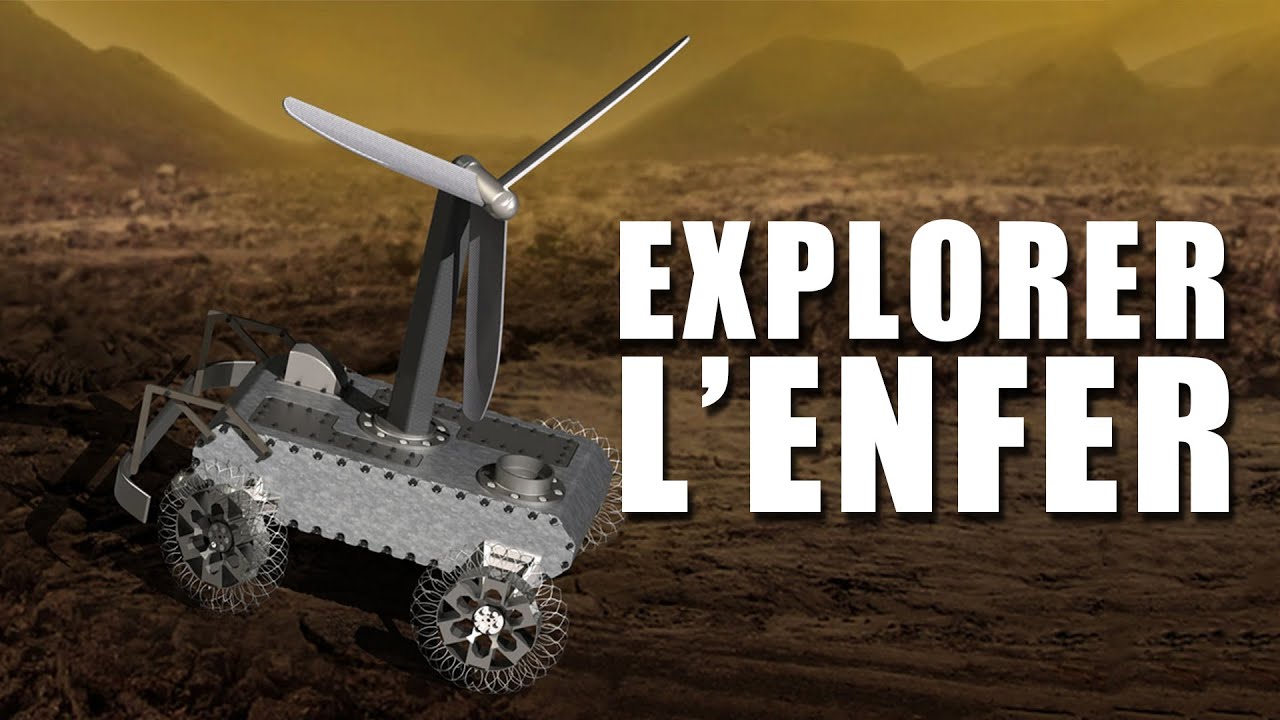
ROVER sur VÉNUS - Mission impossible ? LDDE
Keywords
Summary
176 words
Critical Evaluation
Value of the Information & Strength of the Argument
The video provides valuable insights into an innovative approach to space exploration, highlighting the potential of mechanical systems in extreme environments. The argumentation is solid, systematically addressing each challenge (temperature, pressure, power, navigation, communication) and presenting plausible solutions. The host effectively argues that abandoning electronics in favor of mechanics could enable long-duration missions on Venus, a planet often overlooked in favor of Mars. The inclusion of NASA’s AREe concept and the design competition adds credibility and shows that these ideas are being seriously considered by space agencies.
Scientific Rigor, Source Quality, Title Accuracy
The video demonstrates scientific rigor by referencing specific NASA projects and competitions, and by providing links to sources in the description. The information is presented accurately, with clear explanations of the physical constraints and proposed solutions. The title accurately reflects the content, which directly addresses the question of whether a Venus rover is possible. The video does not oversell the concept, acknowledging its limitations, which enhances its credibility.
170 words
Title / Content Match
The title accurately reflects the content, which explores the feasibility of a Venus rover and presents innovative mechanical solutions.
Quality & Reliability
8/10
The video is well-documented, referencing NASA concepts and competitions, and presents a balanced view of challenges and proposed solutions. The information is accurate and up-to-date as of 2020, with clear explanations of technical constraints.
Key Moments
Markers derived by PSI from the transcript: the creator did not define chapters.
- Introduction to Venus exploration and the Venera program
- Challenges of Venus environment: temperature, pressure, and power
- Introduction to mechanical computers and their robustness
- Power generation using wind energy and mechanical storage
- Navigation and obstacle avoidance with mechanical sensors
- Communication challenges and potential solutions
Cited Sources
- NASA AREe concept — Mentioned as the main concept for a mechanical Venus rover
- Youssef Ghali's concept video — Winner of NASA's Venus rover design competition
- KOB ART prototype video — Prototype demonstration for a mechanical rover
- HeroX Venus Rover Challenge — NASA's open innovation competition for Venus rover designs
Concurring Sources
- NASA AREe concept — Supports the feasibility of a mechanical rover on Venus
External References
Contribution & Novelties
The video brings a fresh perspective on Venus exploration by advocating for a return to mechanical systems, a concept often overlooked in modern space engineering. It synthesizes various innovative ideas from NASA’s AREe project and the design competition, making a compelling case for a hybrid approach. The video also highlights the potential of mechanical computers and sensors, which are not widely known outside niche engineering circles.
Pour aller plus loin :
- Automaton Rover for Extreme Environments (AREE) — Provides an overview of the NASA concept.
- Mechanical computer — Explains the history and principles of mechanical computation.
- Venera program — Details the Soviet Venus missions, providing context for the challenges discussed.
110 words
Radar Profile
The radar profile shows high scores in information quantity and quality, with a slightly lower technical level, indicating that the video is accessible yet informative. The reliability score is also high, reflecting the use of credible sources and a balanced presentation.
💬 Très positif. Sur les 30 commentaires analysés, les spectateurs expriment un enthousiasme marqué pour le concept de rover mécanique, saluant la qualité de la recherche et la présentation, avec des commentaires comme 'excellent' et 'passionnant'.