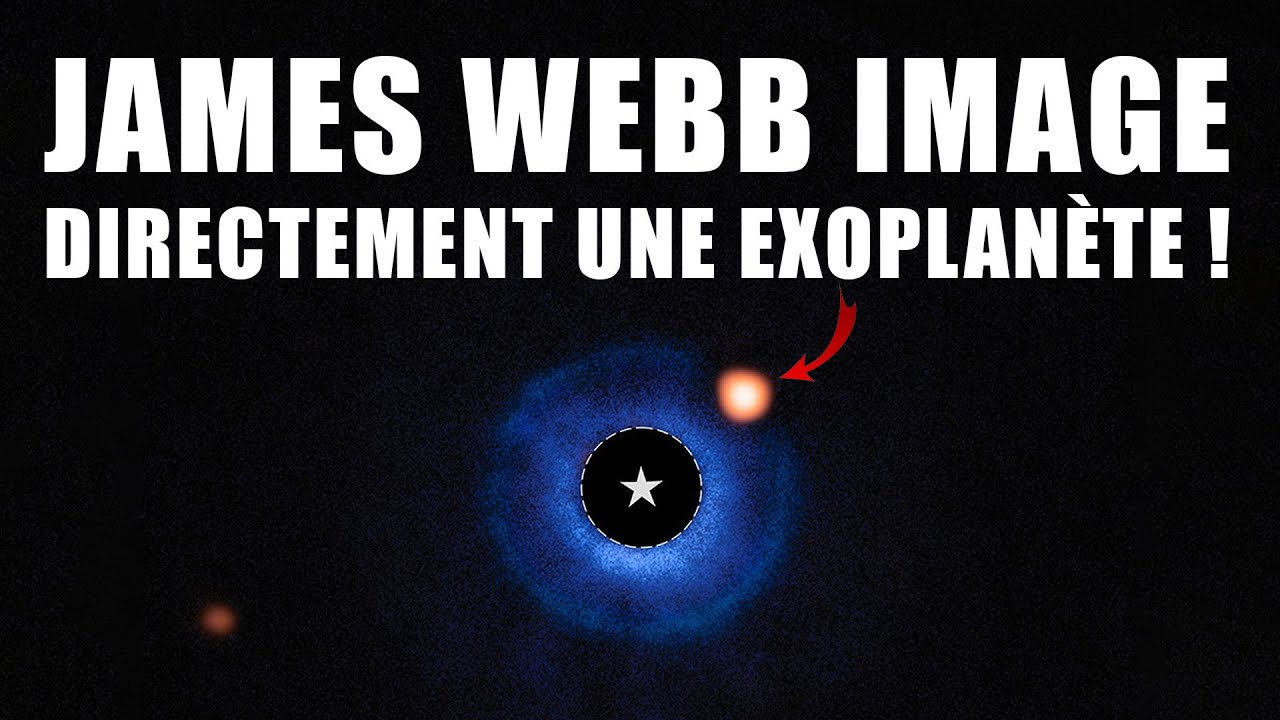
Incroyable : James Webb découvre sa première exoplanète !
Keywords
Summary
157 words
Critical Evaluation
Value of the Information & Strength of the Argument
The video provides valuable information about a significant astronomical discovery, explaining the scientific context and the technical challenges of direct imaging. The argumentation is solid, supported by references to the Nature paper and ESA image. The host clearly distinguishes between confirmed facts and interpretations, and acknowledges uncertainties (e.g., orbital shape). The use of analogies (glow-in-the-dark worm, flashlight) effectively conveys the contrast problem. The video also emphasizes the collaborative nature of the discovery and the potential for future research, making it informative for both enthusiasts and those new to the topic.
Scientific Rigor, Source Quality, Title Accuracy
The video demonstrates scientific rigor by citing primary sources (Nature article, ESA image) and explaining the methodology. The title accurately reflects the content. The host also mentions that the results were shared before official publication, indicating close collaboration with researchers. The video does not overstate claims, and the statistical confidence (less than 1 in 300 chance of error) is mentioned. The adéquation between title and content is excellent.
173 words
Title / Content Match
The title accurately reflects the content: the video announces and explains the first exoplanet discovered by JWST via direct imaging.
Quality & Reliability
8/10
The video presents a recent discovery (TWA 7b) with clear explanations of the direct imaging method, and cites primary sources (ESA image, Nature article). The information is accurate and well-contextualized, though some simplifications are made for a general audience.
Key Moments
Markers derived by PSI from the transcript: the creator did not define chapters.
- Introduction to the discovery of TWA 7b, the first exoplanet found by JWST via direct imaging.
- Explanation of why direct imaging is difficult: contrast and angular separation.
- Description of TWA 7b's characteristics: Saturn-mass, 52 AU from star, temperature 320 K.
- Discussion of the debris disk and the gap cleared by the planet, evidence of planet-disk interaction.
- Explanation of the coronagraph on MIRI and its role in blocking starlight.
- Future prospects: spectroscopic analysis, orbit monitoring, and potential for detecting smaller planets.
- Conclusion and mention of future observatories like Habitable World Observatory and LIFE.
Cited Sources
- High-contrast coronograph image of TWA 7b — Image of TWA 7b from ESA, used to illustrate the discovery.
- Nature article on TWA 7b — Peer-reviewed paper presenting the discovery of TWA 7b.
Concurring Sources
- ESA image of TWA 7b — Official image from ESA, consistent with the video's description.
- Nature article — Peer-reviewed publication confirming the discovery.
External References
Contribution & Novelties
The video provides a clear and accessible explanation of a recent scientific discovery, highlighting the technical challenges and the significance of direct imaging. It emphasizes the collaborative effort and the potential for future research. The video also connects the discovery to broader questions about planetary formation and the search for Earth-like planets.
Pour aller plus loin :
- Direct imaging of exoplanets — Overview of the method and its challenges.
- Coronagraph — Explanation of the instrument used to block starlight.
- James Webb Space Telescope — General information about the telescope and its instruments.
92 words
Radar Profile
The radar profile shows high scores in information quality and reliability, with slightly lower scores in technical depth and quantity, reflecting a balance between accessibility and scientific accuracy.
💬 Très positif. Sur les 30 commentaires analysés, les spectateurs expriment une admiration et un enthousiasme marqués pour la découverte et la qualité pédagogique de la vidéo, saluant le travail de vulgarisation et la rigueur scientifique.