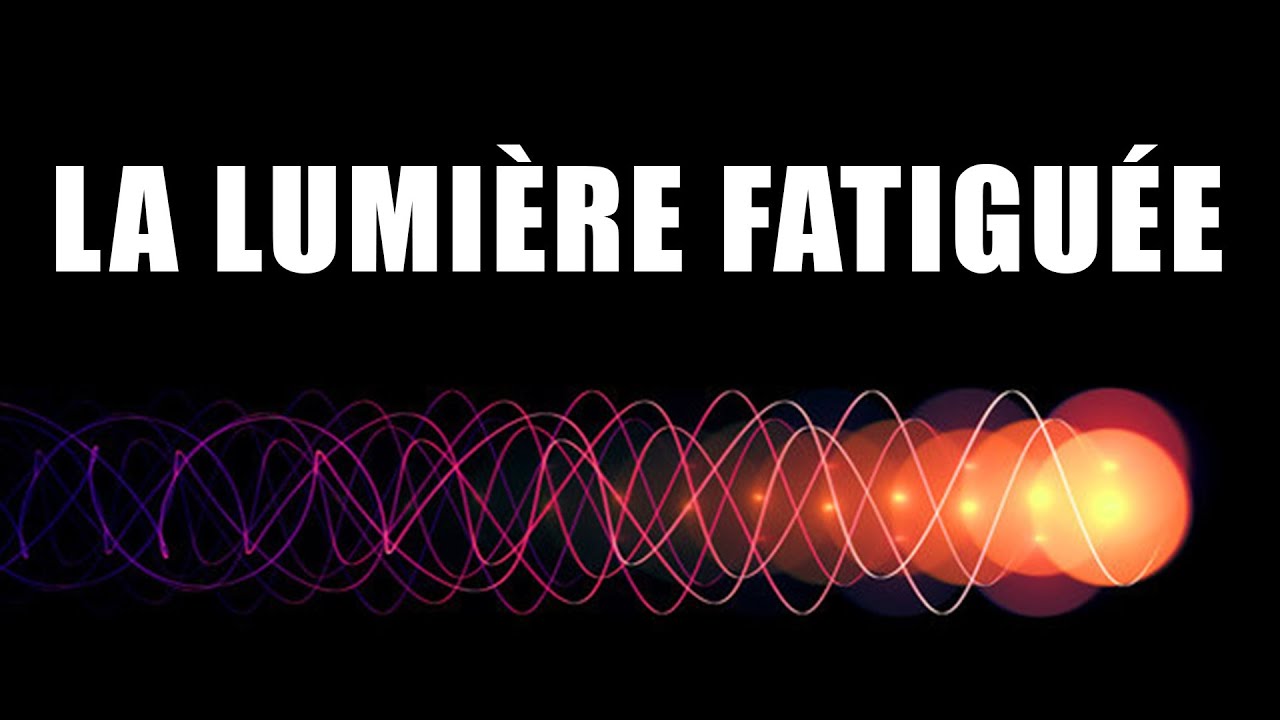
Et si l'UNIVERS était en fait VIEUX de 26 MILLIARDS D'ANNÉE ? (la lumière fatiguée) Documentaire
Keywords
Summary
185 words
Critical Evaluation
Value of the Information & Strength of the Argument
The video provides a clear and accessible explanation of complex cosmological concepts, making it valuable for a general audience. It effectively outlines the standard model and the challenges posed by JWST, then introduces the tired light hypothesis as a possible solution. The argumentation is balanced, presenting both the potential benefits and the significant drawbacks of the model, such as the need for varying constants. However, the video could strengthen its argument by including more critical perspectives from the scientific community and discussing why the tired light hypothesis is generally not favored. The presentation is engaging and logically structured, but it leans towards a narrative that might overemphasize the viability of the hypothesis without sufficient counterbalance.
Scientific Rigor, Source Quality, Title Accuracy
The video cites one scientific paper from the Monthly Notices of the Royal Astronomical Society, which adds credibility. However, it does not provide a comprehensive list of sources or references to broader scientific literature. The title is somewhat sensationalist but accurately reflects the content’s focus on the tired light hypothesis and the potential age of the universe. The video’s content aligns well with the title, though it could be more rigorous in distinguishing between established science and speculative proposals. The lack of citations for other claims and the absence of expert interviews or contrasting viewpoints slightly reduce the overall scientific rigor.
231 words
Title / Content Match
The title accurately reflects the content, which explores the hypothesis of an older universe via tired light, though it is somewhat sensationalist.
Quality & Reliability
7/10
The video presents a balanced overview of the tired light hypothesis as a response to JWST observations, clearly distinguishing established cosmology from speculative proposals. It cites a specific scientific paper and acknowledges the speculative nature of the discussed model. However, it lacks detailed critical analysis and does not mention broader scientific consensus or alternative explanations in depth.
Key Moments
Markers derived by PSI from the transcript: the creator did not define chapters.
- Introduction to the video and the topic of JWST observations challenging cosmology.
- Explanation of the Hubble tension and the problem of early massive galaxies.
- Overview of the Lambda-CDM model and its predictions for galaxy formation.
- Discussion of JWST observations of early galaxies and quasars that contradict Lambda-CDM.
- Introduction to the tired light hypothesis and its historical context.
- Presentation of the hybrid model from the University of Ottawa, suggesting a 26.7 billion-year-old universe.
- Conclusion and reflection on the scientific process and potential future developments.
Cited Sources
- A hybrid model of Lambda-CDM and tired light to explain JWST observations — The paper proposes a model combining Lambda-CDM and tired light, suggesting an older universe.
Concurring Sources
- Tired light on Wikipedia — Provides general information on the tired light hypothesis and its historical development.
Dissenting Sources
External References
Contribution & Novelties
The video provides a concise and engaging overview of the tired light hypothesis as a response to recent JWST anomalies, making it accessible to a broad audience. It highlights the ongoing scientific debate and the creative efforts of theorists to reconcile observations with existing models. The video’s main contribution is its role in popularizing a niche hypothesis and encouraging viewers to consider alternative cosmological models.
Pour aller plus loin :
- Tired light on Wikipedia — Provides background on the hypothesis and its historical context.
- Lambda-CDM model on Wikipedia — Explains the standard model of cosmology.
- James Webb Space Telescope on Wikipedia — Details the telescope and its discoveries.
108 words
Radar Profile
The radar profile shows high scores in information quantity and quality, with a moderate technical level and good reliability. This suggests a well-balanced video that is informative and reliable, but not overly technical, making it suitable for a general audience interested in cosmology.
💬 Très positif. Sur les 30 commentaires analysés, les spectateurs expriment un fort enthousiasme pour la vidéo, saluant la qualité des explications et la passion du sujet, tout en notant l'importance des nouvelles découvertes de James Webb.