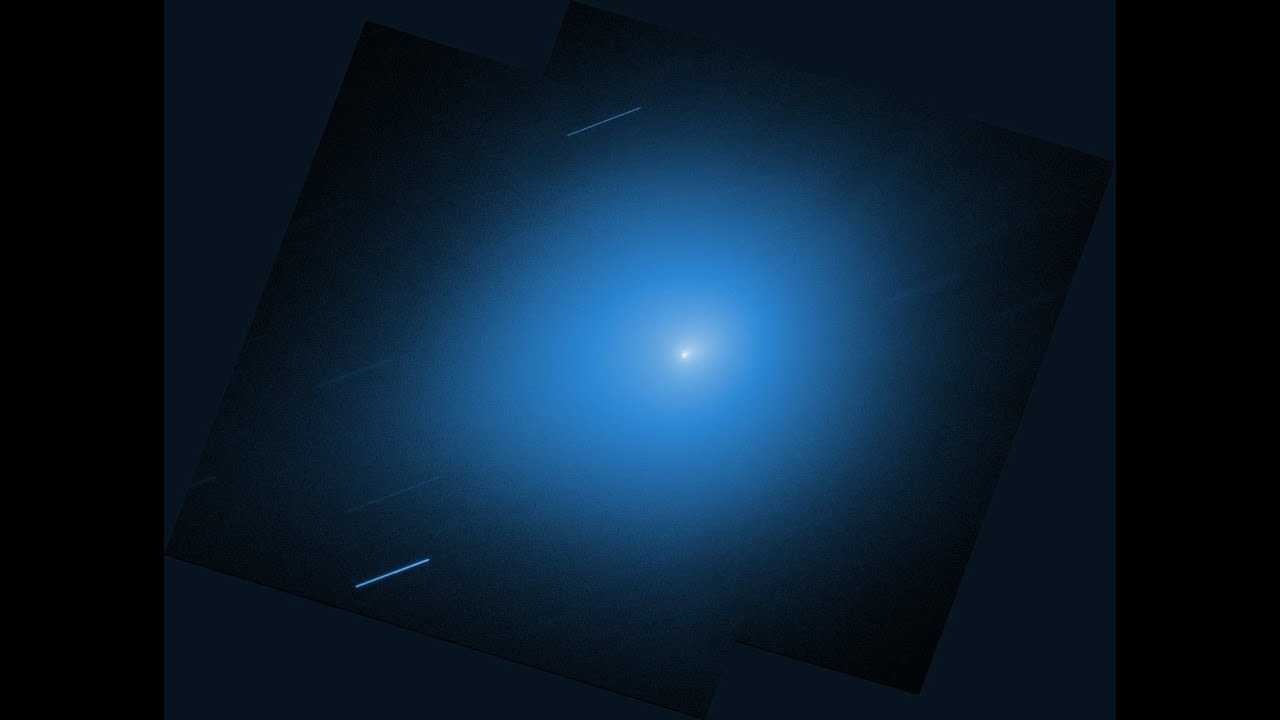
Interstellar Comet 3i/ATLAS Update for December 10, 2025
Keywords
Summary
179 words
Critical Evaluation
Value of the Information & Strength of the Argument
The video provides valuable, up-to-date information on a rapidly evolving astronomical topic, synthesizing data from multiple professional observatories and space missions. The argumentation is solid, as the narrator explains the scientific significance of each observation, such as the X-ray emission mechanism and the prebiotic implications of detected molecules. He also contextualizes the data, comparing 3i/ATLAS to other comets and addressing potential anomalies. The discussion of AI misinformation is relevant and adds value by guiding viewers to reliable sources. The reasoning is logical and well-structured, with clear explanations of technical concepts.
Scientific Rigor, Source Quality, Title Accuracy
The video demonstrates scientific rigor by referencing specific instruments, missions, and a published Astronomer’s Telegram. The narrator distinguishes between confirmed findings and interpretations, and acknowledges uncertainties, such as the unknown origin of the comet’s ejection. The title accurately reflects the content, and the video maintains a high standard of accuracy. The inclusion of a warning about AI-generated misinformation shows a commitment to source quality. The description provides links to relevant sources, including the Astronomer’s Telegram and the creator’s other channels.
185 words
Title / Content Match
The title accurately reflects the content: a December 10, 2025 update on the interstellar comet 3i/ATLAS.
Quality & Reliability
8/10
The video presents recent scientific observations of interstellar comet 3i/ATLAS from multiple space- and ground-based instruments, referencing an Astronomer's Telegram and mentioning peer-reviewed studies. The information is current and specific, though it relies on the narrator's interpretation without direct access to all primary sources. The channel has a reputation for reliable science communication, and the content is consistent with known astronomical data.
Key Moments
Markers derived by PSI from the transcript: the creator did not define chapters.
- Introduction to the update on 3i/ATLAS, mentioning X-ray observations by JAXA's Xtend telescope.
- Explanation of X-ray emission from comets, first detected with Comet Hyakutake.
- Details on the X-ray observation of 3i/ATLAS, including the 17-hour exposure and detection of nitrogen, carbon, and oxygen.
- ALMA's detection of methanol and hydrogen cyanide, and their significance as prebiotic molecules.
- Discussion of the unusual ratio of methanol to hydrogen cyanide in 3i/ATLAS.
- New Hubble image of 3i/ATLAS taken on November 30, with ultraviolet spectroscopy data pending.
- Observations by ESA's JUICE spacecraft, with data expected in February 2026.
- Comparison of amateur and professional observations, highlighting the challenges of spacecraft instruments.
- Warning about AI-generated misinformation on YouTube, including a fake Avi Loeb channel.
- Additional detections of hydrogen cyanide and upcoming observations by James Webb Space Telescope.
- Study on 3i/ATLAS's past stellar encounters and its possible origin.
- Upcoming events: closest approach to Earth on December 19 and to Jupiter in March 2026.
Cited Sources
- Astronomer's Telegram #17523 — Announcement of X-ray observations of 3i/ATLAS by the Xtend telescope.
- John Michael Godier's Patreon — Support page for the channel.
- Event Horizon Channel — Another channel by the creator, mentioned for additional content.
- Cylinder Five by Chris Zabriskie — Music used in the video, licensed under Creative Commons.
- Creative Commons Attribution 4.0 license — License for the music used.
Concurring Sources
- Astronomer's Telegram #17523 — Primary source for the X-ray detection, consistent with the video's claims.
Contribution & Novelties
The video provides a timely synthesis of the latest observations of 3i/ATLAS, including X-ray detection, chemical analysis, and spacecraft imaging, offering viewers a comprehensive update. It also highlights the growing issue of AI-generated misinformation in astronomy content, which is a novel and important contribution to the public understanding of science communication.
Pour aller plus loin :
- Comet Hyakutake — First comet with detected X-ray emission, relevant to the mechanism discussed.
- Prebiotic chemistry — Overview of how molecules like hydrogen cyanide and methanol contribute to the origins of life.
- ALMA Observatory — The telescope used for the methanol and hydrogen cyanide detection.
- JUICE mission — ESA’s spacecraft that observed 3i/ATLAS.
109 words
Radar Profile
The radar profile shows high scores in quantity of information and technical level, indicating a dense, detailed update. The quality and reliability scores are also strong, reflecting the use of credible sources and clear explanations. The overall balance suggests a highly informative and trustworthy video.
💬 Très positif. Sur les 30 commentaires analysés, la grande majorité exprime une appréciation chaleureuse pour le contenu et le style du narrateur, avec quelques remarques humoristiques et des remerciements pour la qualité des informations.