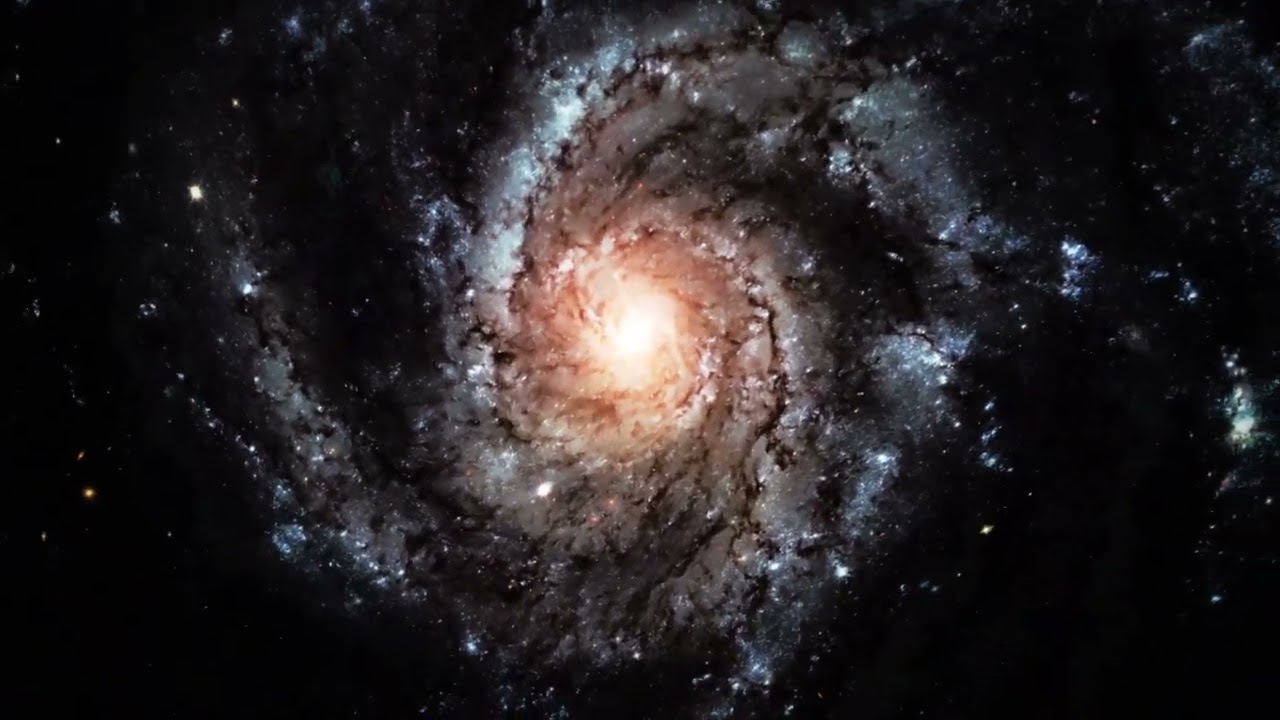
Will We Ever Fully Understand the Universe?
Keywords
Summary
178 words
Critical Evaluation
Value of the Information & Strength of the Argument
The video provides a valuable synthesis of multiple scientific and philosophical perspectives on the limits of knowledge. It effectively argues that while the universe imposes epistemic limits, understanding may not be entirely foreclosed. The argumentation is solid, building from concrete examples (Herculaneum scrolls) to abstract concepts (quantum mechanics, infinity), and it acknowledges uncertainties by presenting multiple interpretations (e.g., multiverse vs. cyclic cosmology). The reasoning is logical and avoids overstatement, though it could benefit from more explicit citations to primary sources.
Scientific Rigor, Source Quality, Title Accuracy
The video demonstrates scientific rigor by grounding its discussion in established concepts and historical facts. It references the work of Philodemus, the Villa of the Papyri, and modern imaging techniques, as well as theories like cyclic conformal cosmology by Roger Penrose. However, it does not provide direct citations to scientific papers, relying instead on general knowledge. The title accurately reflects the content, which is a thoughtful exploration rather than a definitive answer. The video’s alignment with mainstream scientific understanding is strong, with no obvious misrepresentations.
180 words
Title / Content Match
The title accurately reflects the video's central question, which is thoroughly explored through multiple scientific and philosophical angles.
Quality & Reliability
7/10
The video presents a well-structured, thoughtful exploration of the limits of scientific knowledge, referencing established concepts (quantum mechanics, cosmology, the Fermi Paradox) and historical examples (Philodemus, Eubulides). While it does not cite specific peer-reviewed sources, it aligns with mainstream scientific understanding and avoids speculative claims without clear caveats.
Key Moments
Markers derived by PSI from the transcript: the creator did not define chapters.
- Introduction to the human quest for understanding and the cumulative nature of knowledge.
- Discussion of Philodemus and the Herculaneum papyri, illustrating loss and recovery of knowledge.
- Introduction of limits to knowledge: black holes and the observable universe.
- Quantum mechanics and the limits of measurement; the wave function and uncertainty.
- Complexity in weather and protein folding as barriers to prediction.
- The multiverse and the possibility of detecting other universes.
- Human cognitive limits and the potential for superintelligence to understand the universe.
Cited Sources
- Event Horizon Show — Mentioned as the creator's other channel for further exploration.
- Cylinder Eight by Chris Zabriskie — Background music used in the video.
- Creative Commons Attribution 4.0 License — License for the music used.
Concurring Sources
- Observable universe — Supports the claim about the limits of what we can observe due to cosmic expansion.
- Quantum mechanics — Confirms the inherent uncertainty and probabilistic nature of quantum systems.
Contribution & Novelties
The video offers a comprehensive and accessible overview of the philosophical and scientific limits to understanding the universe, synthesizing ideas from physics, cosmology, and cognitive science. It uniquely frames the question through the lens of potential superintelligence and evolutionary successors, adding a fresh perspective to the discussion.
Pour aller plus loin :
- Observable universe — Provides context on the cosmic horizon and limits of observation.
- Quantum mechanics — Explains the probabilistic nature and measurement problem.
- Fermi paradox — Discusses the apparent contradiction between high probability of alien civilizations and lack of evidence.
- Cyclic model — Relates to Penrose’s conformal cyclic cosmology mentioned in the video.
105 words
Radar Profile
The radar profile shows high scores in information quantity and quality, reflecting the video's rich content and scientific grounding. The technical level is moderate, making it accessible to a general audience while still covering complex topics. The overall reliability is solid, though the lack of explicit citations slightly lowers the score.
💬 Très positif. Sur les 30 commentaires analysés, le public exprime une admiration constante pour la clarté, la profondeur et la capacité du créateur à stimuler la réflexion, avec des références à Feynman et Douglas Adams, et des remerciements pour la qualité du contenu.